
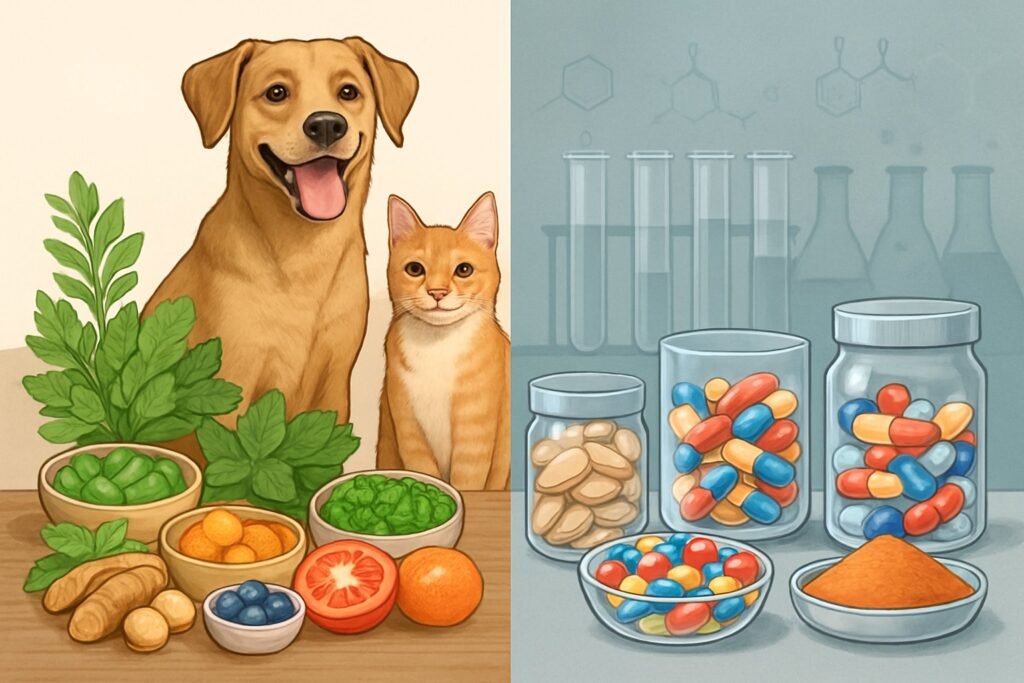
A balanced natural diet usually beats routine vitamins, but targeted supplements help when needed.
I’ve spent years working with dog owners, vets, and canine nutrition plans, so I know the practical trade-offs between dog vitamins vs natural diet. This article breaks down the science, real-world results, and step-by-step guidance so you can choose what’s best for your dog. You’ll get clear signs to watch, safe supplement choices, and sample meal ideas that keep your dog healthy without guesswork. Read on to make an informed decision tailored to your dog’s life stage and health needs.

Why the dog vitamins vs natural diet debate exists
Pet owners often ask whether pills or whole foods are the best way to feed a dog. The debate exists because both options have real benefits and real limits. Modern commercial diets are fortified, and raw or home-cooked diets promise whole-food nutrition. The choice depends on your dog’s needs, your vet’s advice, and how well you plan meals.
Vets, nutritionists, and breeders all look at different factors. Age, breed, activity level, and medical history change what a dog needs. Understanding those needs is the first step in the dog vitamins vs natural diet decision.

What vitamins do for dogs
Vitamins and mineral supplements fill gaps in the diet. They can correct deficiencies and support recovery during illness. Common supplements include:
- Vitamin D for bone health and calcium balance.
- Omega-3s for skin, coat, and joint support.
- Probiotics for gut health and digestion.
- Multivitamins for picky eaters or dogs on restricted diets.
Supplements are powerful when used correctly. They act quickly and are measured in doses. But overdosing is a real risk, especially with fat-soluble vitamins like A and D. Always check with a vet before starting new supplements.

What a natural diet provides
A well-planned natural diet gives a range of nutrients in whole-food form. Whole foods offer protein, fats, fiber, and micronutrients that work together. Benefits include:
- Better digestibility for many dogs.
- More variety of textures and flavors.
- Natural sources of vitamins and antioxidants.
- Improved appetite and mental stimulation from real meals.
Natural diet options include high-quality commercial fresh diets, home-cooked meals, and carefully prepared raw food plans. The key is balance: protein, healthy fats, carbohydrates, vitamins, and minerals in the right proportions.

Comparing effectiveness: dog vitamins vs natural diet
Both approaches can produce healthy dogs when done well. Natural diets deliver complex nutrient interactions that supplements can’t fully replicate. However, vitamins are useful tools when the natural diet is unbalanced or a dog has special needs.
Pros of natural diet:
- Whole nutrients and fiber
- Fewer artificial additives
- Often better palatability
Pros of vitamins:
- Precise dosing for deficiencies
- Convenient for travel or picky eaters
- Helpful in recovery or old age
Cons and risks:
- Natural diets can be unbalanced without careful planning.
- Supplements can mask poor diet or cause toxicity if misused.
When comparing dog vitamins vs natural diet, consider the dog first, not the trend. Labs and vet checks will show if you need supplements on top of a whole-food plan.
 combining both”
style=”max-width: 100%; height: auto; border: 2px solid black; border-radius: 10px; display: block; margin: 0 auto;”
loading=”lazy”
/>
When to choose vitamins, when to choose a natural diet, and combining both
Choose vitamins when:
- Bloodwork shows a deficiency.
- Your dog is recovering from illness or surgery.
- You feed a home-cooked or restricted diet without full vet-designed balance.
Choose a natural diet when:
- You can commit to planning or use a veterinary-formulated fresh diet.
- Your dog eats well and has no medical needs that require higher nutrient levels.
- You want whole-food benefits and better food variety.
Combining both often works best. Use a balanced natural diet as the base and add targeted supplements for joint care, skin issues, or digestion. Always review any plan with a vet and repeat labs as needed.
How to choose quality supplements and plan a natural diet
Picking safe supplements:
- Look for products made for dogs with clear dosing instructions.
- Check that the manufacturer follows good manufacturing practices.
- Avoid human gummies and complex multi-ingredient blends without veterinary guidance.
Planning a natural diet:
- Work with a veterinary nutritionist for recipes and portion guides.
- Include lean proteins, healthy fats, and varied vegetables or safe carbs.
- Add calcium sources or a balanced mineral supplement if you leave out bones.
Sample daily home-cooked framework for an average adult dog:
- 50% lean cooked protein (chicken, turkey, beef, or fish).
- 25% cooked vegetables (carrots, green beans, squash).
- 25% cooked carbs or healthy fats (sweet potato, pumpkin, olive oil).
- Add a dog-safe multivitamin only if recommended by a vet.
Test and adjust based on weight, stool quality, coat condition, and energy. Keep simple records and recheck bloodwork every 6–12 months when changing diets or adding supplements.
Personal experience and practical tips
As a long-time dog owner and nutrition advisor, I’ve tested both approaches on my own pets. One of my dogs had dull coat and dry skin on a commercial diet. After switching to a balanced home-cooked plan and adding omega-3s, the coat improved in weeks. I also once gave a high-dose vitamin hoping to speed recovery after surgery; the vet warned it was unnecessary and we stopped it.
Lessons learned:
- Small changes show up fast in coat and digestion.
- More is not better with fat-soluble vitamins.
- Work with a vet or nutritionist to avoid mistakes and costly fixes later.
Practical tips:
- Keep simple meal templates and rotate protein sources.
- Use lab tests to guide decisions, not guesswork.
- Buy supplements from reputable brands and follow dosing by weight.
Frequently Asked Questions of dog vitamins vs natural diet
What is the main advantage of a natural diet over vitamins?
A natural diet offers whole-food nutrients and fiber that act together. It can improve digestion, appetite, and long-term health when balanced correctly.
Can vitamins replace a poor natural diet?
No, vitamins can fill gaps but cannot fully replace a balanced diet. Relying only on supplements can lead to missing essential food components like fiber and beneficial compounds.
Are supplements safe for all dogs?
Supplements are not universally safe. Dogs with certain conditions or those on multiple medications need vet approval to avoid interactions or toxicity.
How often should I test my dog’s blood when changing diets or adding vitamins?
Plan a baseline blood test, then recheck in 6 to 12 months after major changes. More frequent tests may be needed for sick or senior dogs.
Can homemade diets meet all nutrient needs without vitamins?
Yes, if they are designed by a veterinary nutritionist or follow a complete, vetted recipe. Many homemade diets still need a specific calcium and trace mineral supplement.
Is raw feeding better than cooked for natural nutrition?
Raw feeding can offer nutrient variety but carries bacterial and balance risks. Proper handling and expert guidance are essential for safety.
When should I consider omega-3 supplements?
Consider omega-3s for skin, coat, inflammation, and joint support, especially in older dogs or breeds prone to joint issues.
Conclusion
Choosing between dog vitamins vs natural diet comes down to the dog, the caregiver’s commitment, and professional guidance. A balanced natural diet often provides the best foundation, while targeted vitamins solve specific problems. Start with vet-backed tests, pick reputable supplements if needed, and track results over time. Take action today: review your dog’s current food, schedule a vet check if you have concerns, and try one small, informed change to improve your dog’s health. Leave a comment with your dog’s experience or subscribe for more feeding tips.
