
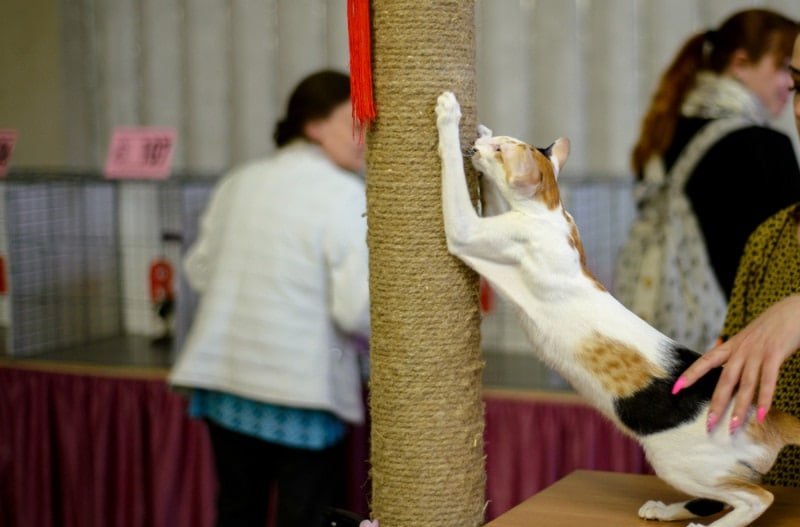
A scratching post focuses on claw health and marking; a cat tree adds climbing, play, and rest.
I’ve worked with many cat owners and tested dozens of products, so I know the key trade-offs between a scratching post vs cat tree. This guide breaks down function, size, materials, training tips, and budget so you can pick the right solution for your cat’s body, mind, and home. Expect clear comparisons, real-life lessons, and step-by-step advice to help your cat scratch, stretch, and perch happily.
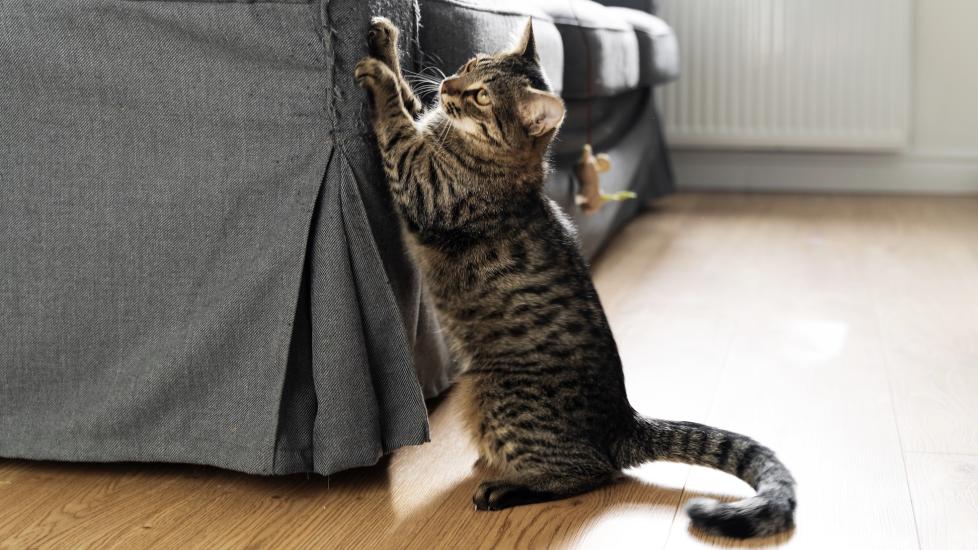
Why cats scratch and how that affects the scratching post vs cat tree choice
Cats scratch to sharpen claws, stretch muscles, mark territory, and relieve stress. A scratching post addresses claw care and marking. A cat tree expands on those needs by adding climbing, resting spots, and vertical territory. Choosing between a scratching post vs cat tree starts with what your cat values most: focused scratching or multi-level play and rest. Consider age, activity level, and whether your cat likes high perches or quiet spots.
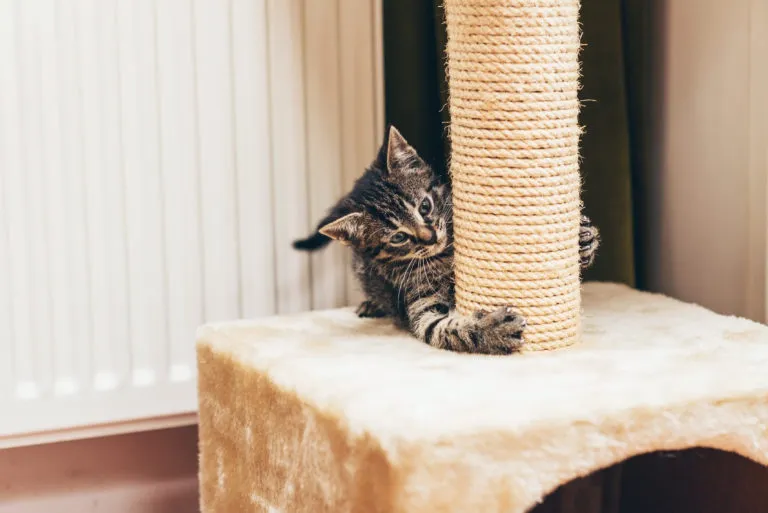
What is a scratching post? features, materials, and benefits
A scratching post is a stand designed for cats to dig and extend their claws. Common materials include sisal rope, sisal fabric, cardboard, and carpet. Sisal posts tend to last longer and hold up to heavy claws. Cardboard scratchers are cheap and loved by many cats but wear out fast.
Benefits of a scratching post
- Saves furniture by giving cats an approved surface to scratch.
- Promotes healthy claws and paw stretching.
- Small and easy to place around the home.
When to prefer a scratching post over a cat tree
- You have limited floor space.
- Your cat mainly needs a place to scratch and stretch.
- You want a low-cost or single-purpose solution.

Source: shopify.com
What is a cat tree? features, materials, and benefits
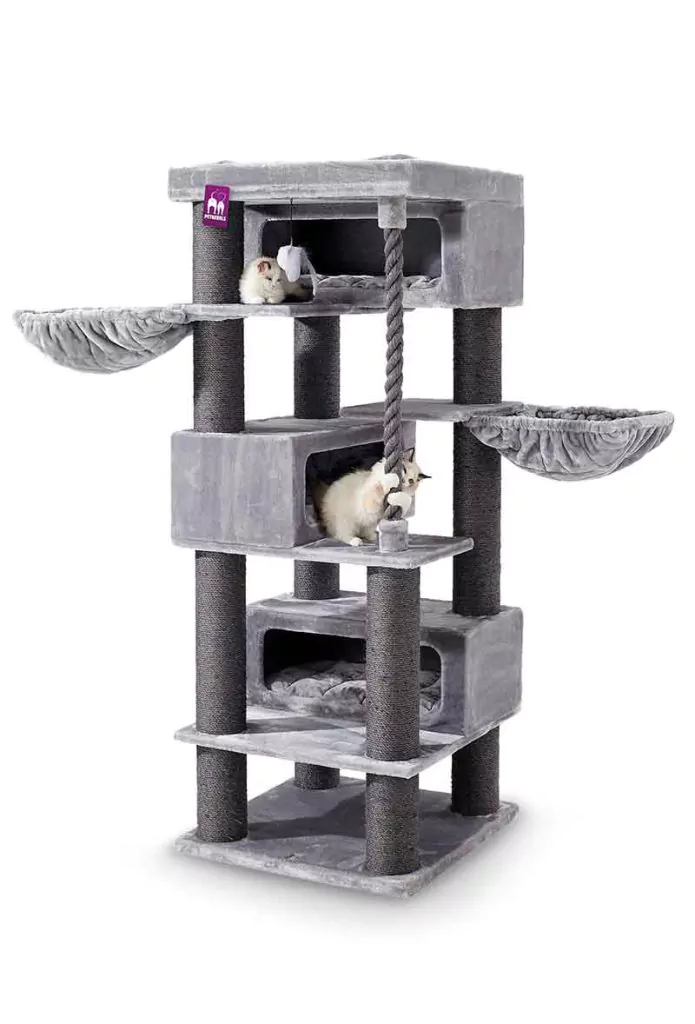
A cat tree is a multi-level structure with platforms, cubbies, posts, and sometimes hanging toys. Materials are similar to posts but include plush fabric and particle board. Cat trees create vertical space that appeals to climbing and perching instincts.
Benefits of a cat tree
- Gives cats safe vertical territory and lookout points.
- Combines scratching surfaces with rest and play areas.
- Helps multi-cat homes by offering several perches.
When to prefer a cat tree over a scratching post
- Your cat likes high places or has a strong play drive.
- You want a single unit for scratching, sleeping, and climbing.
- You have multiple cats and need vertical separation.
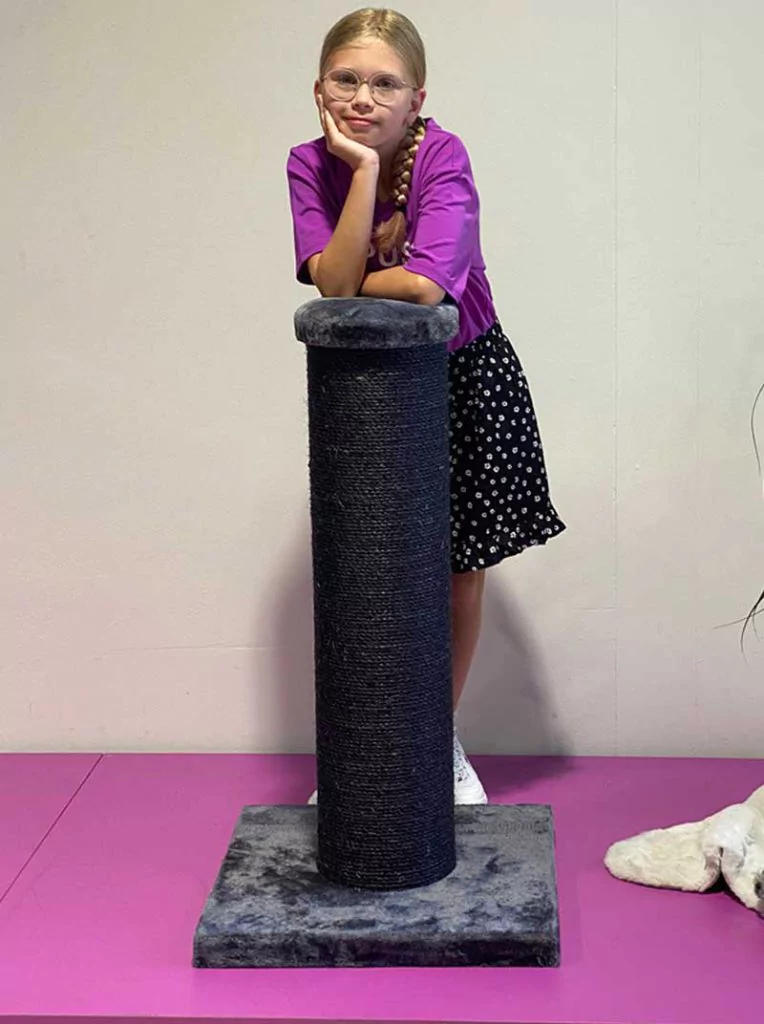
Source: petrebels.com
Side-by-side comparison: scratching post vs cat tree
Use this quick checklist to compare a scratching post vs cat tree in practical terms.
Size and footprint
- Scratching post: compact and fits in small spaces.
- Cat tree: takes more space and can dominate a room.
Durability
- Scratching post: sisal posts are long-lasting.
- Cat tree: depends on construction; cheap trees may wobble or break.
Cost
- Scratching post: usually lower cost.
- Cat tree: higher upfront cost for sturdy models.
Function
- Scratching post: focused claw care and marking.
- Cat tree: scratching plus climbing, resting, and play.
Training and placement
- Scratching post: easy to move and place near problem spots.
- Cat tree: best placed near windows or central play areas.
Maintenance
- Scratching post: replace as needed; minimal upkeep.
- Cat tree: vacuum, tighten screws, and replace worn parts.
This side-by-side shows why the scratching post vs cat tree choice depends on your cat’s needs and your space.
How to choose the right option for your cat
Step 1: Observe your cat
- Notice where they scratch and whether they climb.
- See if they prefer horizontal surfaces or vertical climbs.
Step 2: Match materials to preference
- Cats that dig prefer corrugated cardboard or horizontal scratchers.
- Vertical scratchers in sisal suit cats that stand and stretch.
Step 3: Consider size and stability
- Taller cats and climbers need sturdy bases.
- Wobbly trees scare many cats away.
Step 4: Think about household needs
- For small apartments, choose a tall slim post or a wall-mounted scratcher.
- For multi-cat homes, select a cat tree with multiple perches.
Step 5: Budget and longevity
- Spend more on well-built cat trees if you want durability.
- Replace cheap cardboard scratchers often to keep interest.
Following these steps will help you pick between a scratching post vs cat tree in a way that fits your cat’s behavior and your home.
Training tips: get your cat to use the scratching post vs cat tree
Make the chosen item attractive and easy to use.
Placement tips
- Put scratchers near doors, couches, or where your cat currently scratches.
- Place cat trees near windows to make them rewarding spots.
Attraction tips
- Rub catnip on the post or hang toys from a cat tree.
- Encourage with praise and treats after use.
Routine and patience
- Redirect unwanted scratching gently.
- Replace or repair worn surfaces; cats avoid thin or slippery materials.
If your cat resists a new cat tree or scratching post, try combining both: a post in the living room plus a small tree by the window. This hybrid approach often wins.
Personal experiences and lessons learned
I’ve tried many setups in homes and shelters. One timid cat ignored a tall tree until I moved it near a sunny window. After rubbing catnip and placing a favorite blanket on a platform, she used it every day. Another case: a multi-cat house needed both options—a tall tree for the dominant cat and several posts to stop territorial fights.
Lessons I learned
- Placement matters more than style.
- Durable sisal and solid construction save money over time.
- Mix options for best results in active or multi-cat homes.
Safety, upkeep, and lifespan
Safety checks
- Inspect posts and trees for loose screws or frayed materials.
- Replace torn fabric or sharp staples quickly to avoid injury.
Cleaning and care
- Vacuum plush parts weekly.
- Rotate cardboard scratchers to extend life.
- Tighten fasteners on trees every few months.
Lifespan expectations
- Cardboard scratchers: 1–6 months depending on use.
- Sisal posts: 1–5 years depending on thickness and use.
- Well-built cat trees: 3–10 years with proper care.
Being proactive on maintenance keeps your cat safe and extends the life of your investment.
Cost, space, and sustainability considerations
Budget planning
- Low-cost scratchers start under $15.
- Mid-range cat trees run $50–$200.
- High-end trees cost $300+ for custom or heavy-duty models.
Space planning
- Measure ceiling height and room corners. Trees need stable bases and clearance.
- Use wall-mounted scratchers and shelves for tight spaces.
Sustainability
- Look for recycled or certified wood and natural sisal.
- Cardboard is recyclable; check manufacturer recycling programs.
Weigh long-term value: a pricier tree used daily can be more cost-effective than frequent scratcher replacements.
When to use both: ideal setups and hybrid solutions
Many homes benefit from both a scratching post vs cat tree approach. Use posts near furniture and a cat tree by a window or in a play area. For multi-cat homes, provide multiple scratchers and at least one tall tree. Hybrid ideas
- Place a tall sisal post next to a low cardboard pad.
- Create vertical shelves leading to a tall cat tree.
- Use one sturdy tree and several small posts around the house.
A mix helps different personalities thrive and reduces conflict over prime spots.
Frequently Asked Questions of scratching post vs cat tree
What is better for older cats: a scratching post vs cat tree?
Older cats often prefer lower, stable scratching posts with gentle incline and cushioned resting spots. If they can climb safely, a low cat tree with easy steps also works well.
Can a cat tree replace all scratching posts?
A sturdy cat tree with good sisal posts can replace many posts, but cats may still want horizontal or cardboard scratchers. Offering both types covers all preferences.
How tall should a scratching post be compared to a cat tree?
A scratching post should allow a full stretch—about two-thirds of the cat’s length when upright. Cat trees vary; taller trees give climbers better lookout points.
How do I stop my cat from scratching furniture instead of the new post or tree?
Place the new post near the furniture and make it appealing with catnip and treats. Positive reinforcement works best; gently redirect and reward use.
Are wall-mounted scratchers better than freestanding posts?
Wall-mounted scratchers save floor space and can be very stable. Freestanding posts are easier to move and replace. Choose based on room layout and cat preference.
How often should I replace a scratching post vs cat tree?
Replace cardboard scratchers when worn. Replace or repair sisal posts and platforms when the structure becomes unsafe or the material is shredded. Regular checks every few months help.
Is sisal better than carpet for scratching?
Sisal is generally more durable and preferred by many cats. Carpet may fray and invite furniture-like behavior for some felines.
Conclusion
Choosing between a scratching post vs cat tree comes down to your cat’s habits, available space, and budget. A scratching post is great for focused claw care and small homes. A cat tree adds climbing, rest, and mental play. Many cat owners find a mix of both gives the best results. Try placing items where your cat already spends time, use catnip and toys to encourage use, and invest in sturdy materials for long-term value. Start by observing your cat today, pick one well-built solution, and adjust based on what your cat prefers. Share your results, ask questions below, or subscribe for more pet-proof tips and product guides.
