
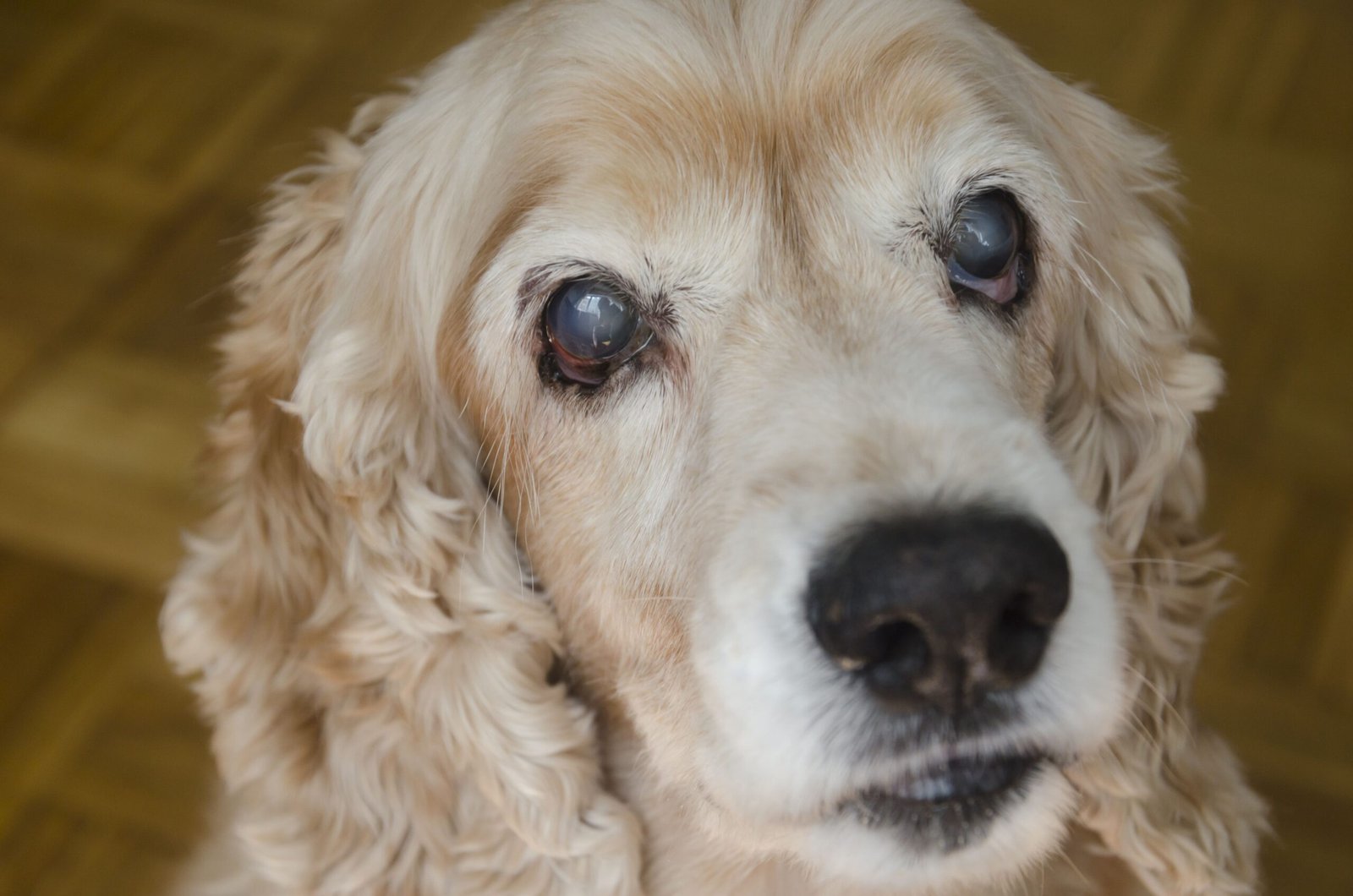
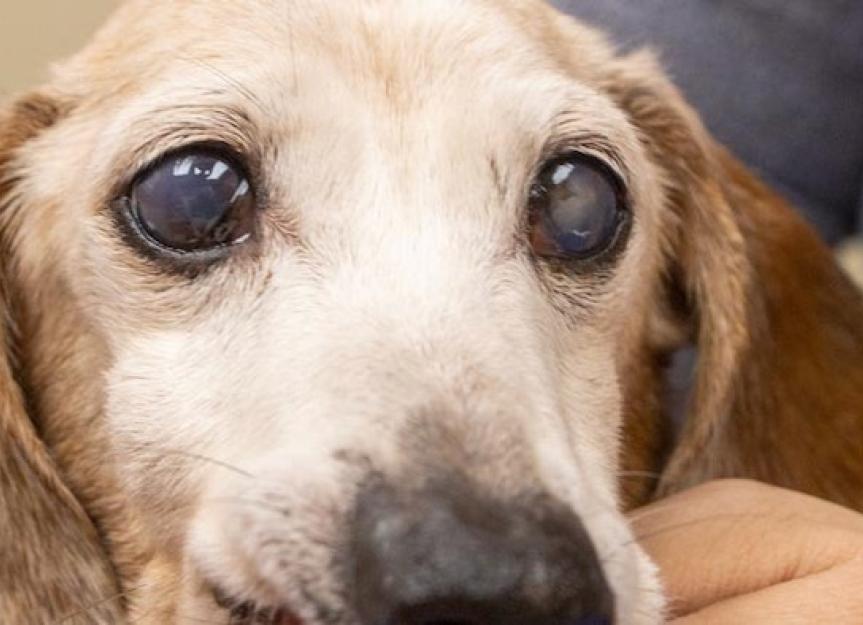
Cloudy eyes in dogs often mean cataracts, corneal disease, glaucoma, or age-related change.
I’ve studied canine eye health and cared for many dogs with cloudy vision. This guide explains the dog cloudy eyes meaning in clear, practical terms. You’ll learn common causes, signs to watch for, how vets diagnose problems, treatment choices, prevention tips, and what to do right away. Read on to understand the dog cloudy eyes meaning and make the best choices for your pet’s sight and comfort.
Common causes of cloudy eyes in dogs
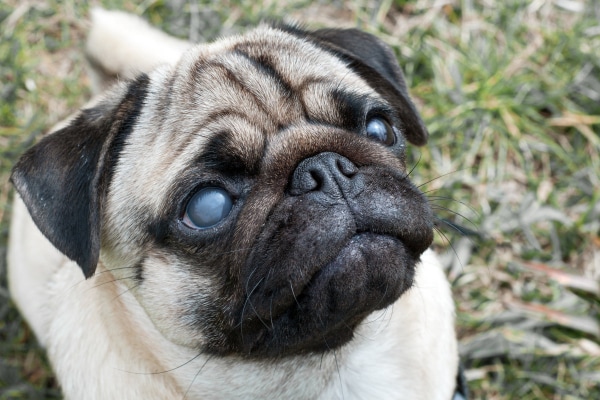
Cloudiness in a dog’s eye can come from many sources. Understanding the dog cloudy eyes meaning starts with the cause. Common causes include cataracts, corneal ulcers, nuclear sclerosis, glaucoma, uveitis, and infections. Each cause has a different risk level and treatment path.
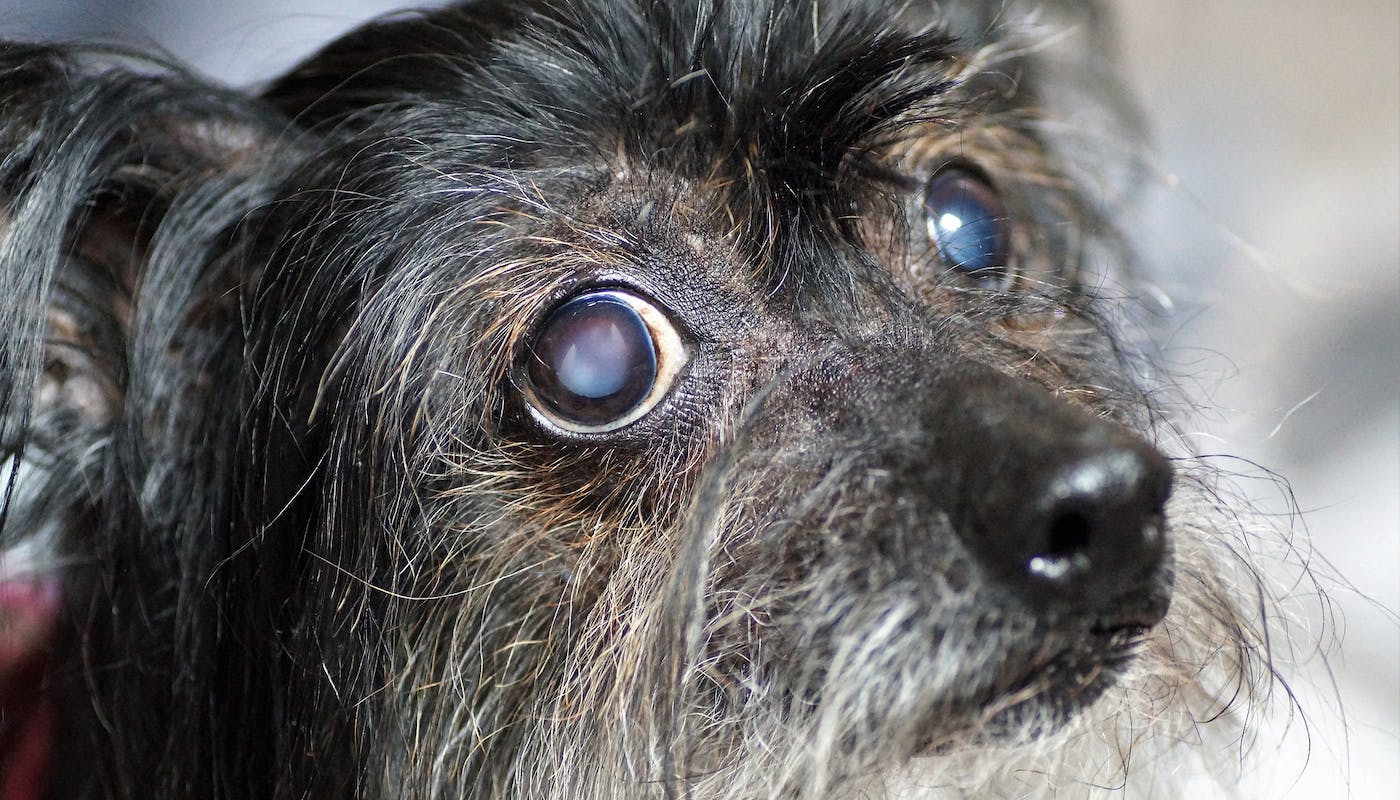
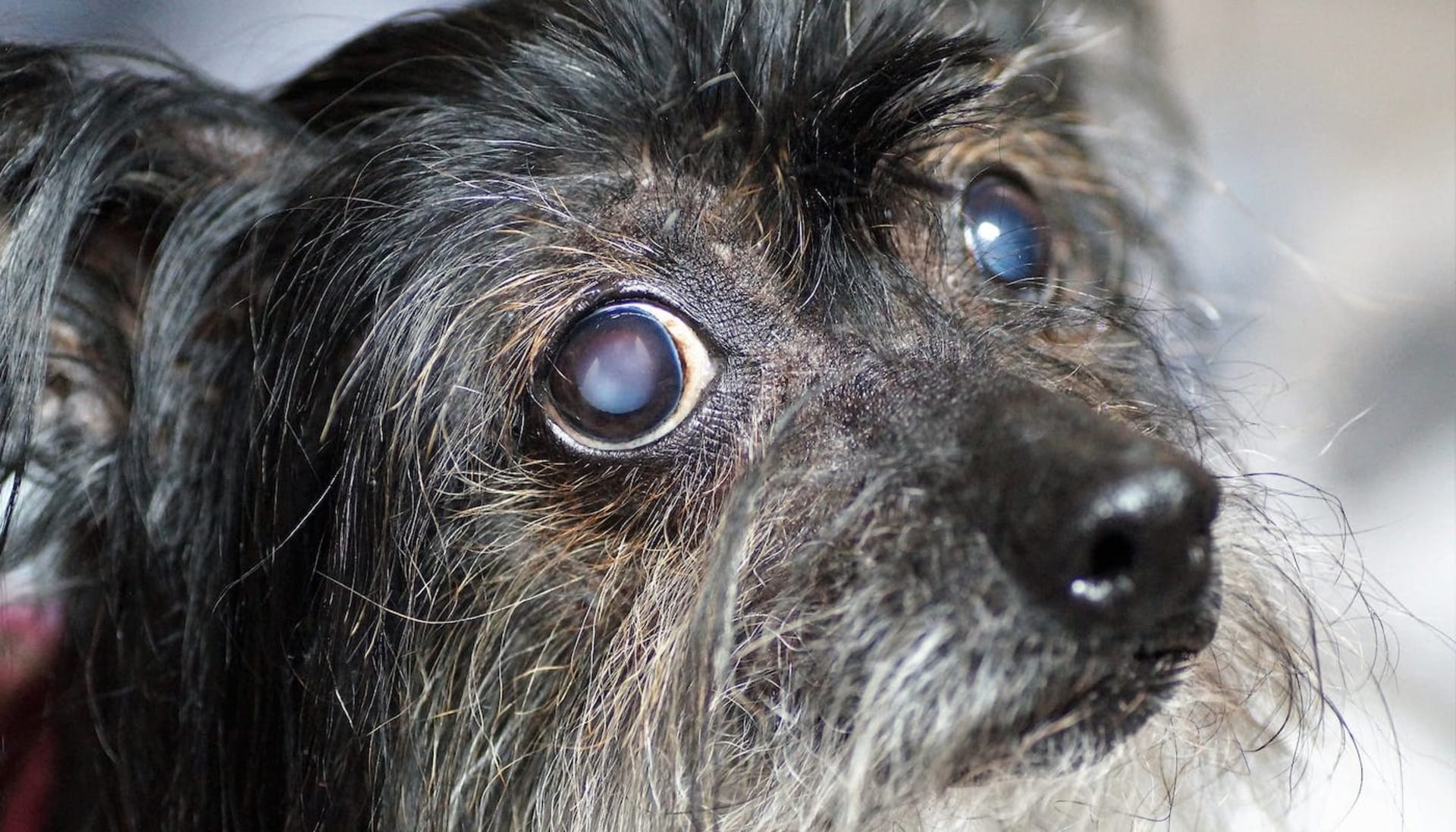
- Cataracts cause a white or gray lens and often lead to vision loss.
- Corneal ulcers make the surface of the eye cloudy and painful.
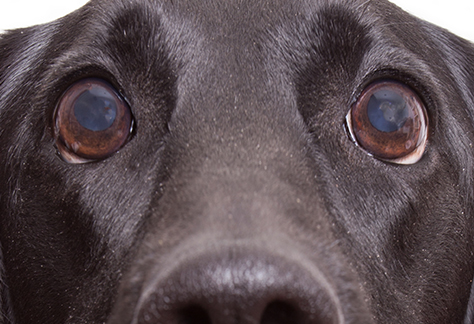
- Nuclear sclerosis is an age-related hardening of the lens that looks bluish but often leaves vision mostly intact.
- Glaucoma increases pressure inside the eye, which can make the eye cloudy and painful and can cause rapid vision loss.
- Uveitis (inflammation inside the eye) can make the eye look cloudy and red.
Veterinary studies and clinical practice show that quick diagnosis matters. The dog cloudy eyes meaning can shift from minor to urgent depending on the cause. Early vet care often preserves vision and comfort.
:strip_icc()/blind-senior-dog--portrait-1269165814-1d4c680387924a36a1d893111d991439.jpg)
Symptoms and signs to watch for
You can spot many clues at home. Knowing these signs helps you act fast and improve outcomes when exploring the dog cloudy eyes meaning.
- Cloudy, milky, bluish, or gray appearance in one or both eyes.
- Squinting, increased blinking, or pawing at the eye.
- Redness, discharge, or swelling around the eye.
- Changes in behavior such as bumping into objects or hesitance on stairs.
- Dilated or uneven pupils, or visible pain like whimpering.
If you notice any of these signs, note whether the cloudiness appears in one eye or both. One-sided cloudiness often points to trauma, infection, or early cataract. Bilateral cloudiness may suggest age changes or genetic conditions.

How veterinarians diagnose the problem
A vet uses simple tests and tools to pinpoint the dog cloudy eyes meaning. The exam is usually quick but thorough.
- Physical exam with bright light to inspect the cornea and lens.
- Fluorescein stain to detect corneal ulcers.
- Measurement of eye pressure to check for glaucoma.
- Ophthalmoscope exam to view the lens and retina.
- Blood tests, eye cultures, or imaging for deeper issues if needed.
Advanced cases may need referral to a veterinary ophthalmologist. Accurate diagnosis guides treatment plans and gives a realistic outlook on vision recovery.
Treatment options and recovery
Treatment depends on the underlying cause behind the dog cloudy eyes meaning. Options range from simple drops to surgery.
- Eye drops and ointments for infections or inflammation.
- Antibiotics or antifungals for infectious causes.
- Pain relief and pressure-lowering drugs for glaucoma.
- Surgery, such as cataract removal, for serious lens disease.
- Supportive care like lubrication and protective collars for corneal injuries.
Recovery time varies. Some dogs improve within days with medical therapy. Surgery requires more recovery and follow-up. Success depends on timely care and correct diagnosis.
Prevention and eye care at home
You can lower risk and spot problems early by caring for your dog’s eyes. Good home care helps clarify the dog cloudy eyes meaning before issues get worse.
- Keep fur trimmed around the eyes to reduce irritation.
- Clean minor discharge with a damp cloth and vet-approved wipes.
- Use sun-protective gear or limit bright light for dogs prone to eye disease.
- Keep toxic chemicals and sharp objects away from the face.
- Schedule regular vet checkups, especially for aging dogs and breeds prone to eye disease.
Training family members to watch for subtle vision changes helps catch problems sooner.
When to seek immediate veterinary care
Some signs mean you must see a vet right away to protect vision. Recognize these urgent clues to act fast.
- Sudden onset of cloudiness or rapid vision loss.
- Severe eye pain, heavy discharge, or a bulging eye.
- One eye is much more cloudy than the other after trauma.
- A dog stops eating or shows signs of severe distress tied to eye discomfort.
Delay can lead to permanent vision loss. If you suspect glaucoma or a deep corneal ulcer, emergency care is essential.

My experience with dog cloudy eyes meaning
I’ve cared for older dogs with nuclear sclerosis and puppies with early cataracts. One rescue dog arrived with a cloudy eye after a fight. Quick dye testing and antibiotics saved his cornea and eased his pain. Another senior dog had slow, bilateral clouding that proved to be nuclear sclerosis and needed only monitoring.
Lessons I learned from these cases
- Act quickly when cloudiness appears. Early vet care changes outcomes.
- Keep clear notes on onset, behavior changes, and any past eye problems.
- Trust specialists when standard treatment does not help or when vision is at risk.
Personal attention and steady follow-up make the biggest difference in caring for any dog with cloudy eyes.
Frequently Asked Questions of dog cloudy eyes meaning
What exactly does dog cloudy eyes meaning refer to?
It refers to the reasons and implications behind a visible clouding in a dog’s eye. The meaning can range from harmless age change to serious disease that threatens vision.
Can age alone cause cloudy eyes in dogs?
Yes, age can cause nuclear sclerosis, which gives a blue-gray sheen but often leaves vision intact. However, age can also coincide with cataracts or other issues that do impair sight.
Are cloudy eyes always a sign of blindness?
Not always. Some causes, like nuclear sclerosis, may not affect vision much. Other causes, like cataracts or glaucoma, can lead to significant vision loss if untreated.
How fast can cloudy eyes get worse in dogs?
Progress varies. Glaucoma and deep corneal ulcers can worsen in hours to days. Cataracts usually progress more slowly over weeks to months. Early vet care slows or stops many pathways.
Can home care reverse cloudiness in a dog’s eye?
Home care can help with minor irritations but cannot reverse true cataracts or severe lens damage. Always consult a vet before trying home remedies for eye cloudiness.
Conclusion
Understanding the dog cloudy eyes meaning helps you act with confidence. Cloudy eyes may be harmless or a sign of a serious condition. Watch for changes, seek prompt veterinary advice, and follow through with care and follow-up. Your attention can protect your dog’s vision and comfort. If you notice cloudiness, book a vet visit, ask about testing, and consider specialist care when needed. Share your experience or questions below, and subscribe for more practical pet-health guides.
