
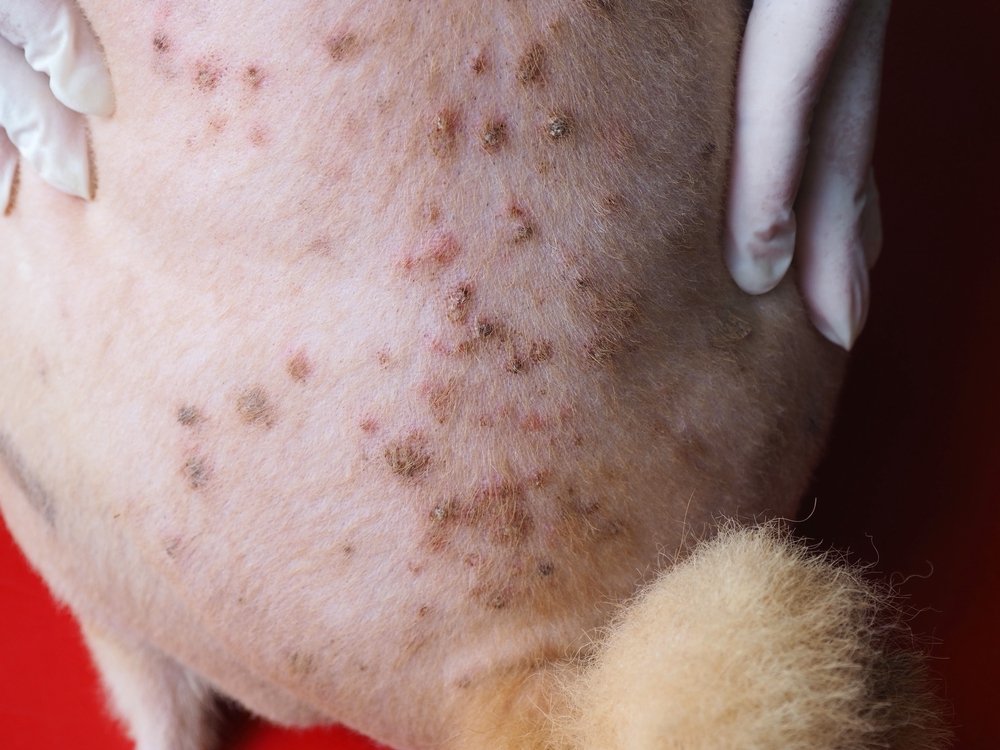
Most dog skin scabs are caused by infections, parasites, allergies, or trauma to the skin.
I have worked with dogs and their skin issues for years, and this guide explains dog skin scabs causes clearly and practically. You will learn how to spot the most common causes, how vets diagnose them, simple home care tips, and when to get professional help. Read on to understand dog skin scabs causes and feel confident helping your dog heal.

Common causes of dog skin scabs
Understanding dog skin scabs causes helps you act fast and avoid complications. Below are the most frequent reasons dogs develop scabs.
- Flea and mite infestations: Fleas and mites bite and irritate the skin, leading to itching and scabbing. Severe infestations often cause hot spots and widespread scabs.
- Bacterial and fungal infections: Bacteria or yeast can infect broken skin or persistent wounds. These infections form crusts and scabs as the immune system fights back.
- Allergies: Food, environmental allergens, and contact irritants cause itchiness. Dogs scratch and bite, which leads to scabs and secondary infections.
- Trauma and self-inflicted wounds: Scratches, cuts, or constant licking create scabs. Behavioral issues can make self-trauma worse.
- Parasites beyond fleas: Ticks and some internal parasites can lead to skin lesions and scabs.
- Autoimmune and inflammatory conditions: Conditions like pemphigus can cause scabs due to immune attacks on skin cells.
- Hormonal imbalances: Thyroid problems and Cushing’s disease change skin quality and healing, increasing scab risk.
- Foreign bodies and chemical burns: Plant awns, foxtails, or harsh chemicals can injure skin and cause scabs.
Dog skin scabs causes are often multiple. For example, allergies can lead to scratching that invites bacterial infection. Treating the visible scab without addressing the root cause rarely solves the issue.
How to recognize scabs and related symptoms
Quick, regular checks help catch problems early. Look for these signs when checking your dog’s skin.
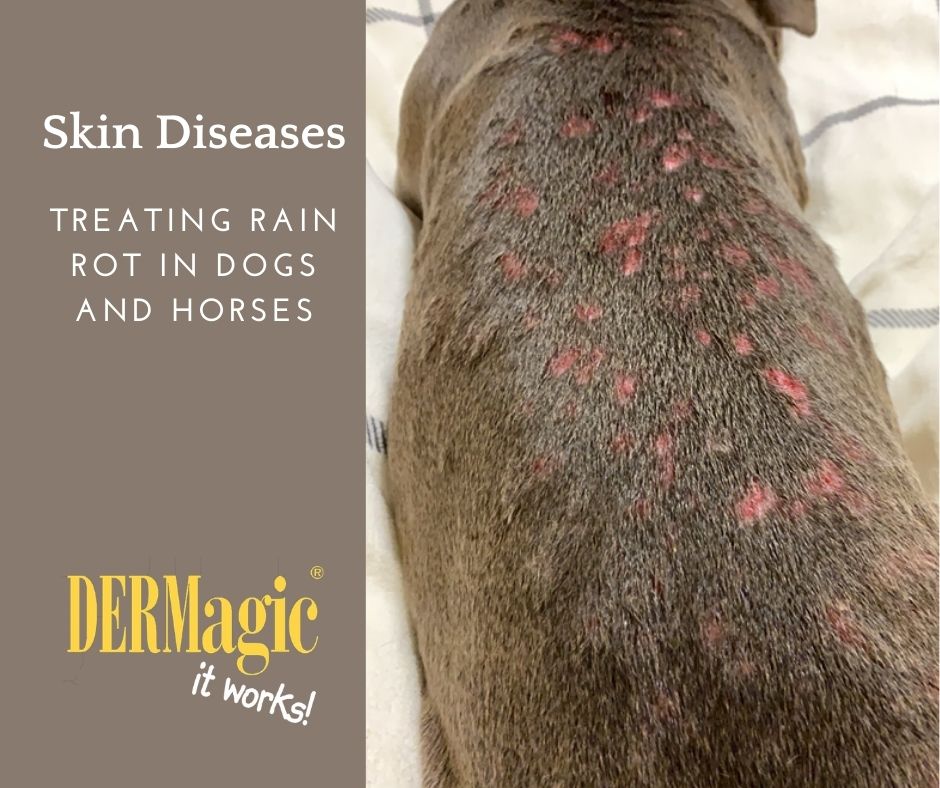
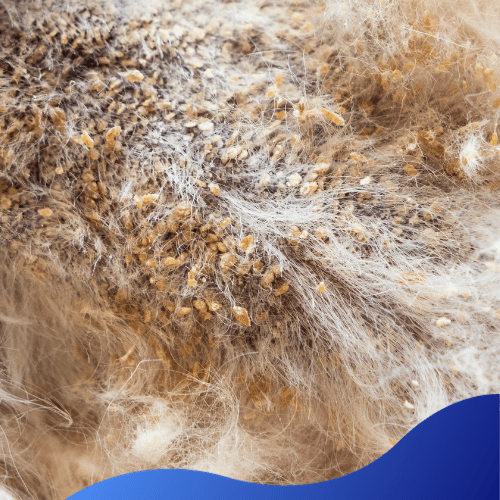
- Scabs and crusts: Dry, raised crusts that may be red or dark.
- Hair loss: Localized balding around scabbed areas.
- Itching and licking: Frequent scratching, chewing, or licking of one spot.
- Odor: A foul smell often indicates infection.
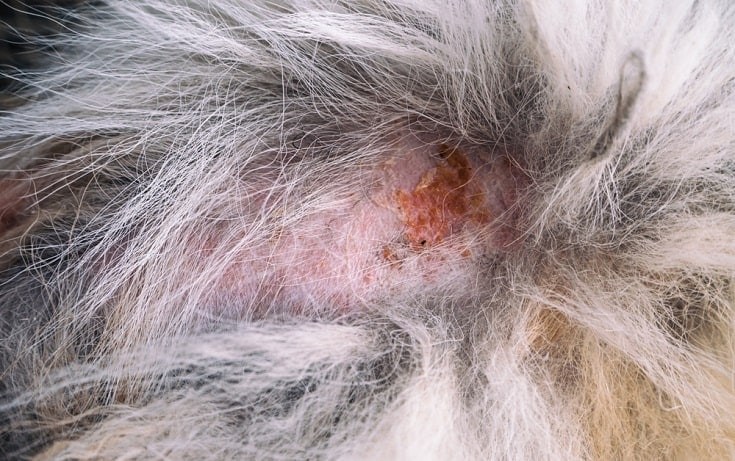
- Redness and swelling: Inflamed or warm skin near scabs.
- Discharge: Pus or serum suggests an active infection.
Not all scabs are painful, but many cause significant discomfort. Note the pattern and timing of symptoms to help your vet identify dog skin scabs causes.

Diagnosis: what your vet will check
Veterinarians use simple tests to find dog skin scabs causes. Expect a stepwise approach.
- History and exam: The vet will ask about diet, recent exposures, flea prevention, and behavior. A full skin exam follows.
- Skin scraping and microscopy: These tests find mites and some parasites.
- Cytology: Swabs or tape preps reveal bacteria or yeast under the microscope.
- Culture and sensitivity: Used when infections resist treatment or are severe.
- Allergy testing or elimination diets: These find food or environmental triggers.
- Blood tests: Check hormones and overall health to rule out systemic causes.
- Biopsy: In unclear or severe cases a small skin sample can diagnose autoimmune or cancerous lesions.
Clear, simple tests often lead to quick answers. Accurate diagnosis is key to resolving dog skin scabs causes and preventing recurrence.
Treatment options by cause
Treatment depends on the specific dog skin scabs causes. Here are common approaches matched to causes.
- Fleas and mites
- Clean the environment and use veterinarian-recommended flea control.
- Topical or oral medications remove mites and stop more bites.
- Bacterial or fungal infections
- Short courses of antibiotics or antifungals treat infection.
- Topical medicated shampoos speed healing and reduce odor.
- Allergies
- Identify triggers with diet trials or testing.
- Antihistamines, steroids, or immunotherapy manage inflammation.
- Long-term care often combines diet changes and topical therapies.
- Wounds and trauma
- Clean and protect wounds to prevent infection.
- Use e-collars to stop licking and let scabs heal.
- Autoimmune or hormonal issues
- Immune-modulating drugs or hormone therapy may be needed.
- Regular monitoring ensures safe treatment.
- Supportive care
- Omega-3 supplements and gentle skin care improve barrier function.
- Short, medicated baths and topical sprays soothe itch and lower infection risk.
Treatments often combine local care and systemic medications. Follow your vet’s dosages and finish any prescribed courses to prevent relapse.
Home care tips for faster healing
Simple steps at home can make a big difference when managing dog skin scabs causes.
- Keep the area clean: Gently wash crusts with a mild antiseptic or medicated shampoo as directed.
- Prevent licking or chewing: Use an e-collar or protective clothing.
- Trim around scabs: Carefully remove long hair near lesions to improve airflow.
- Maintain flea control: Use vet-approved products consistently.
- Monitor and document: Take photos and note changes to share with your vet.
- Offer a calming routine: Stress can worsen scratching in some dogs, so keep routines stable.
I often advise owners to photograph scabs every few days. Visual records help track progress and show patterns linked to dog skin scabs causes.

Prevention strategies
Preventing recurrence is about building healthy skin habits and avoiding triggers tied to dog skin scabs causes.
- Regular parasite control: Year-round flea and tick prevention reduces many causes.
- Balanced diet: High-quality food supports skin health and immune function.
- Grooming routine: Routine baths and brushing remove irritants and detect problems early.
- Avoid harsh chemicals: Use dog-safe products and avoid frequent human shampoos.
- Allergy management: If your dog has known allergies, reduce exposure and consider immunotherapy.
Small, consistent steps reduce flare-ups and lower the chance of scabs returning.

When to see a vet urgently
Some signs mean you should seek immediate care for dog skin scabs causes.
- Rapid spread of scabs or swelling
- Heavy discharge, bleeding, or severe odor
- Fever, lethargy, or loss of appetite
- Large areas of hair loss and open wounds
- Signs of pain or inability to stop licking
These signs can indicate severe infection or systemic disease. Quick treatment prevents complications.

Personal experience and lessons learned
I once treated a Labrador with recurring scabs on the belly. The owner used over-the-counter sprays, but the problem kept returning. After tests we found a flea allergy plus a secondary Staph infection. Targeted flea control and a short antibiotic course cleared the scabs in two weeks. Lesson learned: treat both the cause and the infection. Also, document changes and follow up with your vet. Small misses, like inconsistent flea prevention, often explain chronic scabs.

Frequently Asked Questions of dog skin scabs causes
What causes scabs on a dog’s skin?
Scabs form when skin is broken and begins to heal. Common causes include parasites, infections, allergies, and trauma.
Can allergies alone cause scabs?
Yes. Allergies make dogs itch and bite, which breaks the skin and leads to scabs and secondary infections.
How long do scabs take to heal?
Minor scabs often heal in one to two weeks with proper care. Infected or deep wounds can take longer and may need veterinary treatment.
Are scabs contagious to other pets?
Some causes, like certain mites or fungal infections, can spread to other pets. Keep affected animals separate until a vet confirms the cause.
Can I treat scabs at home without a vet?
Mild scabs from minor injuries may heal with cleaning and prevention of licking. Persistent, spreading, or painful scabs should be evaluated by a vet.
Do scabs mean my dog has fleas?
Not always, but fleas are a common cause. If scabs are near the tail base or flank and your dog hides or chews, fleas are likely.
Conclusion
Dog skin scabs causes range from simple wounds to complex medical issues. The best approach is a careful exam, accurate diagnosis, and targeted treatment. Start with parasite control, clean care at home, and vet-guided therapy when needed. Take action early, document changes, and stay consistent with prevention to reduce future flare-ups. If you found this guide helpful, try the steps for your dog and share your results or questions in the comments.
