
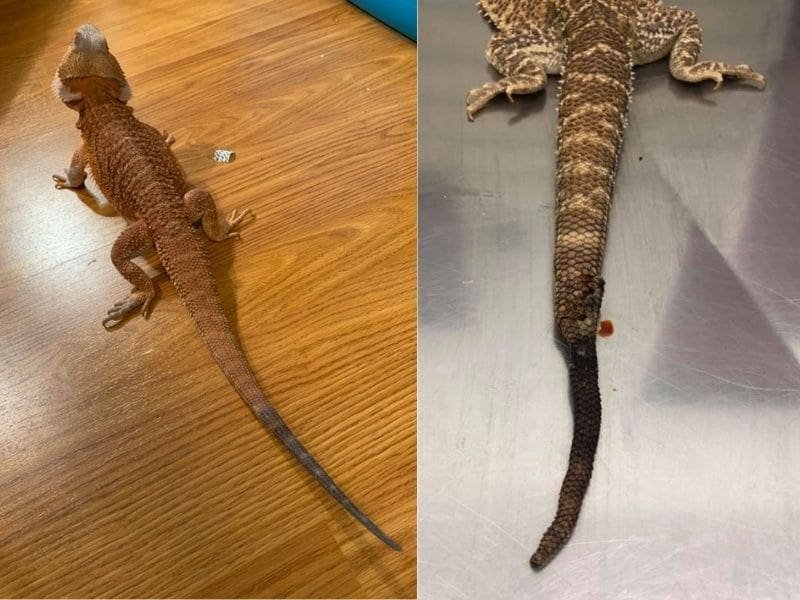
Reptile tail rot is a progressive tissue death in the tail caused by injury, infection, or poor care.
I’ve treated reptile tail rot in captive lizards and snakes for years, so I know how fast it can worsen and how stressful it is for owners. This article explains what reptile tail rot looks like, why it happens, how veterinarians diagnose it, and which treatments work best. You’ll get clear prevention steps, practical home-care tips, and real-life lessons to protect your pet and spot trouble early.

What is reptile tail rot?
Reptile tail rot is tissue damage that starts at the tip and moves inward. It often begins as discoloration, swelling, or a foul smell. Two main types exist:
- Dry tail rot: tissue dies slowly, dries, and turns dark.
- Wet tail rot: infection causes pus, moisture, and rapid breakdown.
Left untreated, tail rot can reach bone and spread systemically. Early detection improves outcomes and can prevent surgery or permanent loss.
Causes and risk factors
Tail rot occurs when tail tissue loses blood flow or becomes infected. Common causes include:
- Trauma from cage items, fights, or falls that damage the tail.
- Improper temperature and humidity that weaken immune defenses.
- Unsanitary enclosures leading to bacterial or fungal infection.
- Tight tails from shed problems or retained shed cutting off circulation.
- Metabolic or systemic illness that reduces healing, such as poor nutrition.
Multiple factors often combine. For example, a small tail injury in a cold, dirty cage is a perfect setup for reptile tail rot.

Signs and symptoms
Early recognition saves tails. Watch for:
- Color change: tail tip turns pale, gray, brown, or black.
- Texture change: soft, mushy, or dry and brittle tissue.
- Odor: a strong, unpleasant smell signals infection.
- Wetness or discharge: pus or bloody fluid indicates active infection.
- Behavioral signs: lethargy, loss of appetite, or the pet biting/picking the tail.
Examine the tail gently every week during handling and after sheds. If you see any of these signs, act quickly.

Diagnosis and tests
A veterinarian will do a thorough exam and may use several tests:
- Physical exam to check extent, smell, and pain response.
- Skin cytology or swab to identify bacteria or fungi.
- X-rays to see if bone (osteomyelitis) is involved.
- Bloodwork to evaluate overall health and infection markers.
Accurate diagnosis guides treatment. For example, bone involvement often requires surgery and longer antibiotic therapy.

Treatment options
Treatment depends on severity and cause. Options include:
- First aid at home for very early cases: clean gently with saline, keep cage clean, and isolate wound from substrate.
- Veterinary medical therapy: targeted antibiotics or antifungals based on culture; pain control; fluids for sick reptiles.
- Surgical care: debridement of dead tissue or partial tail amputation if necrosis or bone infection is present.
- Supportive care: improved husbandry, heat support, and nutrition to boost healing.
Do not attempt deep debridement or remove large portions of tail at home. Improper treatment can worsen infection. Follow your vet’s aftercare plan carefully.
Prevention and husbandry tips
Preventing reptile tail rot is easier than treating it. Focus on:
- Proper enclosure setup: safe decor, secure hides, and non-abrasive substrate.
- Optimal temperatures and humidity for your species to support circulation and immune function.
- Regular cleaning and disinfection to reduce pathogens.
- Careful handling to avoid tail injury, especially with delicate species.
- Monitoring shed cycles and assisting if shed is retained around tail tips.
Routine health checks and immediate attention after injuries reduce the risk of chronic problems.

My experience and practical lessons
I once had a bearded dragon with a small black spot at the tail tip. I treated it quickly with a vet visit, warm supportive care, and a short antibiotic course. We avoided surgery and kept the dragon on a clean paper-towel substrate during recovery. Key lessons:
- Act early — small changes can hide deep problems.
- Keep a basic first-aid kit: saline, sterile swabs, and a phone number for an exotic vet.
- When in doubt, call your vet — waiting makes treatment harder and more costly.
Those steps saved the tail and my peace of mind. The experience taught me that vigilance and good husbandry are the best defenses.
Frequently Asked Questions of reptile tail rot
What causes reptile tail rot to start?
Tail rot usually starts from an injury, poor circulation, or infection combined with suboptimal temperature or hygiene. These factors let bacteria or fungi invade the damaged tissue.
Can tail rot be cured without a vet?
Mild early cases sometimes heal with prompt cleaning, improved husbandry, and close monitoring, but vet advice is recommended to avoid missing bone infection. Self-treatment risks worsening the condition.
How will the vet treat advanced tail rot?
Treatment can include antibiotics, wound debridement, and partial tail amputation when tissue or bone is dead. Post-surgery care and supportive therapy help recovery.
Is tail amputation painful for reptiles?
Veterinarians provide pain relief and sedation or anesthesia during amputation. Reptiles can recover well when given proper post-operative care.
How long does recovery take after treatment?
Recovery varies: mild cases may heal in weeks, while surgical cases can take several weeks to months with follow-up care and wound checks.
Can tail rot spread to other body parts?
If infection enters the bloodstream, it can become systemic and affect other organs. Early veterinary treatment lowers that risk.
Conclusion
Reptile tail rot is a common but preventable condition that responds best to early action, correct husbandry, and professional care when needed. By watching for color and texture changes, keeping enclosures clean and optimized, and seeking veterinary help promptly, you can protect your pet and avoid severe outcomes. Take action at the first sign of trouble, set up a safe habitat, and reach out to your exotic vet for guidance — your reptile will thank you.
