
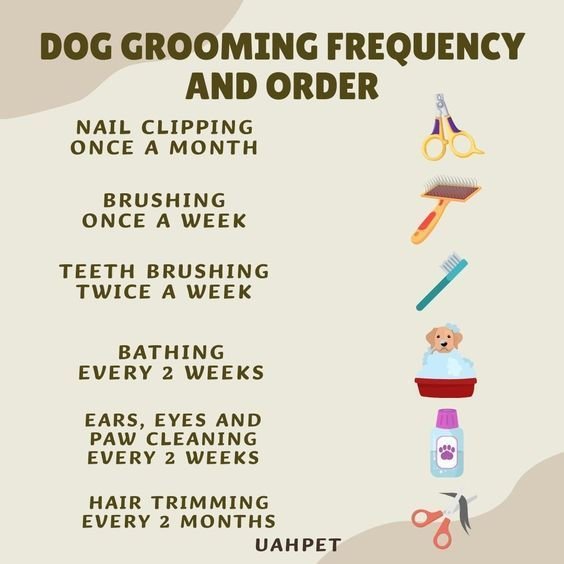
Dog grooming frequency is not the same for every dog. A short-haired indoor dog may need simple weekly care, while a long-haired breed may need daily brushing and professional grooming every month. The right routine depends on your dog’s coat, lifestyle, age, and health.
After years of observing different coat types and grooming needs, professional groomers often find that consistency matters more than following a strict calendar. A small amount of regular care can prevent painful mats, dirty ears, overgrown nails, and skin issues before they become serious problems.
What Is the Ideal Dog Grooming Frequency?
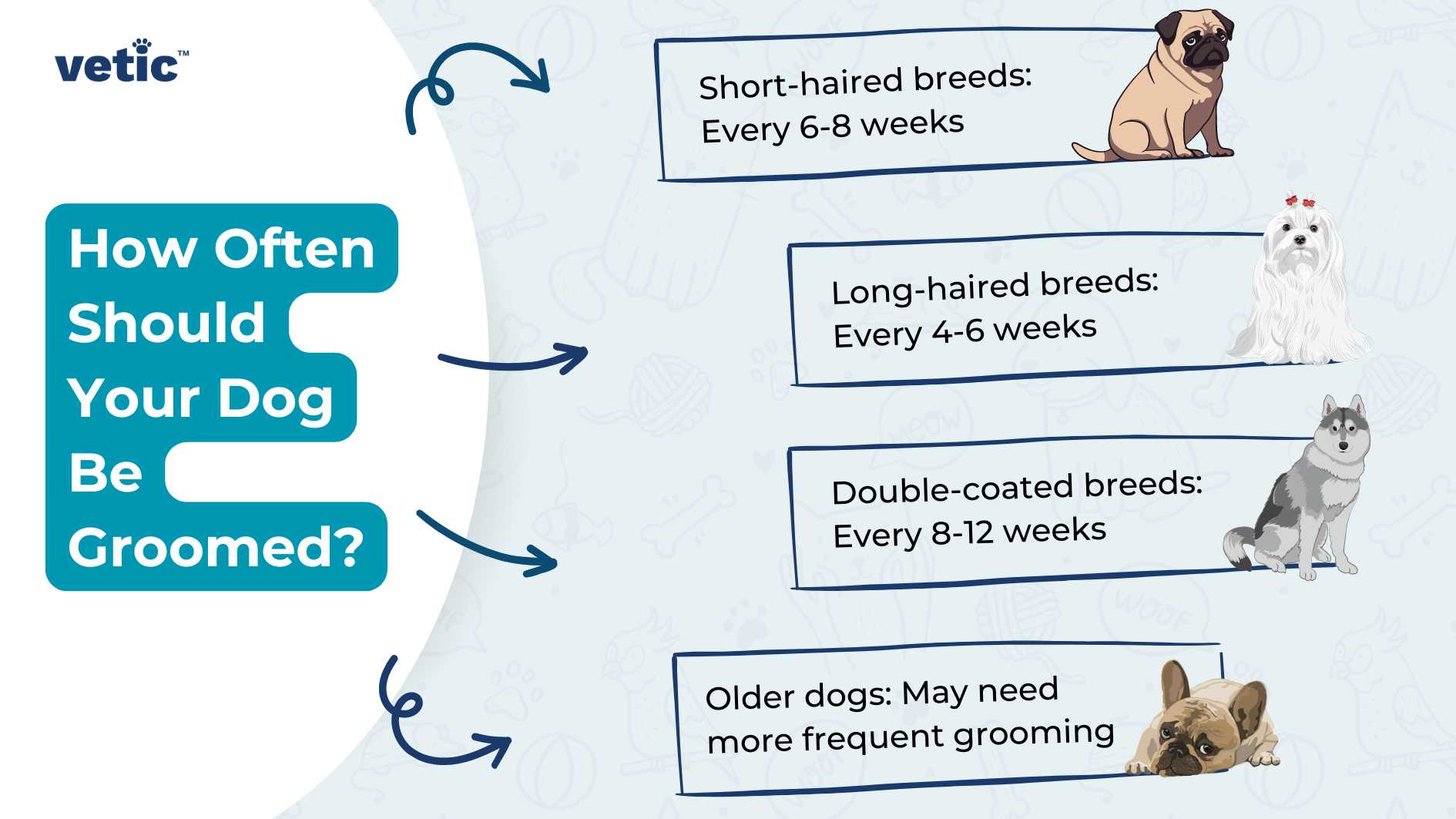
The ideal dog grooming frequency depends on several factors, including breed, coat length, shedding patterns, and daily activities. There is no single schedule that works for every dog because each coat type handles dirt, moisture, and tangles differently.
For many American pet owners, a grooming routine includes home care between professional visits. Brushing, checking the ears, cleaning paws, and trimming nails help maintain your dog’s comfort and appearance.
- ✦ Short-haired dogs
Many short-coated dogs need brushing once or twice a week and professional grooming only when needed.
- ✦ Medium-coated dogs
These dogs often benefit from brushing several times a week and grooming appointments every 6 to 8 weeks.
- ✦ Long-haired dogs
Long coats usually require frequent brushing and professional care every 4 to 6 weeks to prevent mats.
Why Grooming Needs Change Over Time
A puppy, adult dog, and senior dog may all need different grooming routines. Puppies may need gentle training sessions, while older dogs may require shorter and more careful grooming because of joint or skin sensitivity.
Seasonal changes also affect dog grooming frequency. Many dogs shed more during weather changes, which may require extra brushing during those periods.
Dog Grooming Frequency Based on Coat Type
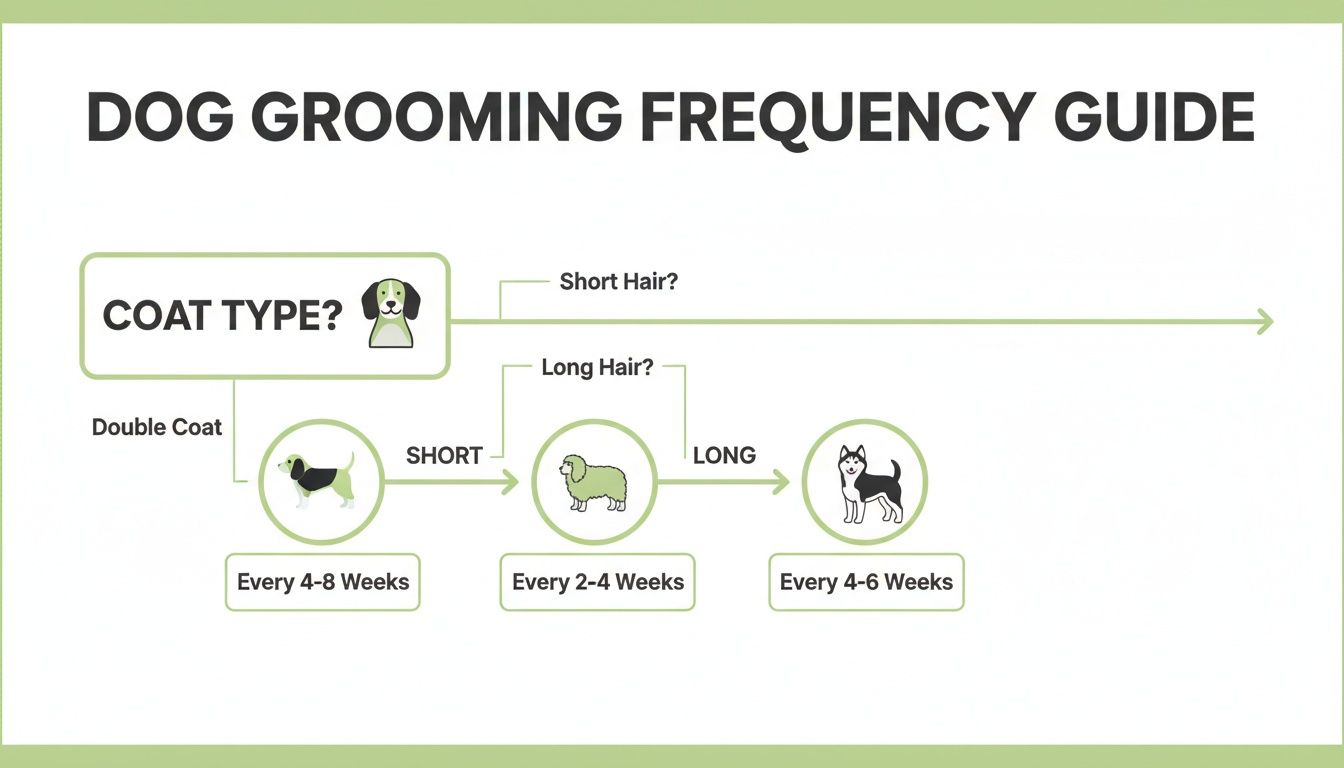
A dog’s coat type is one of the biggest factors that determines grooming frequency. Fur texture, thickness, and length influence how quickly dirt builds up and how easily mats form.
Understanding your dog’s coat can help you create a practical grooming plan instead of waiting until problems appear.

- ✦ Smooth coats
Breeds with smooth coats usually need weekly brushing to remove loose hair and keep the skin healthy.
- ✦ Double coats
Dogs with thick undercoats often need more brushing during shedding seasons to remove loose fur.
- ✦ Curly or wool coats
Curly coats can mat easily and often require frequent brushing and scheduled professional grooming.
Examples of Different Coat Care Needs
A Labrador Retriever may need regular brushing but fewer haircuts, while a Poodle or Goldendoodle often needs professional trimming because their hair keeps growing.
Many owners learn that coat care is easier when they follow a routine instead of waiting for visible problems.
How Often Should You Brush Your Dog?
Brushing is one of the most important parts of dog grooming frequency because it supports healthy skin and prevents tangled fur. The correct brush and routine depend on your dog’s coat type.
Regular brushing also gives owners a chance to notice changes such as dry skin, lumps, parasites, or unusual shedding.
- ✦ Daily brushing
Recommended for many long-haired breeds and dogs that develop mats quickly.
- ✦ Weekly brushing
Works well for many short and medium-coated dogs with normal shedding.
- ✦ Extra brushing periods
Increase brushing during heavy shedding seasons or after outdoor activities.
Bathing Schedule and Dog Grooming Frequency
Bathing is another important part of dog grooming frequency, but too many baths can remove natural oils from the skin. Most dogs do well with baths every few weeks or when they become dirty.
Dogs that swim often, play outdoors, or have skin conditions may need a different bathing schedule based on veterinary advice.

- ✦ Normal bathing routine
Many dogs need a bath about once every month or two depending on their lifestyle.
- ✦ Active outdoor dogs
Dogs that spend time outside may need more frequent cleaning.
- ✦ Sensitive skin dogs
Use gentle products and follow professional recommendations.
Professional Grooming Visits: How Often Are They Needed?
Professional grooming appointments help maintain areas that are difficult to manage at home. Groomers can trim coats, clean difficult areas, and identify possible skin or coat concerns.
The right dog grooming frequency for professional visits depends on your dog’s breed and haircut style. Dogs with continuously growing hair often need more frequent appointments than dogs with natural coats.

- ✦ Every 4 to 6 weeks
Common for breeds that need regular haircuts and coat shaping.
- ✦ Every 6 to 12 weeks
May work for dogs with easier coats and simple grooming needs.
Signs Your Dog Needs Grooming Soon
Visible mats, strong odors, dirty ears, long nails, and excessive shedding can show that your dog needs attention. Waiting too long can make grooming stressful and uncomfortable.
A regular schedule helps your dog become familiar with grooming and reduces anxiety during appointments.
Common Grooming Mistakes That Affect Your Dog’s Health
Many grooming problems happen because owners wait until the coat looks dirty. Grooming is not only about appearance. It supports comfort, hygiene, and early detection of health concerns.
A balanced dog grooming frequency plan combines home maintenance with professional care when needed.
- ✦ Ignoring nails
Long nails can affect walking comfort and may change a dog’s posture.
- ✦ Skipping ear checks
Regular ear checks help spot dirt, moisture, or irritation early.
- ✦ Using wrong tools
The wrong brush or products may damage the coat or irritate the skin.
