
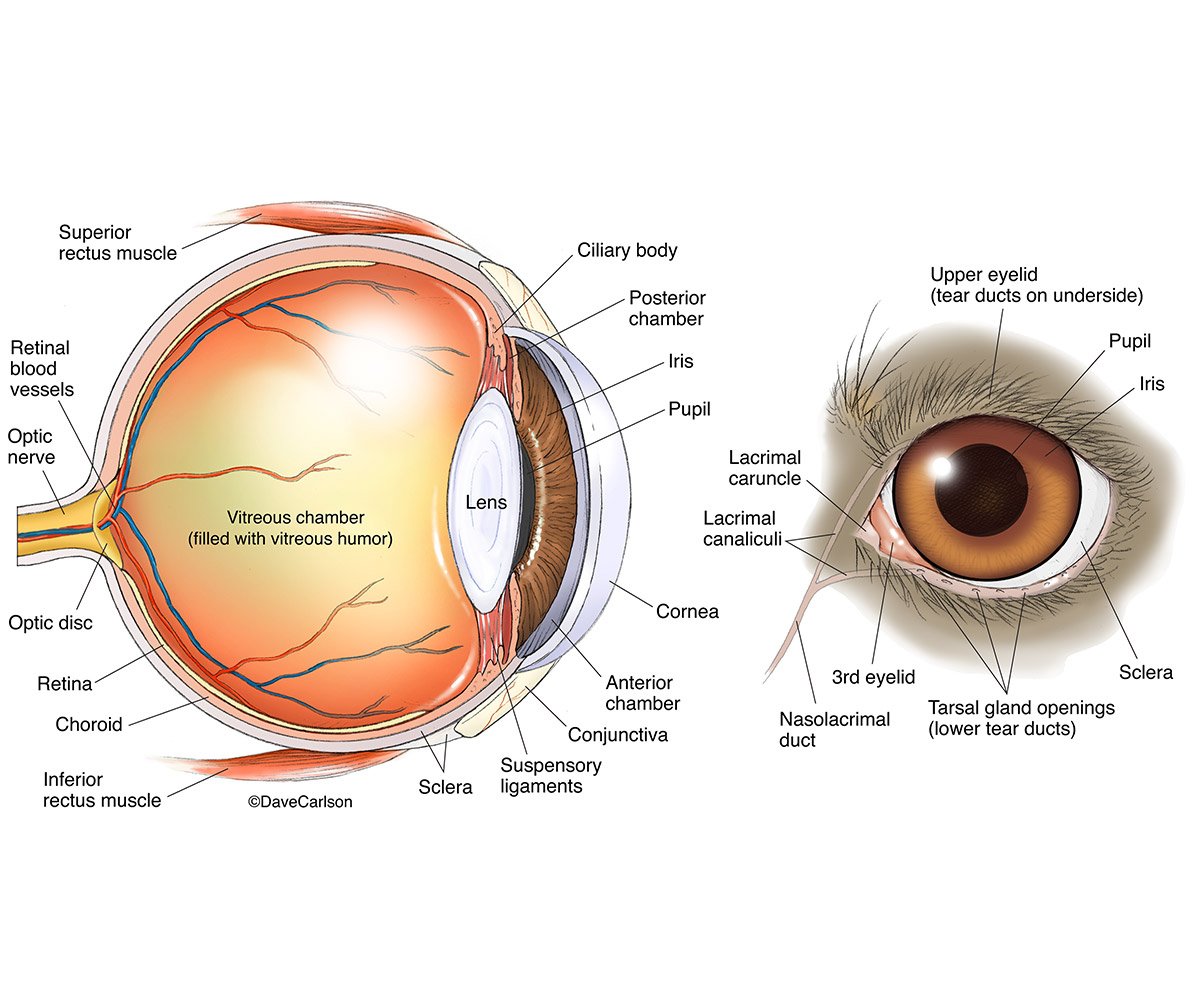
Dog eye anatomy is a fascinating system built for survival, communication, and movement. A dog’s eyes help them track objects, judge distance, recognize people, and explore their surroundings. Each small structure has a specific role that keeps vision clear and healthy.
From my experience studying pet health topics, many dog owners focus only on visible problems like redness or discharge. However, learning the basic parts of the eye makes it easier to understand what is normal and what may need veterinary attention.

Understanding the Basic Structure of Dog Eye Anatomy
The dog eye anatomy is similar to the human eye, but dogs have special features that support their hunting instincts and night vision. The eye collects light, focuses images, and sends information to the brain through complex pathways.
A healthy dog eye looks clear and bright. The surface should be smooth, the pupil should react to light, and the surrounding tissues should appear clean without unusual swelling.

- ✦ Cornea
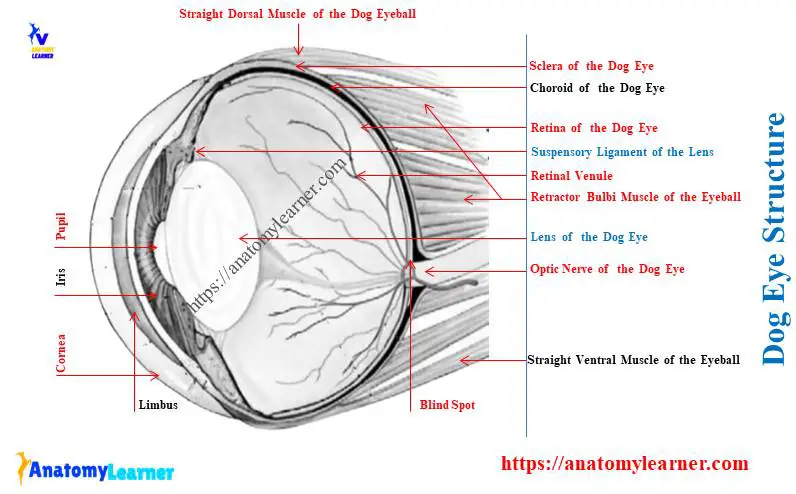
The cornea is the clear outer layer that protects the eye and helps focus incoming light.
- ✦ Lens
The lens changes shape to help the dog focus on objects at different distances.
- ✦ Retina
The retina contains light-sensitive cells that convert light into signals for the brain.
Why Dog Eyes Are Different From Human Eyes
Dogs rely more on movement detection and low-light vision than humans do. Their eyes contain a reflective layer called the tapetum lucidum, which helps them see better in dim conditions.
This layer is also why many dogs’ eyes appear to glow when light hits them at night.
- ✦ Night vision support
The tapetum lucidum reflects light back through the retina and improves vision in low light.
The Main Parts of a Dog Eye and Their Functions
Every part of the eye has a role in creating vision. Problems in one area can affect the entire system because the structures work closely together.
Learning these parts helps dog owners understand common veterinary terms during eye exams.
- ✦ Iris and Pupil
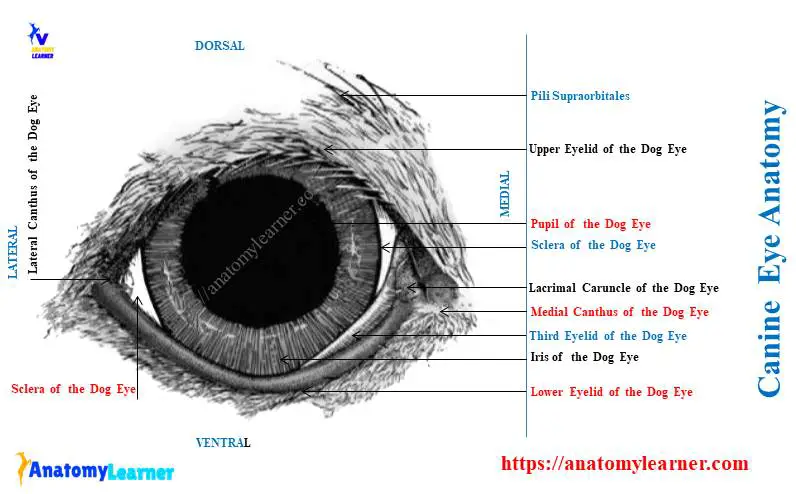
The iris controls the size of the pupil and regulates how much light enters the eye.
- ✦ Sclera
The sclera is the white outer layer that gives the eye strength and protection.
- ✦ Optic Nerve
The optic nerve carries visual information from the eye to the brain.
Protective Structures Around a Dog’s Eye
Dog eye anatomy includes more than the eyeball itself. The surrounding structures protect the eye from dust, injury, and dryness.
These protective parts are important because dogs often use their noses close to the ground, where debris can easily reach their eyes.
- ✦ Eyelids
Eyelids spread tears across the eye surface and protect against foreign objects.
- ✦ Third Eyelid
The third eyelid is a thin protective membrane that helps keep the eye moist and clean.
- ✦ Tear System
Tears provide moisture and help remove small particles from the eye surface.
How Tears Support Eye Health
Tears are essential for maintaining a smooth corneal surface. They contain water, oils, and protective substances that support healthy eyes.
Reduced tear production can cause discomfort and may lead to conditions such as dry eye.
- ✦ Moisture balance
Healthy tears prevent the eye from becoming dry and irritated.
How Dogs See the World Through Their Eyes
Dog vision works differently from human vision. Dogs are excellent at detecting movement and seeing in lower light, but they do not see the same range of colors that humans do.
The dog eye anatomy supports their natural behaviors, including tracking, exploring, and reading body language.

- ✦ Color vision
Dogs mainly see shades of blue and yellow because they have fewer color receptors than humans.
- ✦ Motion detection
Dogs are highly skilled at noticing moving objects.
Common Dog Eye Problems Related to Eye Anatomy
Changes in dog eye anatomy or eye function can cause visible symptoms. Some problems are minor, while others need quick veterinary care.
Owners should watch for changes because early treatment often improves outcomes.
- ✦ Cataracts
Cataracts cause cloudiness in the lens and may reduce vision.
- ✦ Glaucoma
Glaucoma occurs when pressure builds inside the eye and can damage vision.
- ✦ Eye infections
Infections may cause redness, discharge, swelling, or discomfort.
Signs Your Dog May Need an Eye Exam
A veterinarian should check any sudden eye changes. Pain, squinting, cloudy eyes, or unusual discharge can signal a problem.
Routine exams are especially important for older dogs and breeds that are more likely to develop eye conditions.
- ✦ Warning signs
Look for rubbing the eyes, redness, swelling, or changes in vision.
