
A well-planned dog walking routine is one of the simplest ways to keep your dog healthy and happy. In the United States, many dogs spend long hours indoors while their owners work, making regular walks an important part of daily care.
From working with different dogs and studying common walking habits, one lesson stands out: consistency matters more than distance. A calm, predictable walk can reduce boredom, improve manners, and create a stronger bond between a dog and its owner.

Why a Dog Walking Routine Is Important
Dogs need movement every day to stay physically and mentally balanced. A regular dog walking routine gives your pet a chance to exercise, explore new smells, and release extra energy.
Without enough activity, some dogs may develop unwanted habits like chewing furniture, barking often, or digging. Daily walks provide structure and help dogs understand when it is time to be active and when it is time to rest.
- ✦ Physical fitness
Walking supports healthy muscles, joints, weight control, and overall body strength.
- ✦ Mental stimulation
New sights and smells during walks keep your dog’s brain active and engaged.
- ✦ Better behavior
Regular exercise can help reduce stress, boredom, and excess energy.
How Walking Improves Your Dog’s Daily Life
A predictable routine helps dogs feel secure. They learn what to expect each day, which can lower anxiety and make training easier.
Many professional trainers recommend combining walking with simple commands like sit, wait, and heel. This turns a normal walk into a learning experience.
How Often Should You Walk Your Dog Each Day?
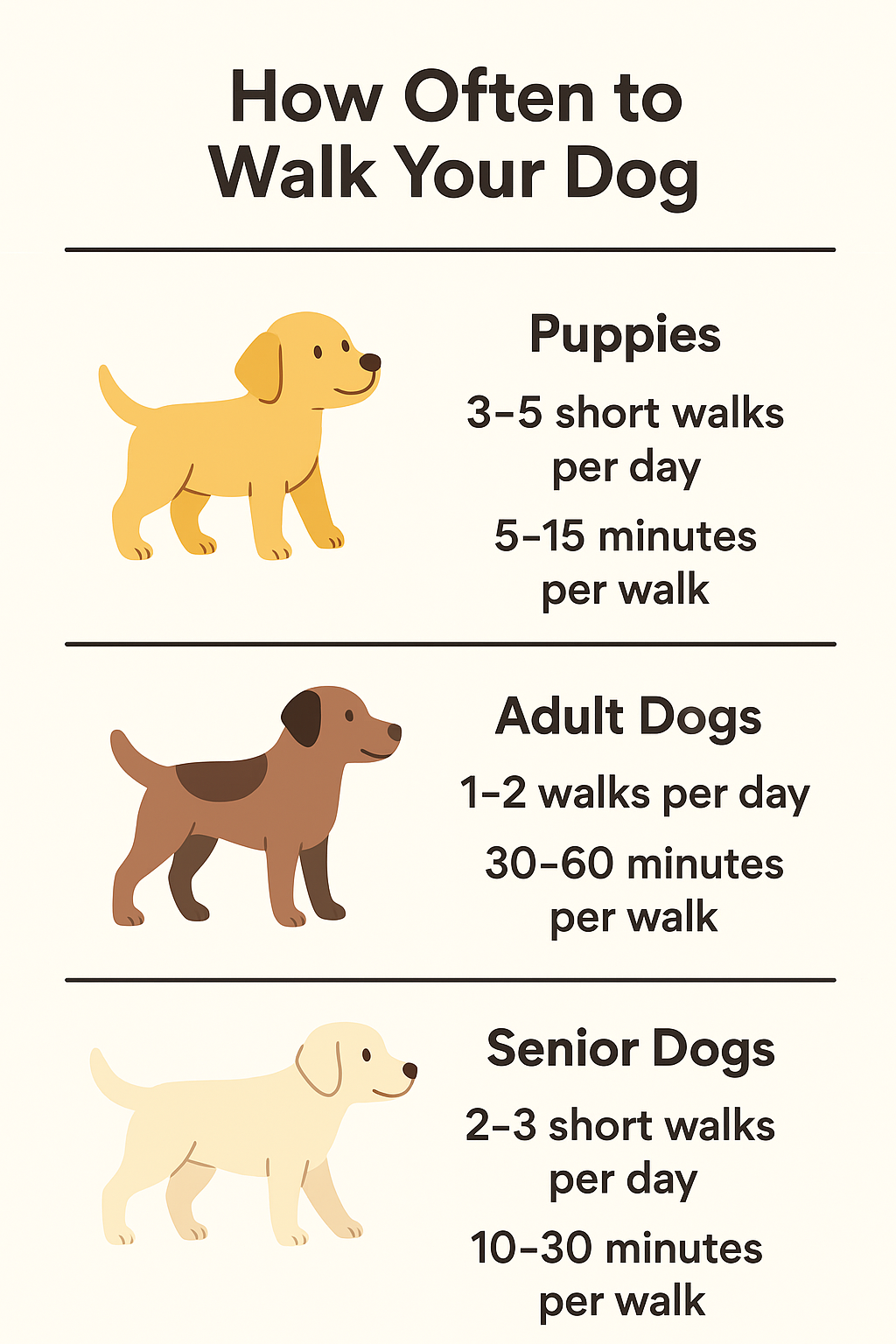
The ideal dog walking routine depends on your dog’s breed, age, size, and energy level. There is no single schedule that works for every dog.
Active breeds may need longer walks or extra play sessions, while smaller or older dogs may do better with shorter, gentle walks. Paying attention to your dog’s behavior is one of the best ways to adjust the routine.
- ✦ High-energy dogs
Many active dogs benefit from multiple walks each day combined with games or training.
- ✦ Adult dogs
Most healthy adult dogs do well with one or two consistent walks daily.
- ✦ Senior dogs
Older dogs often need shorter walks with more breaks and careful monitoring.
Example Daily Walking Schedule
A simple schedule for many households is a morning walk before work, a short bathroom break during the day, and an evening walk after dinner.
The goal is not to create a strict rule. The goal is to build a repeatable dog walking routine that fits both your dog’s needs and your lifestyle.
- ✦ Morning walk
Helps your dog start the day with movement and mental stimulation.
- ✦ Evening walk
Provides exercise and helps your dog relax before bedtime.
Creating the Perfect Dog Walking Routine for Your Lifestyle
The best routine is one you can follow consistently. Busy American households often have changing schedules, so planning realistic walk times makes success easier.
Start with a simple plan and slowly increase walking time if your dog needs more activity. A routine should support your life, not create stress.

- ✦ Choose consistent times
Dogs respond well to predictable patterns because they learn daily expectations.
- ✦ Prepare walking supplies
Keep a leash, waste bags, water, and treats ready to make walks easier.
- ✦ Track progress
Notice changes in energy, behavior, and comfort to improve your routine.
Adjusting Walks for Different Weather
Weather affects your dog’s safety and comfort. Hot pavement, freezing temperatures, and storms may require changes to your normal schedule.
During extreme weather, shorter walks and indoor activities can help maintain your dog’s routine without risking health problems.
- ✦ Hot weather
Walk during cooler parts of the day and check pavement temperature.
- ✦ Cold weather
Protect dogs with thin coats and keep outdoor time reasonable.
Dog Walking Routine Tips for Puppies and Young Dogs
Puppies need a careful approach because their bodies and attention spans are still developing. Short walks combined with training sessions are usually more helpful than long walks.
A puppy’s first walking experiences shape future behavior. Positive experiences with a leash, people, and new environments can build confidence.
- ✦ Start slowly
Allow puppies to explore and learn without forcing long distances.
- ✦ Reward good behavior
Use praise and treats when your puppy walks calmly.
- ✦ Practice leash skills
Teach your puppy that walking beside you is rewarding.
How to Make Your Dog Walking Routine More Enjoyable
A walk should be more than just physical exercise. Dogs use walks to explore their environment, practice skills, and spend quality time with their owners.
Changing routes, allowing sniff breaks, and adding simple games can make daily walks more interesting.

- ✦ Allow sniffing time
Sniffing gives dogs important mental stimulation and lets them process their surroundings.
- ✦ Use training moments
Practice simple commands during walks to build focus and trust.
- ✦ Explore safely
Choose safe paths with suitable surfaces and limited hazards.
Common Dog Walking Mistakes to Avoid
Some owners focus only on distance and forget that quality matters. A rushed walk may not provide the mental benefits dogs need.
Another common mistake is ignoring signs of tiredness. Dogs communicate through body language, so owners should watch for discomfort.
- ✦ Too much exercise
Overworking a dog can lead to fatigue or joint strain.
- ✦ Skipping routine
Irregular walks may increase boredom and unwanted behavior.
