
Finding the right dog walking duration is one of the most important parts of building a healthy routine for your pet. A walk gives dogs exercise, fresh air, training practice, and time to explore their environment.
From my experience studying dog care routines, the best walking plan is not based on one fixed number. A small senior dog and a young working breed may have very different needs, even if they live in the same home.
What Is the Ideal Dog Walking Duration?
The ideal dog walking duration changes from dog to dog. Many adult dogs do well with a daily walk between 30 and 60 minutes, while some active breeds may need more time.
A useful approach is to watch your dog’s behavior before and after walks. A dog that feels calm, sleeps well, and stays healthy is often receiving the right amount of activity.

- ✦ Low energy dogs
Older dogs or calm breeds may enjoy short walks of 15 to 30 minutes with a slower pace.
- ✦ Average adult dogs
Many healthy adult dogs benefit from 30 to 60 minutes of walking each day.
- ✦ High energy dogs
Working and sporting breeds may need longer walks plus play or training activities.
Dog Walking Duration by Age Group
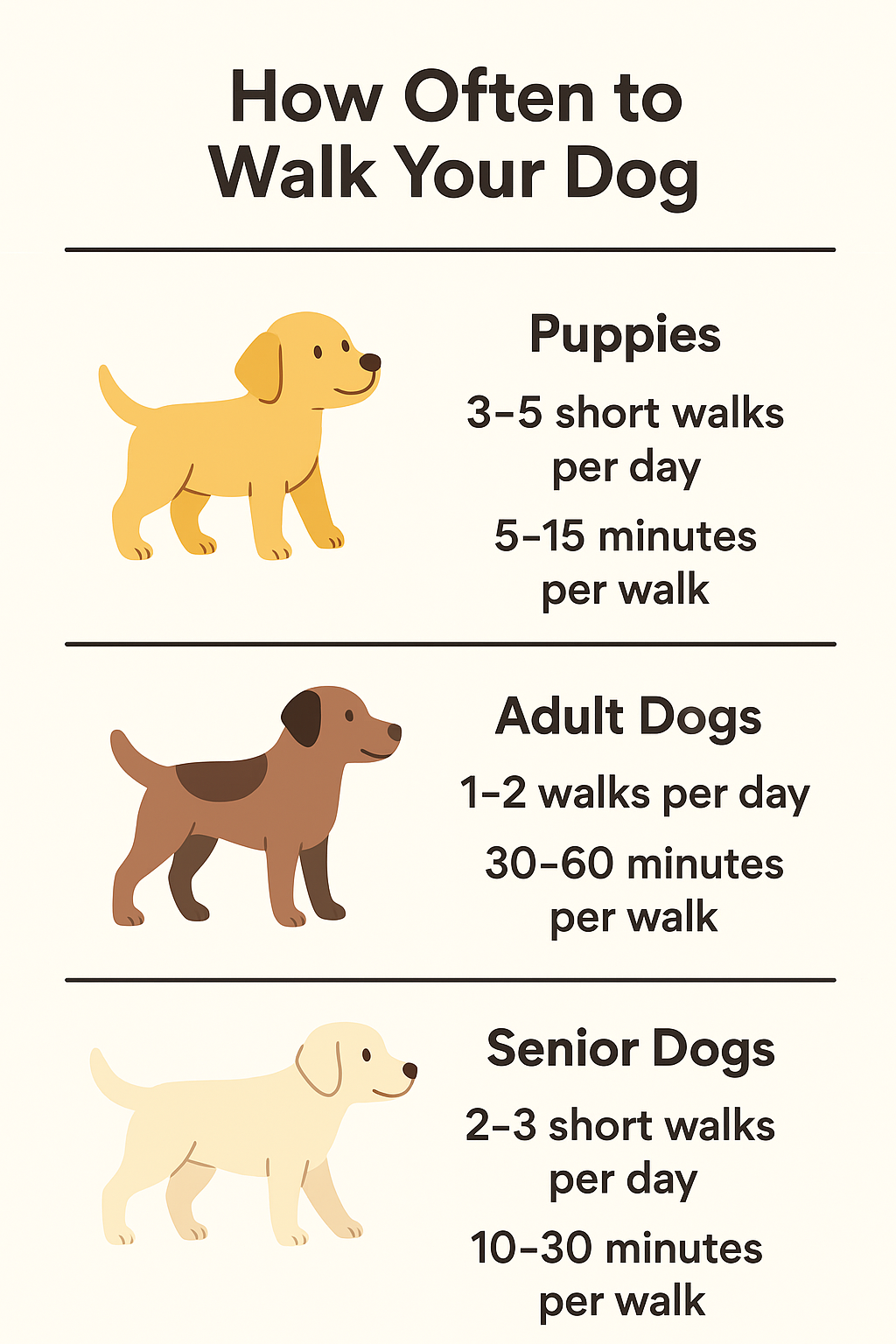
A dog’s age has a major impact on the right walking length. Puppies, adult dogs, and senior dogs all have different exercise limits.
Pushing a young puppy or an older dog too hard can create stress on growing bones or aging joints. The goal is steady movement that supports health.

- ✦ Puppies
Young puppies usually need short walks with breaks because their bodies are still developing.
- ✦ Adult dogs
Healthy adults often handle longer walks and benefit from regular daily activity.
- ✦ Senior dogs
Older dogs may need shorter walks at a comfortable pace with more rest.
How to Adjust Walk Time as Dogs Grow
Increase walking time slowly as puppies mature. For senior dogs, focus on comfort, consistency, and joint support rather than long distances.
How Breed and Size Affect Dog Walking Duration
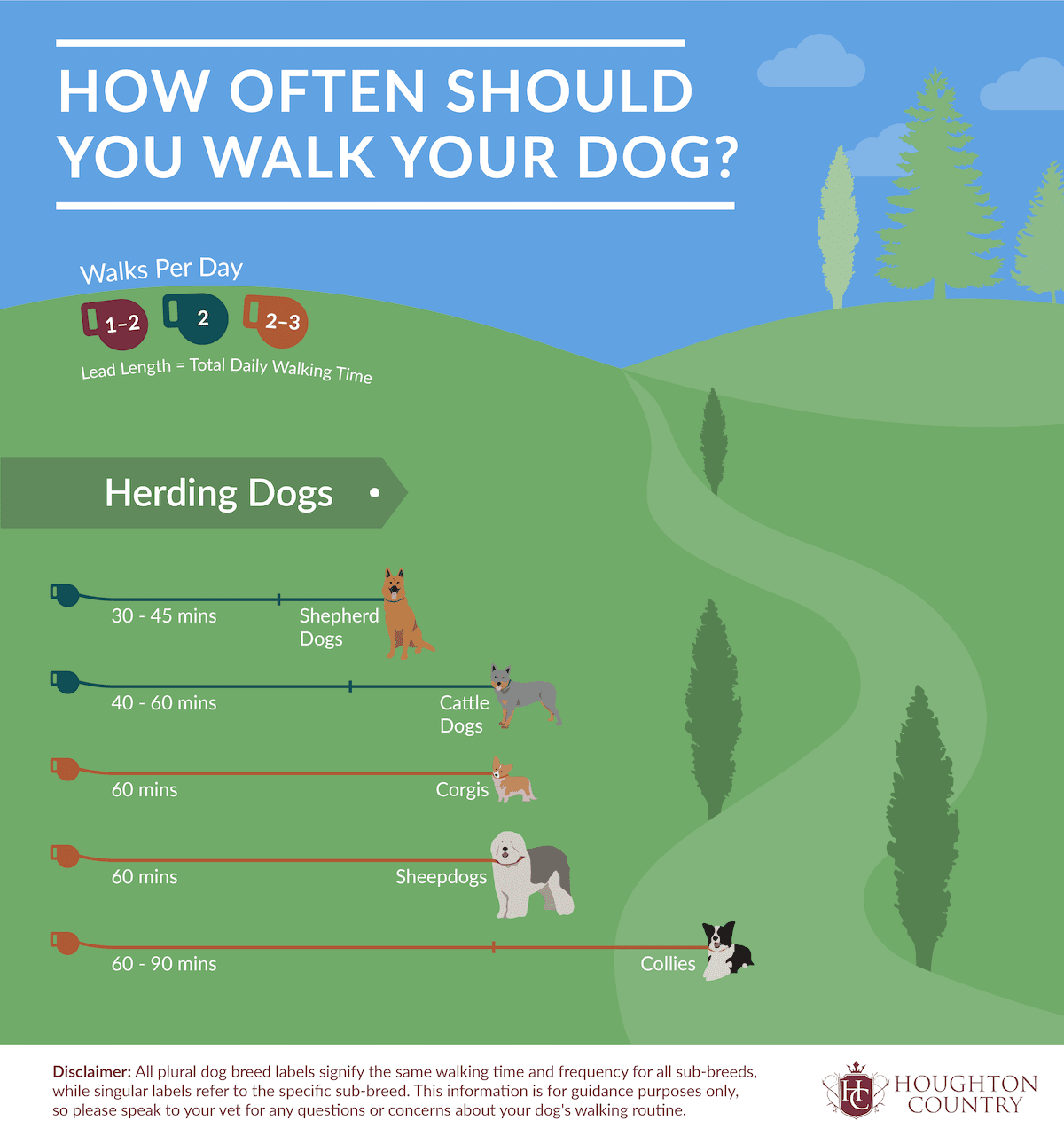
Breed traits strongly influence dog walking duration. Breeds created for hunting, herding, or work often have higher exercise needs than companion breeds.
Size alone does not decide walking needs. A small energetic dog may need more activity than a larger relaxed dog.

- ✦ High energy breeds
Dogs such as Border Collies and Australian Shepherds often need longer walks and mental challenges.
- ✦ Small breeds
Small dogs still need exercise, but their walking time may be shorter depending on health and energy.
- ✦ Flat-faced breeds
Breeds with breathing challenges may require shorter walks and careful temperature control.
Signs Your Dog Needs More or Less Walking Time
Your dog’s behavior can help you understand if the current dog walking duration is working. Changes in energy, mood, and habits often provide useful clues.
A dog that destroys items, becomes restless, or constantly seeks attention may need more activity. A dog that struggles during walks may need less intensity.

- ✦ Signs of too little exercise
Common signs include boredom, excessive barking, restlessness, and unwanted chewing.
- ✦ Signs of too much exercise
Watch for extreme tiredness, limping, heavy breathing, or reluctance to continue walking.
How to Create a Healthy Daily Walking Routine
A consistent routine helps dogs feel secure and improves fitness. Many US dog owners schedule walks before work, after dinner, or during lunch breaks.
The best dog walking duration is one that fits your dog’s needs and your lifestyle. Regular short walks are often better than occasional very long walks.

- ✦ Start slowly
Increase time and distance gradually, especially if your dog is not used to regular exercise.
- ✦ Add mental stimulation
Allow sniffing, simple training, and exploration because walks are also a mental activity.
- ✦ Consider weather
Avoid extreme heat and cold because weather can change safe walking limits.
