
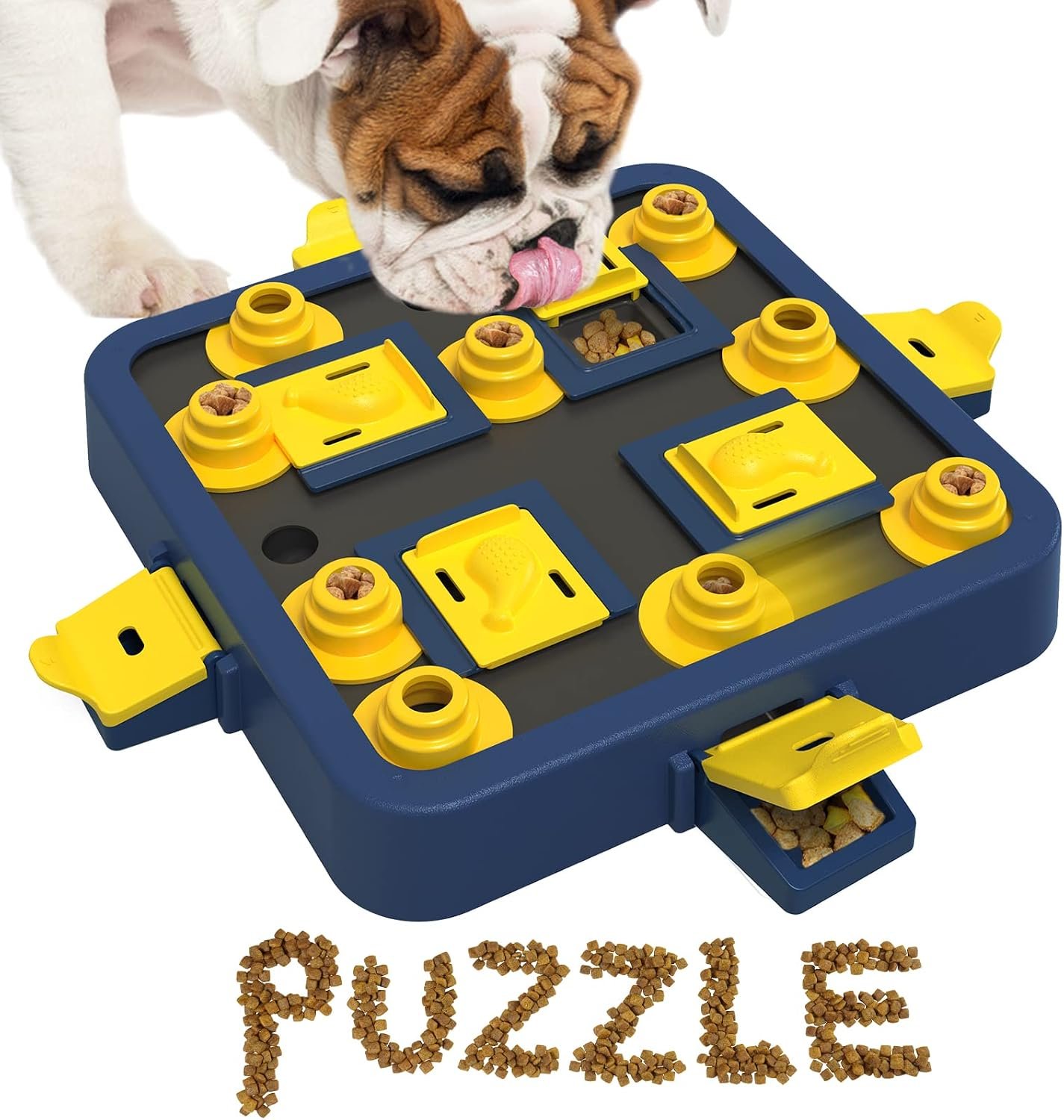
Many dogs in the United States spend long hours indoors while their owners work, travel, or manage busy schedules. Dog puzzle games offer a simple way to add mental exercise to a dog’s daily routine without needing extra outdoor time.
From my experience studying dog enrichment methods, the best puzzle activities are not only about giving treats. They help dogs use natural skills like sniffing, searching, learning, and making choices. A good puzzle can turn a normal afternoon into an engaging learning session.

What Are Dog Puzzle Games?
Dog puzzle games are interactive toys or activities that make dogs think before they get a reward. Most puzzles use hidden treats, movable parts, or simple challenges that encourage dogs to solve problems.
Unlike regular chew toys, these games focus on mental work. Dogs must use their nose, paws, and memory to complete a task. This type of play can make indoor time more meaningful.

- ✦ Treat puzzles
These toys hide food or treats inside compartments that dogs open through movement and problem-solving.
- ✦ Interactive games
These activities require dogs to push, slide, flip, or search to discover rewards.
- ✦ DIY puzzles
Simple homemade activities can use safe household items to create affordable mental challenges.
Why Dogs Enjoy Puzzle Challenges
Dogs naturally enjoy using their senses to explore. Puzzle games copy the kind of searching and problem-solving they would do in nature.
The reward system also builds motivation. When dogs figure out a puzzle, they gain confidence and learn that effort leads to success.
Benefits of Dog Puzzle Games for Mental and Physical Health
Mental stimulation is an important part of a balanced dog lifestyle. A dog that receives only physical exercise may still become bored if the brain does not get enough activity.
Dog puzzle games can support healthier habits by giving dogs a positive outlet for their energy. They are especially useful for dogs that spend many hours inside homes or apartments.

- ✦ Reduces boredom
Puzzle activities give dogs something productive to focus on instead of unwanted behaviors caused by boredom.
- ✦ Supports learning
Dogs practice patience, problem-solving, and decision-making while completing puzzle tasks.
- ✦ Encourages natural behaviors
Many puzzles allow dogs to sniff, search, and explore in ways that feel natural.
Can Puzzle Games Help With Separation Stress?
Some dogs become restless when left alone. A puzzle toy filled with safe treats can provide a positive activity during short periods away from owners.
Puzzle games are not a replacement for professional behavior support, but they can be one useful tool in a complete routine.
Types of Dog Puzzle Games for Different Dogs
Every dog learns at a different pace. The right puzzle depends on age, size, personality, and previous experience.
A beginner dog may need a simple puzzle with easy rewards, while a smart and experienced dog may enjoy multi-step challenges.

- ✦ Beginner puzzles
Simple puzzles with easy openings are good for puppies and dogs learning how games work.
- ✦ Advanced puzzles
Complex designs require more steps and are better for experienced problem solvers.
- ✦ Food dispensing puzzles
These combine feeding time with mental work and can slow down fast eaters.
Choosing Puzzles for Puppies
Puppies need safe and simple challenges. The goal is to build confidence, not frustration.
Short sessions with easy wins help puppies understand the game and enjoy learning.
Choosing Puzzles for Senior Dogs
Older dogs may enjoy puzzles that use smell and gentle movement instead of difficult physical actions.
Soft challenges can keep senior dogs mentally active while respecting their physical limits.
How to Introduce Dog Puzzle Games Successfully
A common mistake is giving a difficult puzzle too soon. Dogs may lose interest if they cannot understand the task.
Start with simple games and show your dog how the reward works. Positive experiences create better long-term engagement.

- ✦ Start easy
Choose beginner-level puzzles that allow your dog to succeed quickly.
- ✦ Supervise play
Watch your dog during new games to ensure safe and proper use.
- ✦ Increase difficulty slowly
Move to harder puzzles only after your dog understands the basic steps.
Common Mistakes When Using Dog Puzzle Games
Puzzle toys work best when they match a dog’s ability level. A puzzle that is too hard can create frustration instead of fun.
Owners should also remember that puzzle games need regular cleaning and safe supervision. Dogs have different chewing styles, and some may damage toys quickly.

- ✦ Choosing the wrong difficulty
A puzzle should challenge a dog but still allow progress and success.
- ✦ Leaving damaged toys available
Broken puzzle parts can become unsafe and should be removed.
- ✦ Using puzzles as the only activity
Dogs still need walks, social time, training, and physical exercise.
