
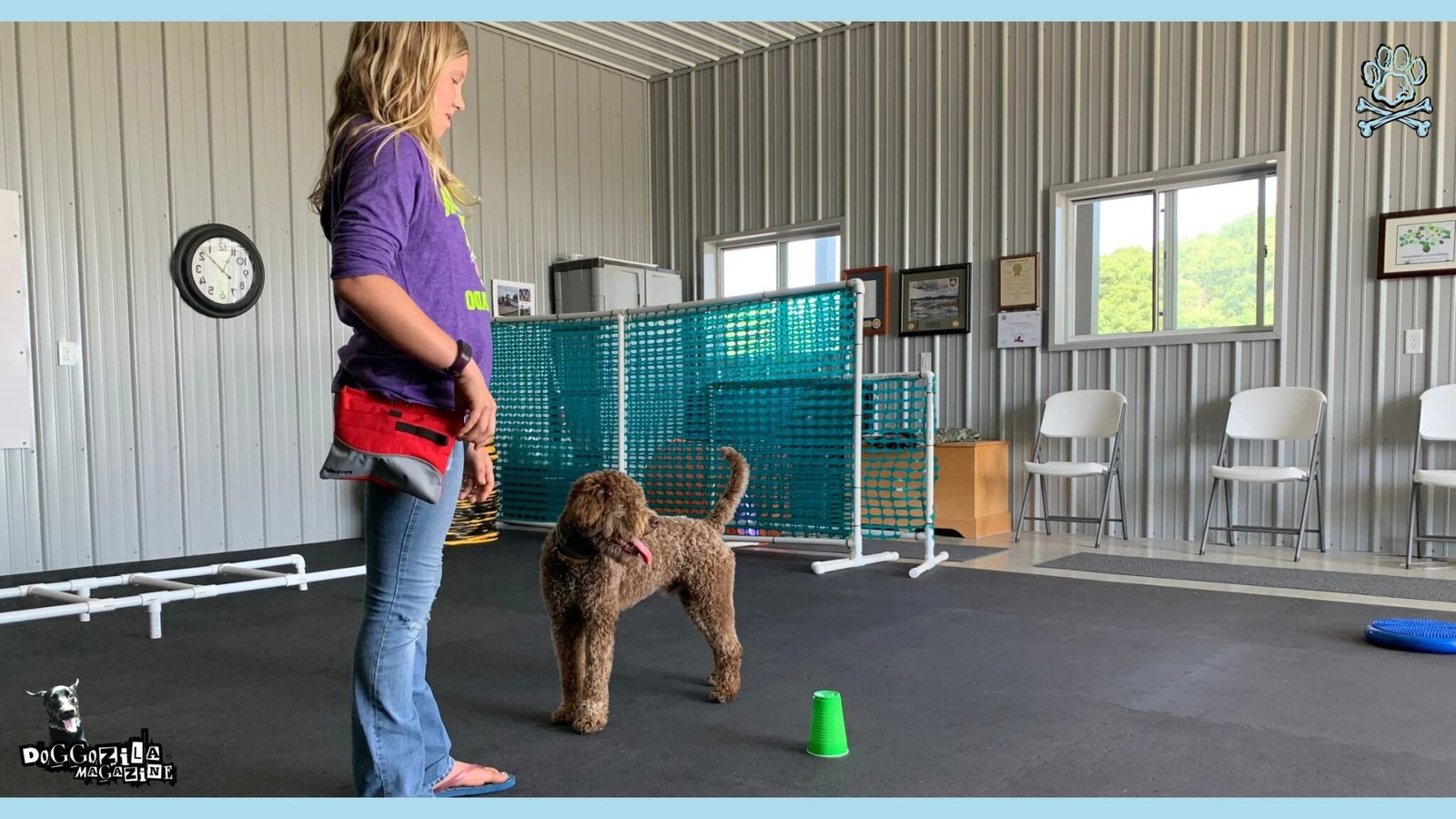
A focused dog is easier to train, safer in public, and more connected with their owner. In busy American homes, dogs often face many distractions like visitors, traffic, other pets, and outdoor noises. Teaching your dog how to focus helps them make better choices in these moments.
Through my experience studying dog behavior and training methods, I have found that focus is not about forcing a dog to stare at you. It is about building trust, clear communication, and a habit of checking in with you. Good Dog focus training starts with simple exercises and grows into real-life skills.

What Is Dog Focus Training and Why Does It Matter?
Dog focus training is the process of teaching your dog to pay attention to you instead of reacting to every sound, smell, or movement around them. It creates a stronger bond between you and your dog.
Many dogs know basic commands like sit or stay but struggle when distractions appear. Focus training fills this gap by teaching your dog that listening to you is rewarding and valuable.
- ✦ Better communication
Focus training helps your dog understand your signals and respond faster during daily activities.
- ✦ Improved safety
A dog that pays attention is more likely to respond when called near roads, parks, or unfamiliar places.
- ✦ Stronger relationship
Regular focus exercises build trust and create a positive connection between you and your dog.
The Difference Between Attention and Focus
Attention is when your dog notices you for a moment. Focus means your dog can stay connected with you even when something interesting happens nearby.
A dog may look at you when you hold a treat, but true focus appears when your dog chooses to listen without needing a reward every second.
How to Start Dog Focus Training Step by Step
The best Dog focus training programs begin in a quiet area with few distractions. Start inside your home, then slowly move to harder environments like your yard, neighborhood, or park.
Keep sessions short. Five to ten minutes of successful practice is better than a long session where your dog becomes tired or frustrated.

- ✦ Choose a focus word
Use a simple word like look, watch, or focus so your dog learns what behavior you want.
- ✦ Reward eye contact
Give praise or a small treat when your dog looks at you naturally.
- ✦ Increase distractions slowly
Add new challenges only after your dog succeeds in easier situations.
The Name Recognition Exercise
Say your dog’s name in a happy voice. When your dog looks toward you, reward immediately. Repeat this often until your dog learns that their name means paying attention.
This simple exercise is one of the foundations of Dog focus training because it creates a reliable way to regain your dog’s attention.
- ✦ Practice daily
Use normal moments like feeding time or walks to strengthen name recognition.
Best Exercises for Building Your Dog’s Focus
Dogs learn focus through repetition and positive experiences. The goal is to make paying attention feel rewarding, not stressful.
These exercises work for puppies, adult dogs, and many breeds with different energy levels.

- ✦ The eye contact game
Hold a treat near your face and reward your dog when they look into your eyes.
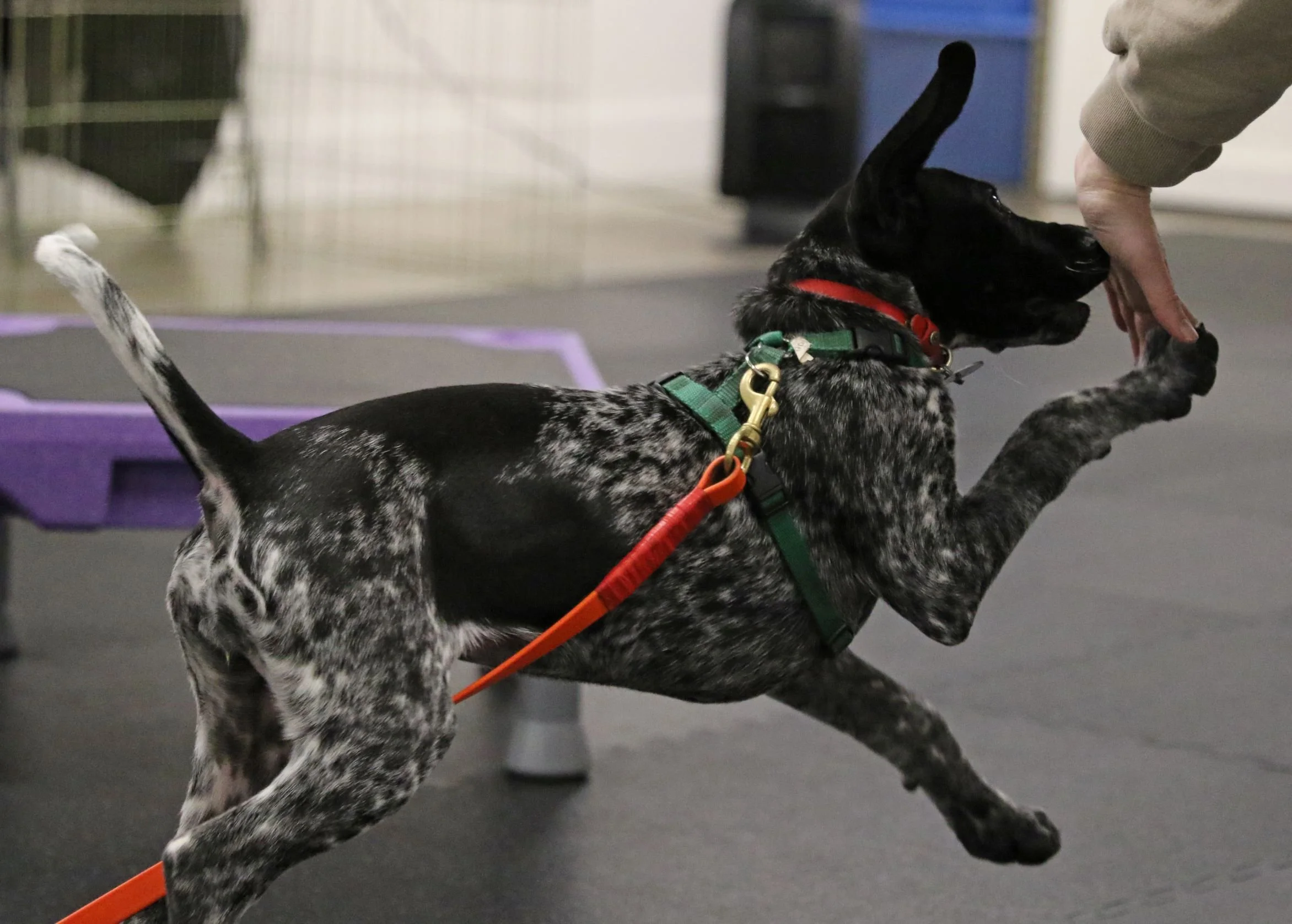
- ✦ Hand target training
Teach your dog to touch your hand with their nose, which improves attention and control.
- ✦ Follow me exercise
Reward your dog for staying aware of your movement during walks.
- ✦ Leave it practice
Teach your dog to ignore distractions and choose your direction instead.
Using Positive Reinforcement Correctly
Positive reinforcement means rewarding behaviors you want to see again. Rewards can include treats, praise, toys, or play.
Timing matters. Reward your dog within a few seconds of the correct behavior so they understand what action earned the reward.
How to Train a Dog to Focus Around Distractions
Distractions are the biggest challenge in Dog focus training. A dog may listen perfectly at home but ignore commands outside because the environment is more exciting.
The key is to increase difficulty slowly. Do not expect your dog to focus near a crowded park if they have only practiced in your living room.

- ✦ Start with distance
Keep distractions far away at first and reward your dog for staying calm.
- ✦ Control the environment
Choose training locations where your dog can succeed before adding harder challenges.
- ✦ Reward calm behavior
Pay your dog for ignoring distractions and choosing to focus on you.
Common Distractions Dogs Struggle With
Dogs often lose focus because of other animals, people, smells, sounds, toys, or excitement. Understanding your dog’s triggers helps you create better training plans.
A calm approach works better than repeating commands many times. If your dog cannot focus, make the exercise easier.
Common Dog Focus Training Mistakes to Avoid
Many owners struggle with focus because they move too fast or expect perfect results immediately. Dogs learn through small steps and repeated success.
Avoiding common mistakes can make training easier and more enjoyable for both you and your dog.
- ✦ Training for too long
Long sessions can reduce motivation and make your dog lose interest.
- ✦ Using rewards incorrectly
Rewards should reinforce good choices instead of becoming a constant bribe.
- ✦ Ignoring body language
Stress signals like turning away or avoiding eye contact mean your dog may need an easier step.
How Long Does Dog Focus Training Take?
The time needed for Dog focus training depends on your dog’s age, personality, breed, and past experiences. Some dogs improve quickly, while others need weeks or months of steady practice.
Consistency matters more than speed. A few minutes of daily training can create stronger results than occasional long sessions.
- ✦ Puppies
Young dogs often learn focus through short games and simple rewards.
- ✦ Adult dogs
Older dogs can learn focus by replacing unwanted habits with better responses.
- ✦ High-energy dogs
Active breeds may need exercise first before they can concentrate well.
