
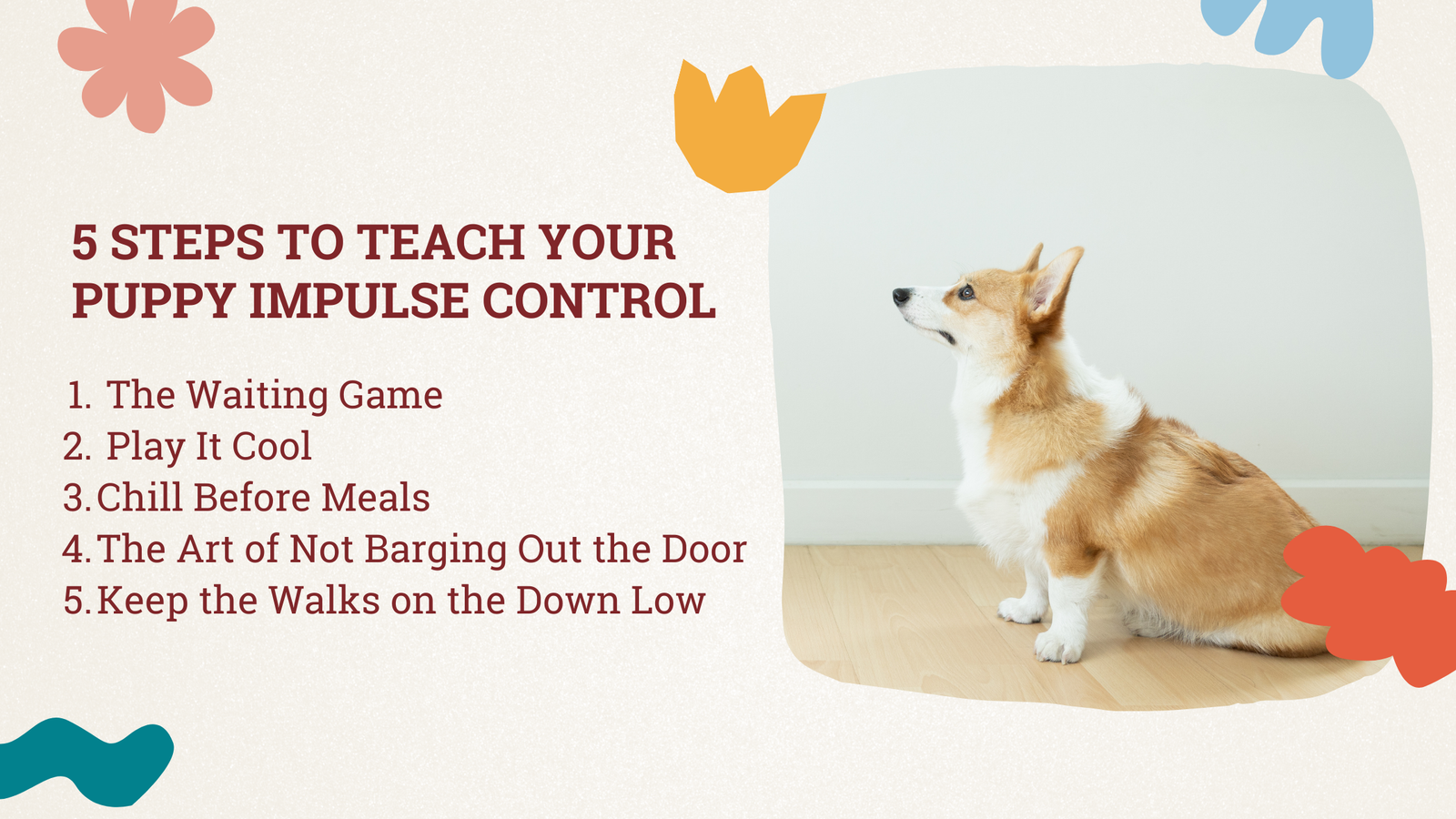
Dog impulse control development is one of the most important parts of raising a balanced dog. Many behavior problems are not caused by a dog being stubborn. They often happen because the dog has not learned how to manage excitement.
In my experience studying dog behavior, I have seen that dogs with strong impulse control are easier to handle in real life. They can wait at doors, ignore distractions, and respond to cues even when something exciting happens.

What is dog impulse control development?
Dog impulse control development is the process of teaching a dog to control natural reactions. A dog may want to jump, bark, chase, grab, or rush forward. Impulse control helps the dog slow down and make a better choice.
This skill does not remove a dog’s natural instincts. Instead, it creates a bridge between instinct and behavior. The dog learns that calm actions often lead to rewards.
- ✦ Pause before action
A dog learns to wait instead of immediately reacting to a trigger.
- ✦ Better decision making
The dog learns which behaviors receive attention and rewards.
- ✦ Improved focus
The dog becomes better at listening around distractions.
Why impulse control matters for modern dogs
Many dogs in the United States live in busy homes with visitors, traffic, other pets, and frequent outdoor activity. These environments create many moments where self-control is needed.
A dog that learns impulse control can enjoy these situations with less stress and fewer unwanted behaviors.
How dogs develop self-control over time
Dog impulse control development changes as a dog grows. Puppies usually have limited control because their brains are still developing. They explore the world through movement, play, and quick reactions.
Adult dogs can improve their self-control with practice. Age helps, but training and daily habits create the biggest changes.

- ✦ Puppy stage
Young dogs learn basic waiting skills through short and simple exercises.
- ✦ Adolescent stage
Teen dogs often test boundaries and need steady guidance.
- ✦ Adult stage
Adult dogs can build advanced focus with regular practice.
The role of the dog’s brain and emotions
Dogs do not naturally understand human expectations. They learn through repeated experiences. When calm behavior brings rewards, the dog starts choosing calm behavior more often.
Emotional control is also important. A dog that feels overwhelmed may struggle to respond, even if it knows a command.
Common signs that a dog needs more impulse control training
Dogs show weak impulse control in many ways. These behaviors are often normal, but they need guidance so they do not become lifelong habits.
Recognizing these signs early makes dog impulse control development easier and more effective.

- ✦ Jumping on people
The dog struggles to stay calm during greetings.
- ✦ Pulling on walks
The dog follows excitement instead of responding to the handler.
- ✦ Taking food quickly
The dog needs practice with waiting and patience.
- ✦ Reacting to distractions
The dog may bark or rush toward triggers without thinking.
Effective exercises for dog impulse control development
The best impulse control exercises are simple and repeated often. Short training sessions work better than long sessions because dogs learn faster when they stay engaged.
Professional trainers often build impulse control through small challenges. The dog first learns calm behavior in easy situations before moving to harder distractions.

- ✦ Wait at doors
Teach the dog to pause before entering or leaving a space.
- ✦ Leave it training
Help the dog ignore unwanted objects or distractions.
- ✦ Place command
Teach the dog to stay calm in a specific location.
- ✦ Calm greetings
Reward sitting or relaxed behavior instead of jumping.
Using rewards correctly
Rewards should happen when the dog shows the behavior you want. Timing matters because dogs connect rewards with actions quickly.
Food is useful, but praise, toys, and access to activities can also reinforce good choices.
Mistakes that slow down impulse control training
Dog impulse control development takes patience. Many owners expect fast results and become frustrated when a dog struggles in difficult situations.
Training works best when the dog receives clear signals every day. Mixed rules can confuse the dog and slow progress.

- ✦ Expecting perfection too soon
Dogs need gradual progress with increasing levels of difficulty.
- ✦ Only training during problems
Practice should happen before difficult moments appear.
- ✦ Ignoring mental needs
Exercise and enrichment support better behavior.
Building long-term impulse control habits
Strong dog impulse control development comes from daily routines. Small moments, such as waiting for meals or sitting before greetings, create lasting habits.
A calm dog is not created by one training session. It is created through thousands of small choices supported by consistent guidance.

- ✦ Practice daily
Use normal routines as training opportunities.
- ✦ Increase distractions slowly
Move from quiet areas to more challenging environments.
