
Labrador Retrievers are known for their love of water, strong bodies, and natural retrieving skills. Many Labs enjoy swimming because their breed history connects them with water work, especially retrieving game for hunters. A good swim session can help burn energy while keeping exercise gentle on the body.
From working with active dogs and studying common Labrador routines, I have found that swimming works best when owners treat it as a skill, not just playtime. A confident swimmer still needs safe entry points, breaks, fresh water, and careful supervision. This guide explains how Labrador Retriever swimming exercise and water activities can become a healthy part of your dog’s life.

Why Labradors Are Naturally Good Swimmers
Labrador Retrievers often enjoy swimming because their bodies are built for water activities. They have a dense coat that helps protect them from cold water, a strong tail that works like a rudder, and a powerful chest that supports movement.
However, natural ability does not mean every Labrador becomes a perfect swimmer right away. Young dogs, nervous dogs, older dogs, and dogs with health concerns may need a slower introduction to water.

- ✦ Water-resistant coat
A Labrador’s double coat helps protect the skin and body during short swimming sessions.
- ✦ Strong retrieving instinct
Many Labs enjoy chasing floating toys, which makes water exercise more engaging.
- ✦ Powerful movement
Their strong legs and tail help them move efficiently through water.
The Role of Breed History
Labradors were developed as working retrievers near water. Their history as helper dogs shaped many traits that make them comfortable around lakes, rivers, and pools today.
Benefits of Labrador Retriever Swimming Exercise and Water Activities
Labrador Retriever swimming exercise and water activities offer many benefits beyond simple fun. Swimming works many muscle groups while creating less impact than running on hard surfaces.
For active American families, water exercise can be a great option during hot summer months. It allows dogs to stay busy while avoiding some of the stress caused by intense outdoor exercise in high heat.
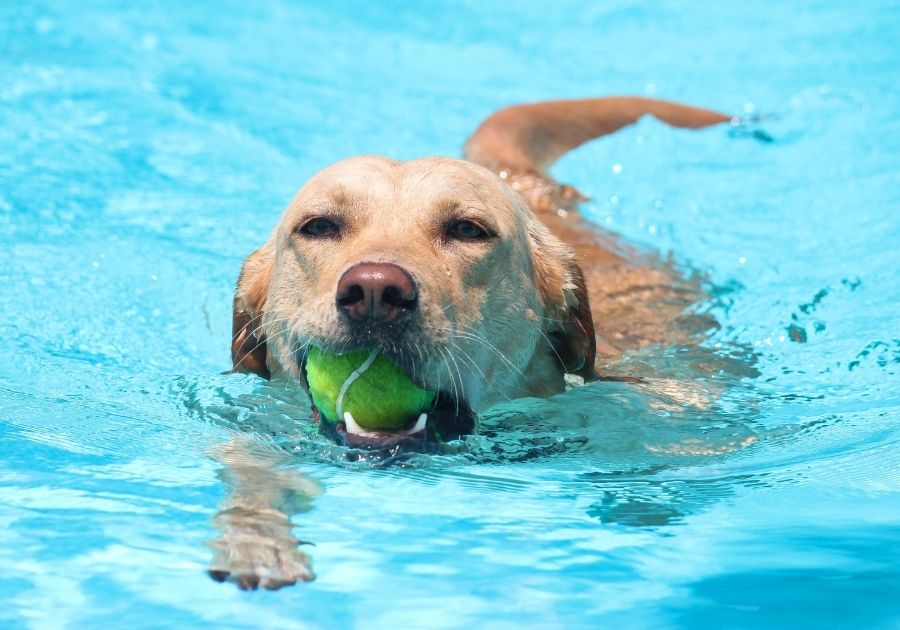
- ✦ Joint-friendly exercise
Water supports the body and may help dogs with stiff joints or limited mobility stay active.
- ✦ Mental stimulation
Swimming, fetching, and exploring water areas challenge a dog’s mind as well as its body.
- ✦ Energy control
Regular swimming sessions can help energetic Labradors release extra energy in a healthy way.
How to Introduce Your Labrador to Swimming Safely
A positive first experience can shape your Labrador’s relationship with water for life. Never force a dog into deep water because fear can develop quickly.
Start with shallow water where your dog can touch the ground. Reward calm behavior and slowly increase swimming time as confidence grows.

- ✦ Choose calm water
Pools, quiet lakes, and safe dog swimming areas are better choices than strong currents.
- ✦ Use positive rewards
Toys, praise, and treats can help your Labrador connect water with a good experience.
- ✦ Stay close
Always supervise your dog during swimming, even if your Labrador swims well.
Helping Nervous Labradors
Some Labradors love water immediately, while others need time. Patience, gentle guidance, and short sessions usually work better than pressure.
Best Water Activities for Labrador Retrievers
Swimming is only one part of Labrador Retriever swimming exercise and water activities. Many Labs enjoy games that combine movement, problem solving, and bonding with their owners.
The best activity depends on your dog’s age, fitness level, and confidence. Always match the activity with your Labrador’s ability.

- ✦ Water retrieving
Throw floating toys into safe water and allow your Labrador to practice natural retrieving skills.
- ✦ Dock diving
Athletic Labradors may enjoy organized dock diving events with proper training.
- ✦ Paddle trips
Calm kayak or paddleboard trips can provide enrichment when safety gear is used.
Swimming Safety Tips Every Labrador Owner Should Know
Safe swimming habits protect your Labrador from accidents and health problems. Even strong swimmers can become tired, especially during long sessions.
After swimming, rinse your Labrador if the water contains chlorine, salt, or dirt. Dry the ears carefully because moisture can increase ear discomfort in some dogs.

- ✦ Watch for tiredness
Signs like slower movement, heavy breathing, or struggling to stay afloat mean it is time for a break.
- ✦ Avoid unsafe water
Do not allow swimming in areas with pollution, dangerous currents, or harmful algae.
- ✦ Use life jackets when needed
A canine life jacket can add safety during boating, deep water, or unfamiliar locations.
How Often Should a Labrador Swim?
The ideal swimming schedule depends on your Labrador’s health, age, and activity level. Some active Labs enjoy several short swimming sessions each week, while others do well with occasional water play.
A balanced routine combines swimming with walks, training, play, and rest. Labrador Retriever swimming exercise and water activities should support overall health instead of replacing every other form of movement.

- ✦ Young Labradors
Puppies need short, controlled water experiences while their bodies continue developing.
- ✦ Adult Labradors
Healthy adults can often enjoy longer swimming sessions with proper breaks.
- ✦ Senior Labradors
Older dogs may benefit from gentle swimming because water reduces body impact.
