
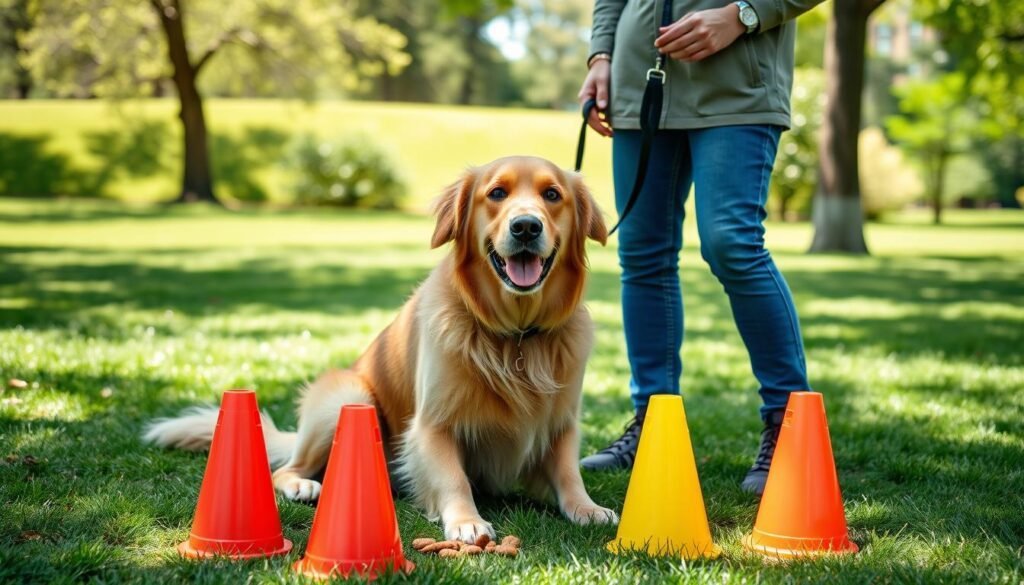
Golden Retriever training motivation and cue response are closely connected because this breed often learns through cooperation with people. In the United States, many Golden Retriever owners train their dogs for family life, therapy work, sports, and daily manners. The key is not forcing obedience but creating a reason for the dog to respond.
After years of studying dog training methods, one lesson stands out: a Golden Retriever that enjoys training usually learns faster and stays more focused. Good training builds a relationship where the dog understands what you ask and feels confident following your cues.

Understanding Golden Retriever training motivation and cue response
Golden Retriever training motivation and cue response describe how a dog learns to connect your signal with a desired action. A cue can be a spoken word, hand movement, or routine signal. Motivation gives the dog a reason to repeat the behavior.
Golden Retrievers were developed as working dogs that cooperated closely with humans. This history helps explain why many enjoy learning tasks and responding to guidance when training feels positive.
- ✦ Motivation creates engagement
A motivated Golden Retriever pays attention because the training experience has value for the dog.
- ✦ Clear cues reduce confusion
Simple and consistent commands help a dog understand exactly what behavior you want.
Why Golden Retrievers are eager learners
Golden Retrievers often enjoy human interaction, which makes social rewards powerful. A happy voice, gentle praise, and shared activities can become strong training tools.
- ✦ People-focused nature
Many Golden Retrievers enjoy working with owners because attention itself can be rewarding.
How rewards improve motivation during Golden Retriever training
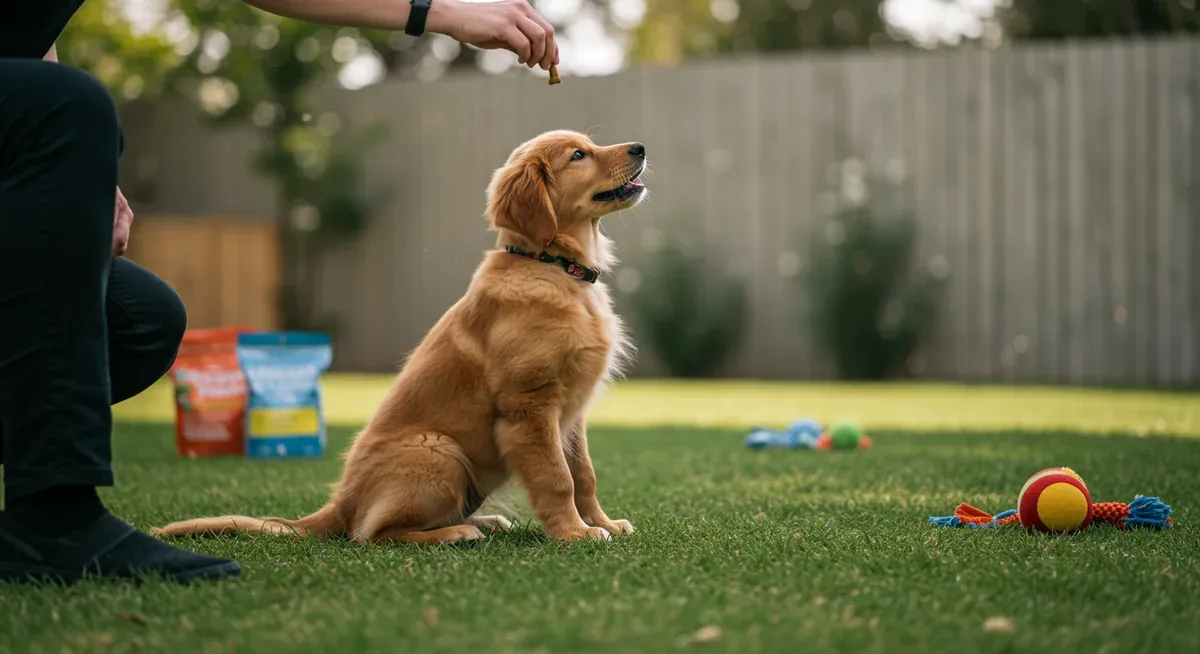
Rewards help a Golden Retriever understand which actions are correct. Positive reinforcement can include treats, toys, praise, or access to fun activities.
The best reward depends on the individual dog. Some Golden Retrievers work hardest for food, while others prefer play or attention from their owner.
- ✦ Food rewards
Small treats can help teach new commands because they provide quick feedback.
- ✦ Life rewards
Opening the door, playing fetch, or going outside can reward good behavior.
Avoiding dependence on treats
Treats are useful during early learning, but a strong training plan slowly adds other rewards. The goal is a dog that responds because the cue has meaning, not only because food appears.
- ✦ Fade rewards slowly
Reduce treat frequency while keeping praise and encouragement.
Building reliable cue response in Golden Retrievers
Golden Retriever training motivation and cue response improve when owners practice commands in many settings. A dog that sits in a quiet room may need more practice before responding at a busy park.
Consistency matters. Everyone in the home should use the same words and expectations so the dog does not receive mixed signals.

- ✦ Use one cue at a time
Clear commands help the dog create a stronger connection between words and actions.
- ✦ Practice in stages
Start with easy environments before adding distractions.
Common cues every Golden Retriever should know
Basic cues such as sit, stay, come, leave it, and heel create a foundation for safety and communication. These commands also help build trust between dog and owner.
- ✦ Recall
A strong come command helps keep your dog safe during outdoor activities.
Improving focus and attention during training sessions
Attention is a major part of Golden Retriever training motivation and cue response. A dog cannot follow a cue well if the environment is too distracting or the session lasts too long.
Short training sessions often work better than long lessons. Ending while your Golden Retriever is still interested helps maintain enthusiasm.

- ✦ Keep sessions short
Frequent short sessions can improve learning and reduce boredom.
- ✦ Reward attention
Mark moments when your dog looks at you or chooses to focus.
Using games to increase motivation
Games like fetch, hide and seek, and simple problem-solving tasks can make training feel natural. Many Golden Retrievers learn faster when their minds and bodies are active.
- ✦ Mental challenges
Puzzle activities encourage thinking and patience.
Mistakes that weaken Golden Retriever cue response
Even friendly breeds can struggle when training lacks structure. Many owners repeat commands too often, reward unwanted behavior, or expect results too quickly.
A patient approach creates better long-term results. Golden Retrievers respond well when owners focus on teaching instead of correcting.

- ✦ Repeating commands
Saying a cue many times can teach a dog to wait instead of responding immediately.
- ✦ Inconsistent rules
Changing expectations makes it harder for a dog to understand the correct behavior.
Building trust through fair training
Trust is the foundation of strong Golden Retriever training motivation and cue response. Dogs learn better when they feel safe and understand what earns rewards.
- ✦ Stay patient
Calm guidance helps maintain confidence during learning.
Advanced training strategies for stronger responses
Advanced Golden Retriever training motivation and cue response involves teaching reliability around distractions. This can include busy streets, visitors, other dogs, and new environments.
Professional trainers often build skills step by step. They first create understanding, then add challenges while keeping the dog successful.

- ✦ Increase difficulty slowly
Small progress steps prevent frustration and build confidence.
- ✦ Reward good choices
Recognizing calm behavior encourages self-control.
Training for real-life situations
The goal is not perfect behavior in a training room. The goal is a Golden Retriever that listens during everyday family life.
- ✦ Practice outside
Real-world practice helps transfer skills beyond the home.
