
Understanding Poodle size weight and body structure helps owners provide better care. In the United States, Poodles are popular family dogs because they adapt well to apartments, homes, and active lifestyles.
The right body condition matters more than a single number on a scale. A healthy Poodle should look athletic, move easily, and maintain a balanced frame. This guide explains size standards, weight ranges, and physical features in simple terms.

Poodle size categories and standard measurements
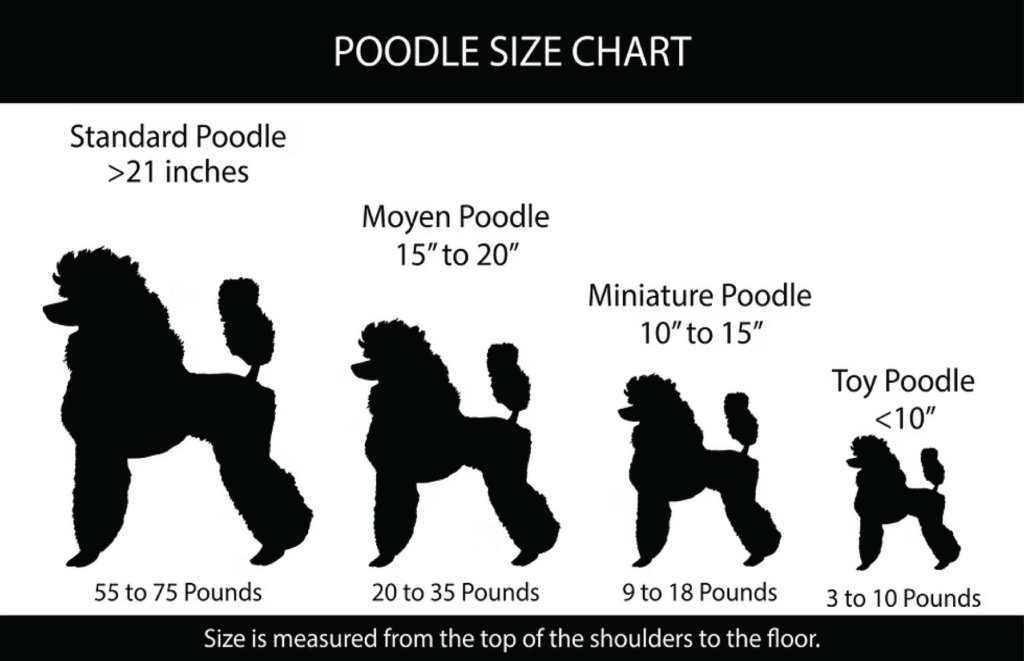
Poodle size weight and body structure changes greatly between the three recognized varieties. The main groups are Toy Poodle, Miniature Poodle, and Standard Poodle.
Each size has the same elegant breed traits. The difference comes mainly from height and overall body mass.

- ✦ Toy Poodle
Toy Poodles usually stand under 10 inches tall and often weigh about 4 to 6 pounds.
- ✦ Miniature Poodle
Miniature Poodles are generally 10 to 15 inches tall and commonly weigh about 10 to 15 pounds.
- ✦ Standard Poodle
Standard Poodles are over 15 inches tall and often weigh between 40 and 70 pounds.
How size affects daily life
Smaller Poodles may fit city lifestyles more easily, while Standard Poodles often need more space and exercise.
All sizes need mental activity, training, and regular movement to stay healthy.
- ✦ Apartment living
Toy and Miniature Poodles often adjust well to smaller homes when they receive daily activity.
Poodle weight ranges and healthy body condition
Poodle weight is not only about breed size. Age, muscle, activity, and food intake all influence a dog’s ideal weight.
A healthy Poodle should have ribs that can be felt without being strongly visible. The abdomen should tuck upward behind the rib cage.

- ✦ Avoid overweight conditions
Extra weight can place stress on joints and reduce energy levels.
- ✦ Monitor growth
Puppies grow quickly, so regular weight checks help owners notice changes early.
Factors that change Poodle weight
Two Poodles of the same height may have different healthy weights. Genetics and muscle structure create natural differences.
A veterinarian can help confirm whether a Poodle has a healthy body condition.
- ✦ Genetics
Family lines influence bone size, height, and muscle development.
Poodle body structure and physical characteristics
The Poodle has a square, athletic body structure. The breed is known for balanced proportions, strong movement, and a proud posture.
The Poodle size weight and body structure guide should always consider shape, not just measurements.
- ✦ Head and neck
Poodles have a refined head shape with a long muzzle and a strong neck.
- ✦ Chest and body
The chest is deep, while the back remains level and strong.
- ✦ Legs and movement
Long legs support an active gait with smooth and graceful movement.
Coat and body appearance
The curly coat can make a Poodle look larger than its actual body size. Regular grooming helps owners see the dog’s true shape.
A well-groomed Poodle shows the breed’s athletic outline clearly.
How to measure a Poodle correctly
Accurate measurements help owners understand Poodle size weight and body structure. Height is measured from the ground to the top of the shoulders.
Weight should be checked with a reliable scale and compared with body condition, not used alone.
- ✦ Measure height
Place the dog on a flat surface and measure from the floor to the shoulder area.
- ✦ Track weight
Record weight regularly during puppy growth and adult life.
Poodle growth stages from puppy to adult
Poodle puppies grow at different speeds depending on their size category. Toy Poodles mature faster than Standard Poodles.
Owners should focus on steady growth, healthy food, and proper exercise during development.
- ✦ Puppy stage
Young Poodles need balanced nutrition and controlled activity while bones develop.
- ✦ Adult stage
Adult Poodles need exercise and feeding plans that match their energy needs.
