
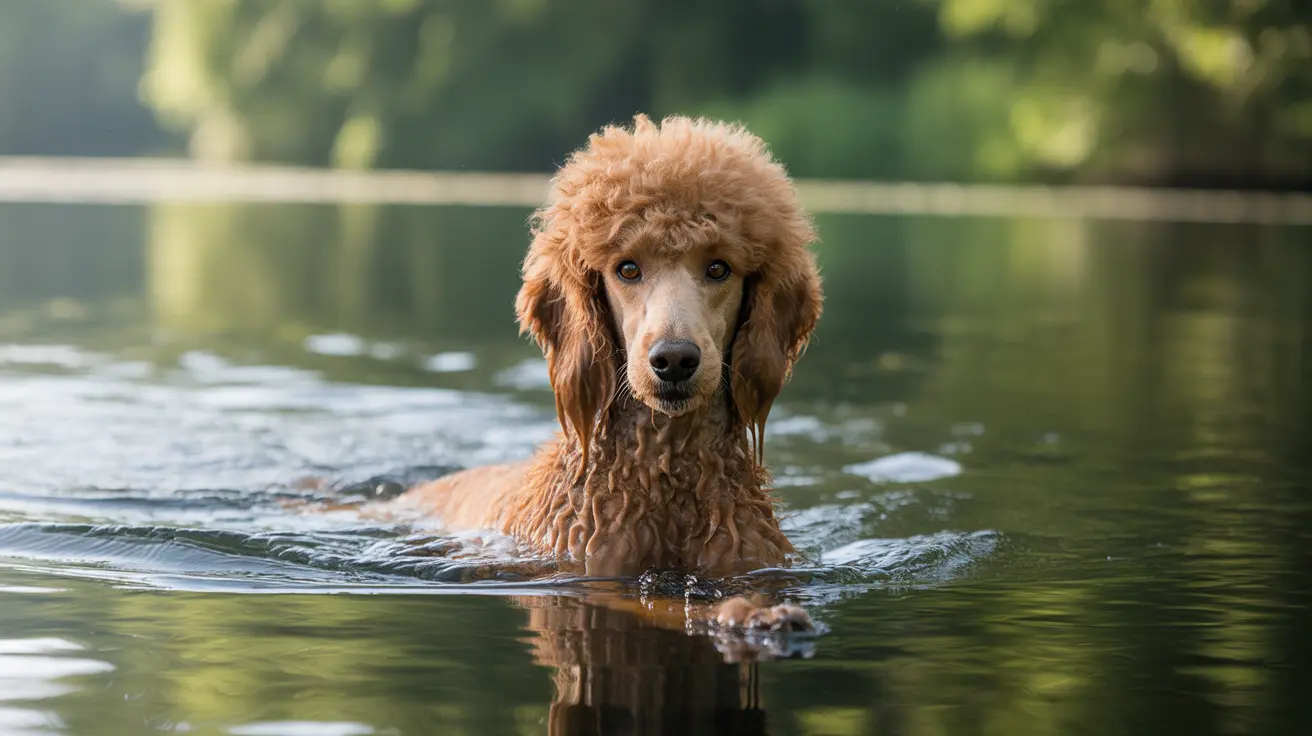
Poodle swimming and physical abilities are closely linked to this breed’s history as a working water dog. Many people know Poodles for their curly coats and elegant appearance, but they were originally bred to retrieve game from water. Their balanced body, strong legs, and intelligence help them perform well in swimming activities.
From my experience studying dog behavior and breed traits, I have found that Poodles often enjoy water when they receive a positive introduction. A confident Poodle can become a skilled swimmer, while a nervous dog may need slow training and support before entering deeper water.

Understanding Poodle swimming and physical abilities
Poodle swimming and physical abilities come from a combination of genetics, muscle strength, body shape, and working history. Standard Poodles especially have a powerful frame that supports active movement in water and on land.
Their long legs help create strong strokes, while their deep chest supports breathing during exercise. Smaller varieties like Miniature and Toy Poodles can also swim, but their smaller bodies may require more attention and safety support.
- ✦ Athletic body structure
Poodles have a balanced frame that supports running, jumping, retrieving, and swimming.
- ✦ High energy levels
Their active nature helps them enjoy physical challenges when exercise matches their needs.
- ✦ Strong learning ability
Poodles quickly learn swimming routines when training uses calm and positive methods.
Why Poodles were built for water work
Poodles were developed as retrieving dogs in Europe. Hunters used them to bring back birds from rivers and lakes. Their working role shaped many of the physical traits seen today.
Their curly coat also helped protect their body from cold water. Traditional grooming styles left hair around important joints to provide warmth while removing extra weight during swimming.
- ✦ Water retrieval background
Poodles have generations of experience performing tasks around water.
How well can Poodles swim compared with other dogs?
Poodle swimming and physical abilities often compare favorably with many active dog breeds. A healthy Poodle can paddle efficiently, change direction, and retrieve floating objects.
However, swimming skill is not automatic for every dog. Personality, early experiences, and body condition all affect how comfortable a Poodle feels in water.

- ✦ Natural swimming movement
Most Poodles use a steady paddle motion that helps them stay above water.
- ✦ Good endurance
Standard Poodles can handle longer swimming sessions when properly conditioned.
Factors that affect swimming performance
Age, weight, fitness level, and health can change how a Poodle performs in water. Puppies and older dogs may need shorter sessions and closer supervision.
A dog’s confidence matters too. A Poodle that has positive water experiences usually develops better swimming skills over time.
- ✦ Physical condition
Healthy muscles and joints support better swimming performance.
The physical strengths that make Poodles athletic
Poodle swimming and physical abilities are not limited to water activities. Poodles are versatile athletes that can perform many forms of exercise, including agility, hiking, running, and retrieving.
Their body combines speed, balance, and coordination. These traits allow them to adapt to many activities with proper training.

- ✦ Muscle power
Strong rear legs help Poodles push forward during swimming and land activities.
- ✦ Body control
Poodles have excellent coordination because of their intelligence and athletic structure.
- ✦ Endurance
Regular exercise helps maintain their stamina and physical health.
Swimming as low-impact exercise
Swimming provides movement without heavy impact on joints. This can make it useful for some Poodles that need gentle exercise options.
Owners should still speak with a veterinarian before changing exercise routines for dogs with injuries or health concerns.
- ✦ Joint-friendly activity
Water reduces pressure on the body while allowing muscle movement.
Teaching a Poodle to swim safely
Good swimming habits begin with slow and positive introductions. A Poodle should never be forced into water because fear can create long-term stress.
Start with shallow water and allow your dog to explore at its own pace. Reward calm behavior and slowly increase swimming time.

- ✦ Use calm introductions
Let your Poodle become comfortable with water before deeper swimming.
- ✦ Provide supervision
Always watch your dog during swimming sessions.
- ✦ Use safety equipment when needed
Life jackets can help young, small, or inexperienced swimmers.
Common swimming mistakes to avoid
Many owners assume every dog can swim immediately. While many Poodles have good swimming potential, each dog has individual limits.
Avoid long sessions, cold water exposure, and unsafe areas. A positive experience creates better confidence.
- ✦ Avoid forced swimming
Pressure can create fear and reduce water confidence.
Swimming benefits for a Poodle’s health and mind
Poodle swimming and physical abilities improve when dogs receive regular, balanced activity. Swimming can support muscle strength, cardiovascular health, and mental stimulation.
Because Poodles are highly intelligent, they often enjoy activities that combine movement with problem solving, such as retrieving toys from water.

- ✦ Physical fitness
Swimming works many muscle groups and supports overall conditioning.
- ✦ Mental enrichment
Water games provide new experiences that challenge a Poodle’s mind.
- ✦ Energy management
Active swimming sessions can help reduce boredom-related behaviors.
Maintaining coat and ear care after swimming
A Poodle’s curly coat can hold moisture after swimming. Drying the coat properly helps keep the skin healthy.
Owners should also check ears after water activities because Poodles can be prone to ear problems due to their ear shape and hair growth.
- ✦ Dry the coat well
Remove extra moisture after every swim.
