

Poodle calorie needs and meal management are key parts of keeping this intelligent breed healthy. In the United States, many Poodle owners choose this breed because of its energy, trainability, and long lifespan. Proper food planning helps support those qualities.
A Poodle’s food needs are not the same for every dog. A Toy Poodle, Miniature Poodle, and Standard Poodle have different body sizes and energy demands. A young active Poodle may need more calories than an older dog with a slower routine.
When working with dog nutrition plans, I have seen that simple habits often create the best results. Measuring meals, watching body shape, and adjusting portions over time are more useful than following a fixed feeding chart without considering the individual dog.

Understanding Poodle calorie needs by size and life stage
Poodle calorie needs and meal management start with understanding your dog’s size and stage of life. A Toy Poodle has a much smaller body than a Standard Poodle, so its daily energy requirement is usually lower.
Puppies, adults, and senior Poodles also use energy differently. Puppies need calories for growth, while adult dogs need enough energy to maintain a healthy body. Senior dogs often need careful portion control because their activity may decrease.
- ✦ Toy Poodles
Toy Poodles usually need smaller meals with careful calorie control because even small extra treats can affect their body weight.
- ✦ Miniature Poodles
Miniature Poodles need balanced calories that match their moderate activity level and muscle needs.
- ✦ Standard Poodles
Standard Poodles require larger portions but still need controlled meals to avoid unnecessary weight gain.
How age changes calorie requirements
A growing Poodle puppy needs nutrient-rich food to support bones, muscles, and brain development. Adult Poodles need stable calories for daily activity. Older Poodles may benefit from meals that support joints, digestion, and healthy weight.
- ✦ Puppy stage
Feed growth-focused meals and monitor body condition as your puppy develops.
- ✦ Adult stage
Maintain consistent portions and adjust food based on exercise and weight changes.
How to calculate daily calories for a Poodle
Poodle calorie needs and meal management require more than guessing portion size. Calories should match the dog’s weight, activity, and health condition.
Veterinarians often use body weight and energy formulas to estimate daily needs. These numbers are starting points, not strict rules. Your Poodle’s body shape and lifestyle matter most.
- ✦ Body weight
A heavier or larger Poodle usually needs more calories than a smaller dog.
- ✦ Activity level
Dogs that walk, train, or play often may need more energy than less active dogs.
- ✦ Health status
Medical conditions can change calorie needs and should be discussed with a veterinarian.
Why calorie estimates need regular updates
A Poodle’s calorie needs can change throughout life. Seasonal activity changes, aging, recovery from illness, and changes in exercise routines can all affect food requirements.
- ✦ Monitor changes
Check weight and body condition regularly instead of waiting for visible problems.
Creating a healthy Poodle meal schedule
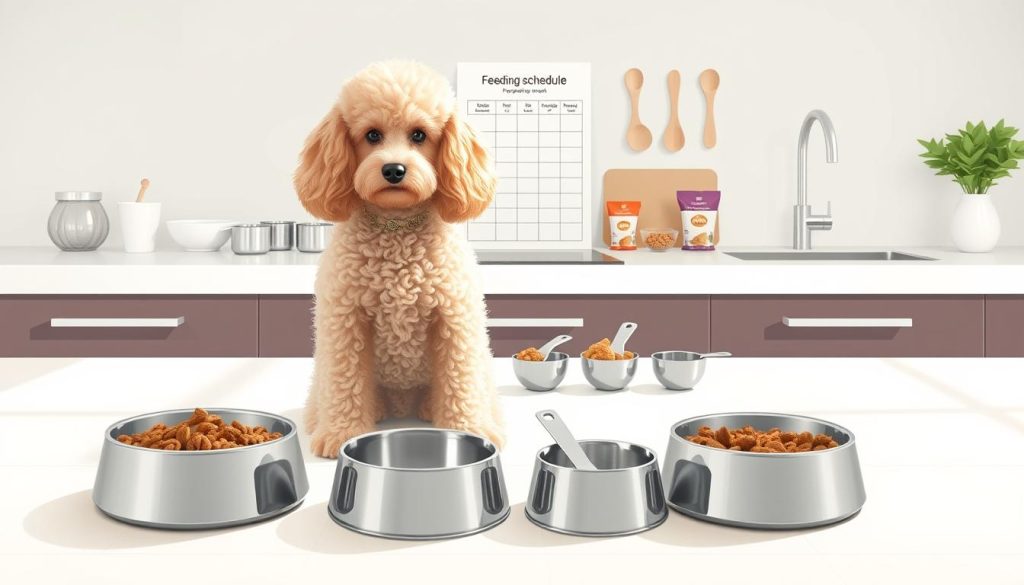
Meal timing plays an important role in Poodle calorie needs and meal management. Regular feeding times help many dogs develop healthy eating habits.
Many owners in the US feed adult Poodles one or two measured meals each day. Puppies often need more frequent meals because their bodies are growing quickly.

- ✦ Measure every meal
Use a measuring cup or kitchen scale to avoid accidental overfeeding.
- ✦ Keep routines stable
Consistent meal times can support digestion and predictable daily habits.
Free feeding versus scheduled meals
Free feeding means leaving food available all day. This method may not work well for many Poodles because some dogs eat too much when food is always available.
- ✦ Scheduled meals
Controlled meals make it easier to track calories and notice appetite changes.
Managing treats, snacks, and extra calories
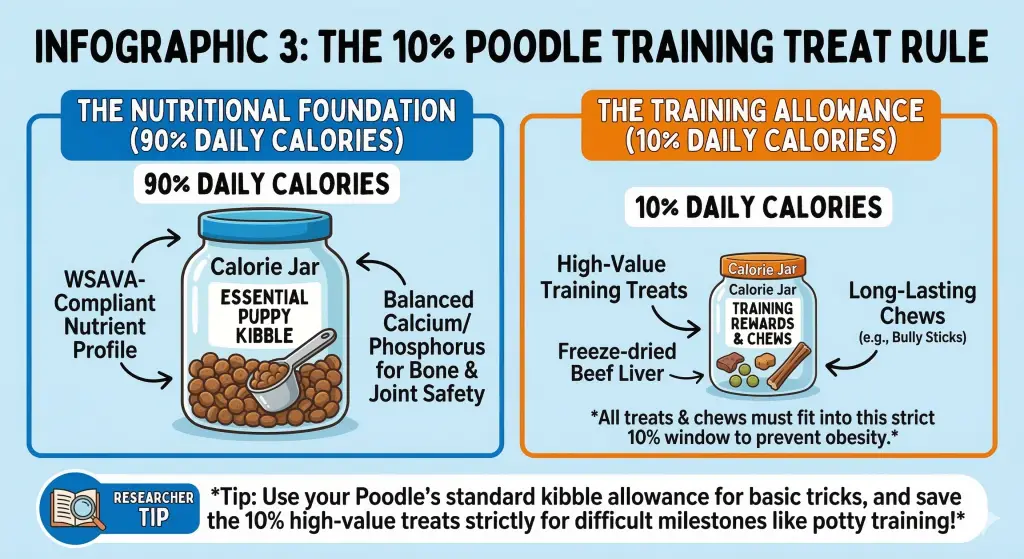
Treat management is a major part of Poodle calorie needs and meal management. Many owners carefully measure meals but forget that treats add daily calories.
Training treats are useful because Poodles are highly responsive to rewards. The goal is to balance motivation with nutrition.

- ✦ Use small treats
Tiny rewards can provide training benefits without adding too many calories.
- ✦ Count treat calories
Include snacks when thinking about your Poodle’s total daily food intake.
Healthy reward options
Some owners use small pieces of approved vegetables or low-calorie treats as rewards. Always introduce new foods slowly and confirm safety with your veterinarian.
- ✦ Training balance
Reduce meal portions slightly if your dog receives many training rewards.
Signs your Poodle may be eating too much or too little
Poodle calorie needs and meal management require regular observation. Your dog’s body condition often gives better information than a feeding label alone.
A healthy Poodle should have a visible waist when viewed from above and ribs that can be felt without strong pressure. Extreme weight changes should always be discussed with a veterinarian.
- ✦ Possible overfeeding signs
Weight gain, reduced energy, and difficulty feeling ribs may suggest your Poodle is receiving too many calories.
- ✦ Possible underfeeding signs
Low energy, poor body condition, or sudden weight loss may require a nutrition review.
Using body condition instead of appearance alone
A fluffy Poodle coat can hide body changes. Regular touch checks and weight tracking help owners notice problems earlier.
- ✦ Weekly checks
Feel your dog’s ribs and track weight changes over time.
Adjusting meals for active, senior, and special-needs Poodles
Every Poodle has unique calorie needs. A dog that enjoys long walks, training, or outdoor activities may require different meal planning than a calm companion dog.
Senior Poodles may need closer calorie control because metabolism and activity often change with age.
- ✦ Active Poodles
Increase nutrition carefully when exercise levels rise and monitor body condition.
- ✦ Senior Poodles
Adjust calories as activity decreases while maintaining quality nutrition.
Working with a veterinarian
A veterinarian can help create a feeding plan for Poodles with allergies, digestive issues, weight concerns, or other health needs.
- ✦ Professional guidance
Use veterinary advice when making major diet changes.
