
Most aquariums need a stable aquarium heater temperature between 74°F and 78°F for tropical fish.
I have kept freshwater and saltwater tanks for years, and I know how vital the aquarium heater temperature is to fish health, plant growth, and reef stability. This guide covers exact temperature ranges, how to set and check your heater, common problems, and hands-on tips I learned the hard way. Read on to make your aquarium stable, safe, and healthy.
Why aquarium heater temperature matters
A steady aquarium heater temperature keeps fish healthy. Fish are cold-blooded. Their metabolism depends on water warmth. A few degrees up or down can change behavior, appetite, and immunity. Stable temperature also helps beneficial bacteria in filters. It affects oxygen levels too. Warmer water holds less oxygen, and sudden shifts stress fish. Consistency matters more than exact numbers for many species.
Ideal aquarium heater temperature ranges by species
Different species need different aquarium heater temperature ranges. Below are simple targets to start with.
- Tropical community tanks
- 74°F to 78°F. This suits most tetras, guppies, and livebearers.
- South American species and bettas
- 78°F to 82°F. Bettas and many cichlids like warmer water.
- Discus and some Amazon fish
- 82°F to 86°F. These species need very warm, stable water.
- Freshwater plants and mixed tanks
- 72°F to 78°F. Plants prefer the lower end of tropical ranges.
- Coldwater fish like goldfish
- 60°F to 72°F. Goldfish do not need tropical heat.
- Marine reef tanks
- 76°F to 80°F. Corals and reef fish need stable, warm water.
Choose the aquarium heater temperature for the most sensitive species in your tank. When mixing types, pick the range that keeps all animals healthy.

How to choose and size a heater for your tank
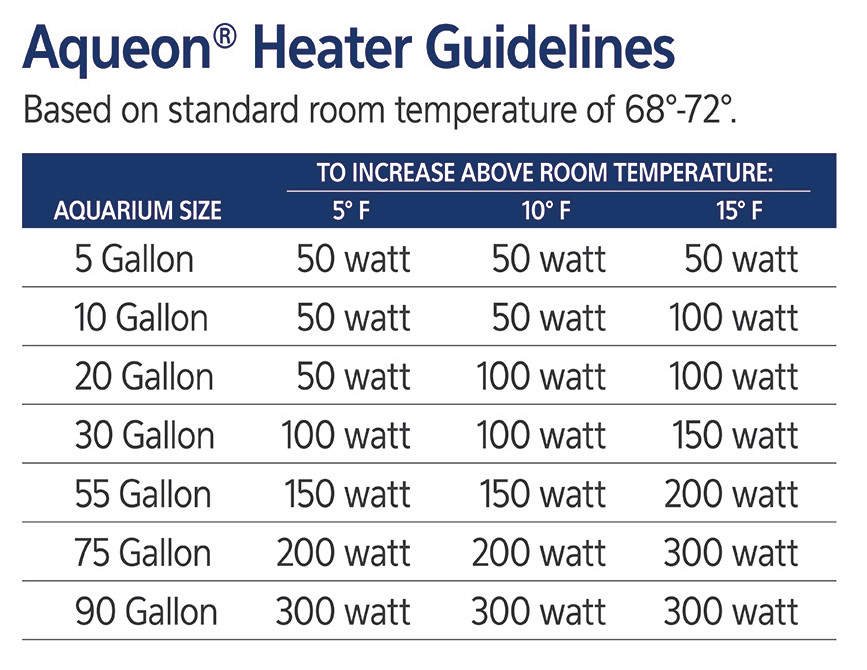
Pick heater wattage and type carefully. Use a simple rule of thumb:
- Wattage rule
- 3 to 5 watts per gallon for most tanks. Larger tanks usually need less watts per gallon.
- Tank material and room temperature
- Glass tanks lose heat faster than acrylic. Cold rooms need higher wattage.
- Type of heater
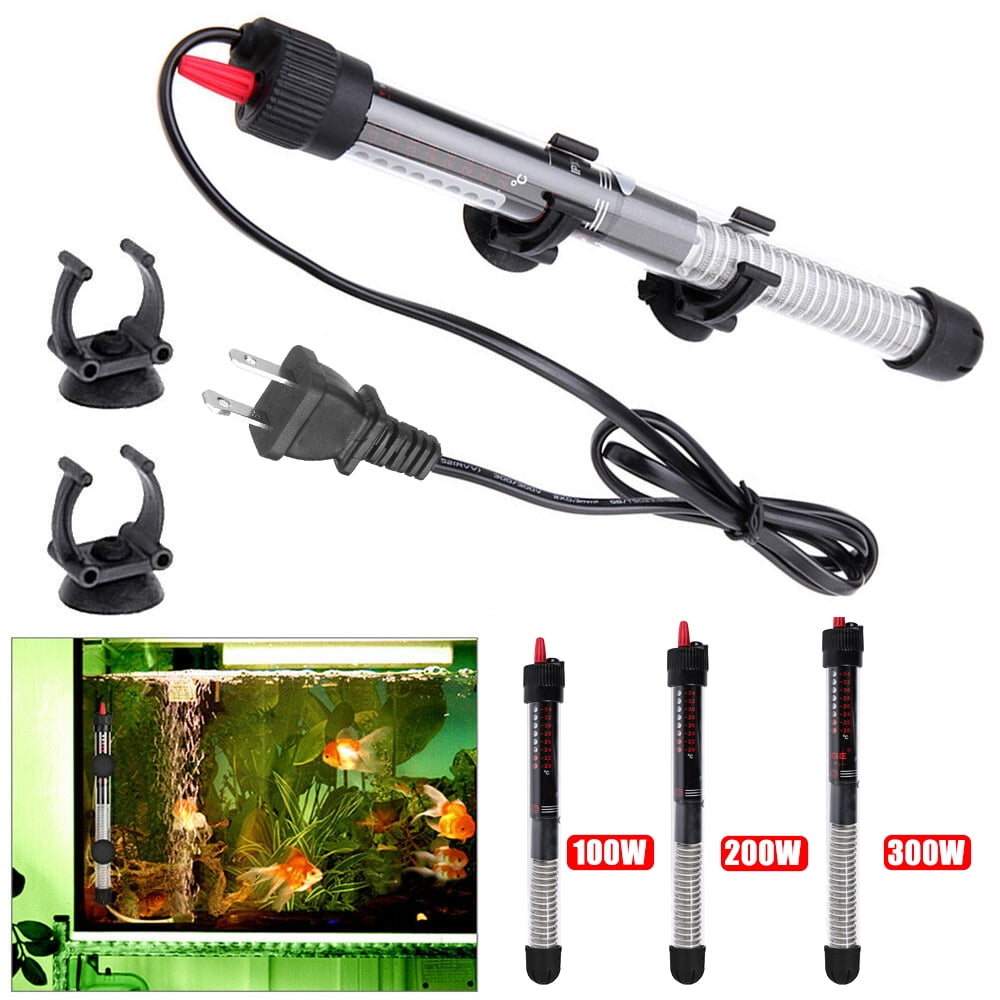
- Submersible heaters work inside the tank and give even heat.
- In-line heaters fit the filter return and keep electronics out of the tank.
- Heater controllers and thermostats add precision for larger or reef tanks.
Example: For a 20-gallon tank, a 50 to 100 watt heater is usually right. For a 75-gallon tank, use one 200 watt or two smaller heaters for redundancy.
How to set and measure aquarium heater temperature accurately
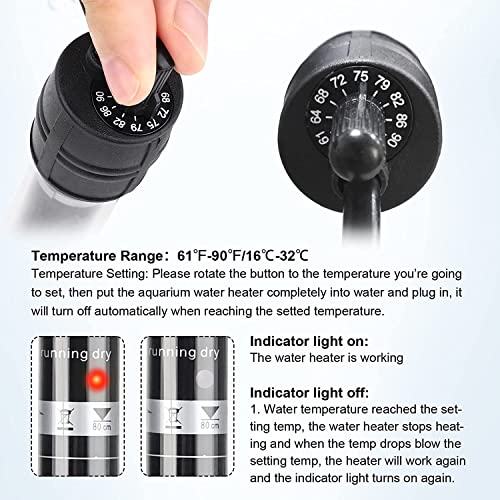
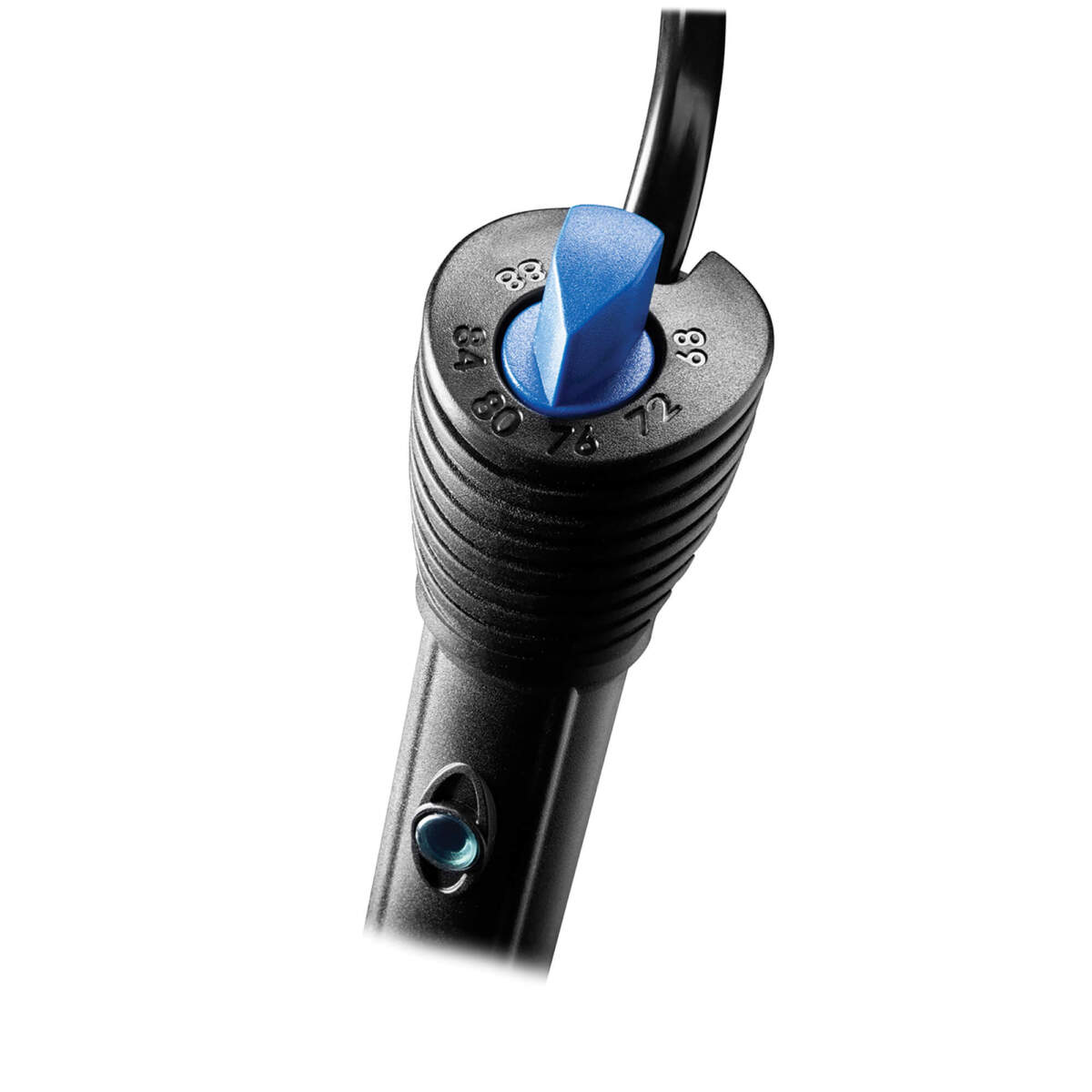
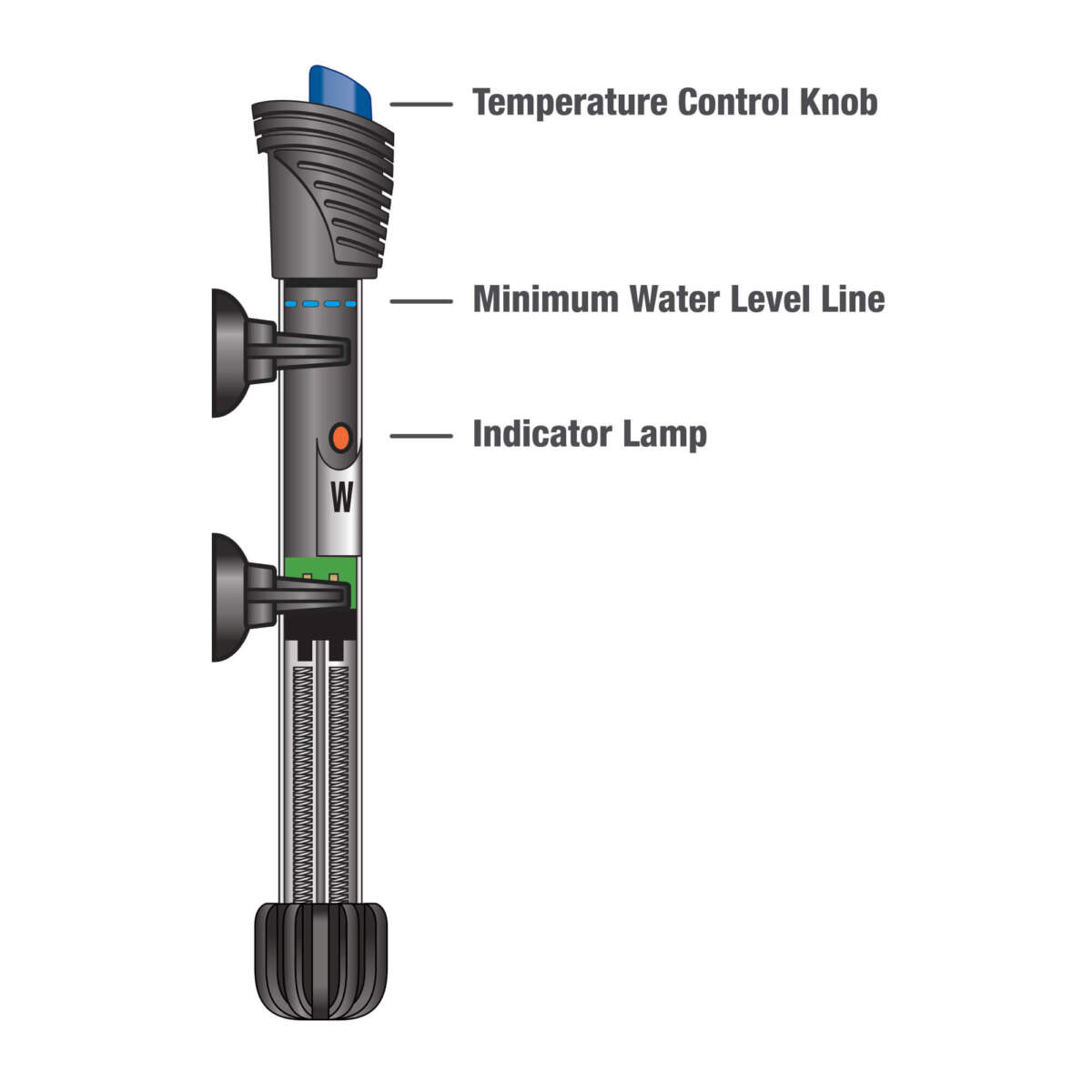
Good tools make accurate aquarium heater temperature control easy.
- Use a reliable thermometer
- Digital stick-on or probe thermometers are fast and accurate.
- Keep a spare thermometer for cross-checks.
- Place thermometer and heater correctly
- Place the thermometer away from the heater to avoid false high readings.
- Put the heater where water flow moves across it.
- Calibrate as needed
- Compare readings to a kitchen thermometer in a cup of tank water.
- Adjust if the heater reads differently.
- Let the heater stabilize
– Wait 24 hours after setting a new heater before trusting the reading. - Avoid large day-night swings
- If room temp drops at night, consider a controller or small backup heater.
I once set a new heater and trusted the built-in dial without checking. Fish became lethargic overnight. A second thermometer saved them. Now I always use two temperature checks.

Common aquarium heater temperature problems and troubleshooting
Heaters fail. Sensors drift. Here are common issues and fixes.
- Heater overshoots or keeps running
- Cause: Faulty thermostat or blocked flow. Fix: Test heater outside tank and replace if needed.
- Heater not turning on
- Cause: Broken element or power issue. Fix: Check outlet and replace heater.
- Temperature fluctuation
- Cause: Poor placement or low wattage. Fix: Add circulation or a second heater for redundancy.
- Calibration drift
- Cause: Old or cheap heater. Fix: Replace and use an external controller.
- Glass cracking
- Cause: Sudden thermal shock or hitting the heater. Fix: Use protective casing or mount heater securely.
Small failures can become big losses. I lost a few plants and one fish before I added a backup heater and a controller. Since then, my tanks stayed stable.
Tips for stability, safety, and energy efficiency
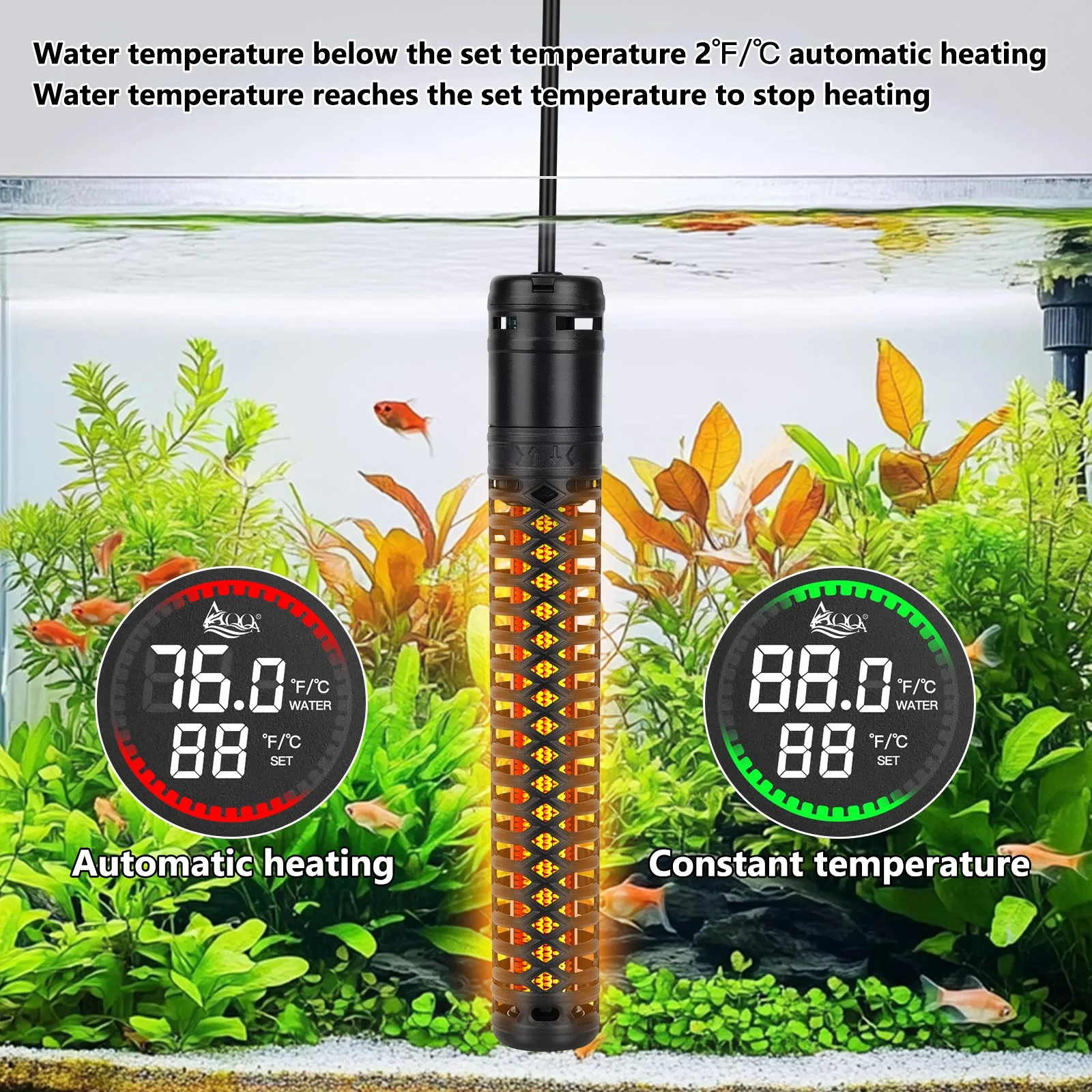
Keep your aquarium heater temperature steady while saving energy and staying safe.
- Use a heater with a good thermostat
- Precision saves energy and prevents stress.
- Use two smaller heaters instead of one large one
- This provides backup if one fails.
- Insulate in winter
- Keep the tank away from cold windows and use a tank hood.
- Turn off heat sources during water changes
- Move fish to a bucket with the same aquarium heater temperature if needed.
- Monitor power outages
- Battery backups and a generator can keep critical tanks safe.
- Safe placement
- Mount heaters horizontally in areas with good flow for even heating.
Energy tip: A stable aquarium heater temperature uses less power than frequent recovery after temperature swings.
Frequently Asked Questions of aquarium heater temperature
What is the best aquarium heater temperature for community fish?
Most community tropical fish do best between 74°F and 78°F. This range balances comfort for many species and plant health.
How often should I check my aquarium heater temperature?
Check daily until you trust your setup, then at least twice a week. Use two thermometers to confirm readings after any change.
Can too high aquarium heater temperature kill fish?
Yes. Temperatures above a species’ tolerance can cause stress, oxygen loss, and death. Reduce heat slowly and move sensitive fish if needed.
Should I leave the heater on overnight?
Yes, leave the heater on to maintain a stable aquarium heater temperature. Nighttime swings are more stressful than daytime warmth.
Is it okay to use a single heater for large tanks?
It can work, but two heaters are safer. Using two smaller heaters prevents total loss if one fails and keeps the aquarium heater temperature more stable.
How do I acclimate fish to a different aquarium heater temperature?
Raise or lower the tank temperature slowly by 1°F every few hours when possible. Use drip acclimation for sensitive species to avoid shock.
Conclusion
A stable aquarium heater temperature keeps fish healthy, plants growing, and corals thriving. Use the right heater size, place it for good flow, check with reliable thermometers, and add redundancy to avoid surprises. Start today by checking your current aquarium heater temperature, adding a second thermometer, and planning a backup strategy. Share your experiences below or subscribe for more practical tank care tips.

Pingback: Reptile Terrarium Setup Guide: Easy Steps For Beginners - pettraiers.com