
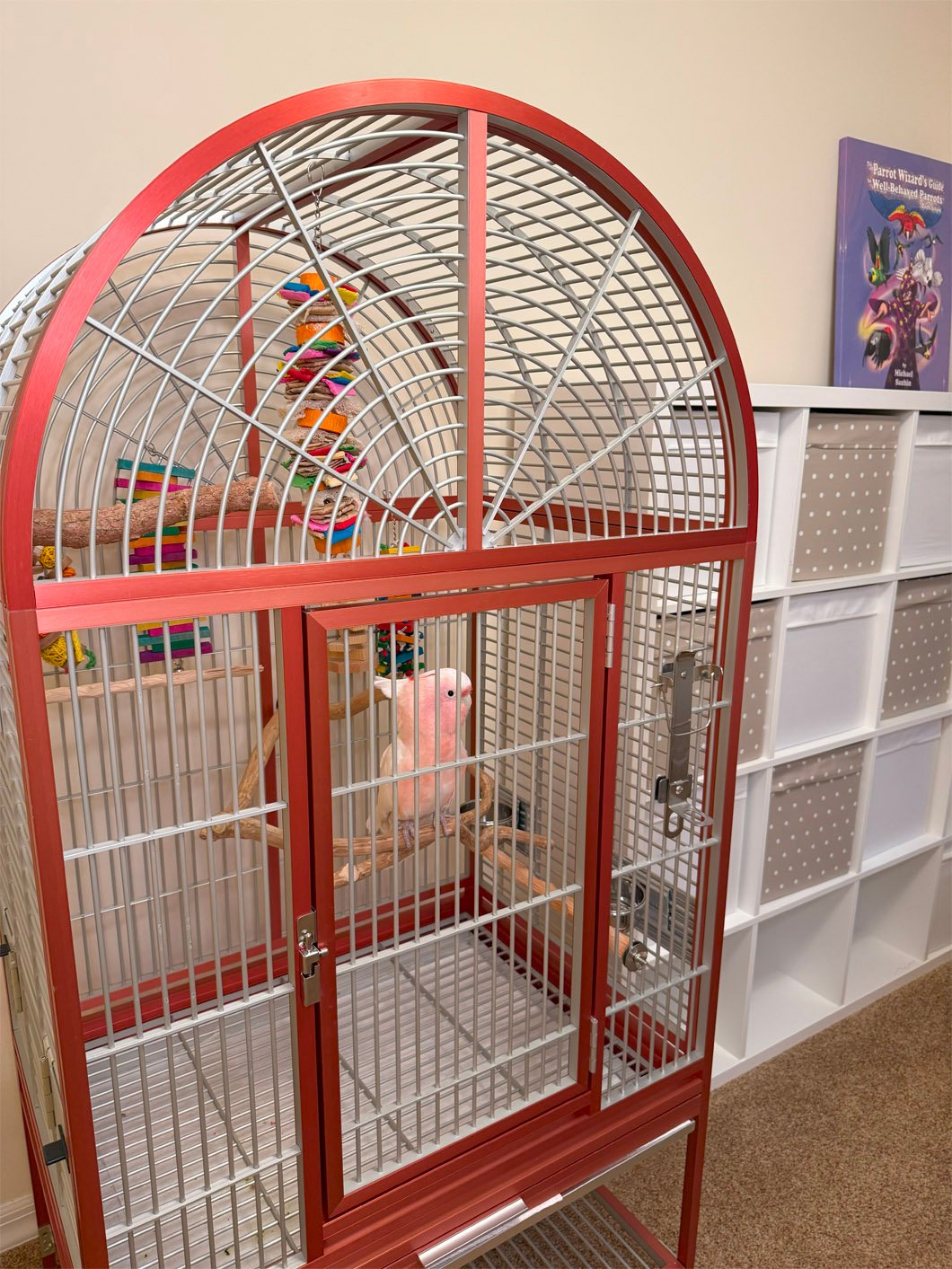
A proper bird cage setup guide ensures safety, comfort, and enrichment for your bird.
I have set up cages for parrots, finches, and cockatiels for over a decade. This bird cage setup guide brings hands-on tips, quick checks, and mistakes to avoid. Read on for step-by-step advice that makes your bird’s space safe, healthy, and fun.

Choosing the right cage: size, shape, and materials
Pick a cage with enough room for your bird to stretch, flap, and climb. This bird cage setup guide starts with size because space affects health and behavior. Bigger is almost always better. Choose stainless steel or powder-coated metal for durability and safety, and avoid cages with lead, zinc, or toxic paint.
Cage shape matters. Taller cages suit climbers and birds that like to hop. Wider cages are better for birds that need horizontal flight. For pair-housed birds, increase size to allow separate spaces. I learned this after confining a budgie too tightly; the bird became withdrawn until I upgraded the cage.
- Recommended minimums for common birds: budgies need at least 18 x 18 x 24 inches, cockatiels need at least 24 x 24 x 30 inches, conures and small parrots need 30 x 30 x 36 inches.
- Material notes: stainless steel resists rust; powder-coated steel is affordable; avoid galvanized steel if you can.
- Bar spacing: 1/2 inch for finches and budgies, 3/4 inch for cockatiels, 1 to 1.5 inch for small parrots.

Cage location and room setup
Where you place the cage changes how your bird feels. This bird cage setup guide recommends a lively, safe spot with natural light and stable temperature. Keep the cage away from direct drafts, kitchen fumes, and windows with intense midday sun. Birds like to see household activity but also need quiet time.
Place the cage at eye level or slightly higher for most parrot species. For timid birds, a slightly lower spot near family traffic can help them adapt. Avoid bedrooms at night if you snore or use bright lights. I once placed a cage near a busy door and had constant stress calls from the bird; moving it to a calmer corner stopped that.
- Light: natural light helps sleep cycles but limit direct hot sun.
- Temperature: keep room between 65°F and 80°F, depending on species tolerance.
- Safety checks: no loose cords, toxic plants, or open water sources nearby.

Essentials inside the cage: perches, feeders, and water
The inside matters as much as the outside. This bird cage setup guide focuses on comfort and function. Add varied perches to exercise feet. Use multiple food and water stations so birds don’t compete or contaminate their bowls.
Choose perch types, including rope, natural wood, and dowel. Keep perches of different diameters to strengthen feet. Place food and water away from droppings. I mix natural wood perches and sanded dowels; it kept my cockatiel’s feet healthy.
- Perch placement: avoid placing perches directly above food or water.
- Feeders: use easy-clean bowls or attachable stainless steel feeders.
- Water: provide fresh water daily; consider a small drinking bottle for finches if they prefer.

Toys, enrichment, and psychology
Toys prevent boredom and support mental health. This bird cage setup guide encourages rotation and variety. Include chew toys, foraging toys, and swings. Match toy size and toughness to your bird’s beak strength.
Rotate toys weekly to keep interest high. Offer safe materials: untreated wood, leather, stainless steel, and sisal. Avoid toys with small parts that can be swallowed. From my experience, a bored bird can pick up unwanted habits; enrichment cuts the risk of plucking and screaming.
- Toy types: chewable, puzzle/foraging, bells and chimes, swings, ladders.
- Rotation tips: swap one or two toys at a time to gauge preference.
- Safety checks: inspect toys for frayed strings or loose parts weekly.

Bedding, trays, and hygiene
Cleanliness prevents disease. This bird cage setup guide stresses daily checks and weekly deep cleans. Use paper liners, plain paper towels, or bird-safe cage liners for droppings. Avoid cedar or pine shavings because of harmful oils.
Daily spot cleaning keeps odors down. Weekly, remove birds to a safe area and scrub the cage with hot water and a bird-safe cleaner or diluted vinegar. Rinse thoroughly and dry before returning the bird. I use plain paper liners for ease and change them daily; it saved me from mold problems once.
- Daily tasks: change liners, refresh water, remove uneaten food.
- Weekly tasks: clean perches, toys, and trays; disinfect with safe solutions.
- Monthly tasks: deep clean the entire cage and check hardware and paint.
Introducing a new bird and training in the cage
A gentle introduction reduces stress. This bird cage setup guide recommends slow, stepwise exposure. Let the bird explore outside the cage only after trust grows. Start training with short, positive sessions.
Use treats and soft praise to link the cage to good things. Offer a comfy sleeping area and cover the cage at night for a few days if the bird is nervous. My first parrot took two weeks to step up calmly; patience and consistency were key.
- Step 1: allow visual access before physical handling.
- Step 2: offer food treats near the cage door.
- Step 3: practice short handling sessions and build time gradually.
Common mistakes and how to avoid them
Many problems stem from small oversights. This bird cage setup guide highlights the top errors and fixes. Mistakes include wrong bar spacing, toxic materials, poor perch variety, and infrequent cleaning. These issues lead to injury, stress, or illness.
Avoid placing the cage in the kitchen. Never use heavy metals or toxic paints. Keep noise and sudden traffic low. Learn from my mistake: a cheap cage with narrow spacing caused a small foot injury. Upgrading to the right cage fixed behavior and health problems fast.
- Don’t use scented cleaners or aerosols near the cage.
- Don’t overcrowd the cage; leave space for flight.
- Don’t ignore toothy beak needs; provide safe chewing toys.
Maintenance schedule and health checks
Routine keeps birds healthy. This bird cage setup guide lays out simple maintenance. Do daily spot checks, weekly deep cleans, and monthly full inspections. Watch your bird’s droppings, feathers, appetite, and behavior for red flags.
If you notice changes, contact an avian vet. Keep a small first-aid kit with styptic powder and tweezers for emergencies. I log cleanings and vet visits on my phone; it helps spot trends early and keeps vet advice timely.
- Daily: water, food, liners, quick wipe of food areas.
- Weekly: full tray clean, scrub toys, wash perches, disinfect.
- Monthly: check bars, latches, welds, and replace worn toys or perches.
Supplies checklist for a great bird cage setup guide
A quick list helps new owners start right. This bird cage setup guide includes essentials and nice-to-haves. Buy quality where it matters. Replace cheap items that fail quickly.
- Cage sized for species
- Multiple perches of varied texture and diameter
- Food and water bowls, extra set for rotation
- A mix of safe toys and chew items
- Cage liners or paper, cleaning supplies, and a thermohygrometer
Troubleshooting common issues
Problems are normal and fixable. This bird cage setup guide gives practical fixes. If your bird is noisy, check for boredom or hunger. If it plucks, review diet, stressors, and veterinary care.
If a bird avoids a perch, swap materials and position. If toys are ignored, rotate different types or add foraging elements. From experience, small changes often solve big issues fast.
Frequently Asked Questions of bird cage setup guide
How large should my bird’s cage be?
Pick a cage that allows your bird to fully stretch its wings and move around. Minimum sizes vary by species; more space supports better health and behavior.
What bar spacing is safe for my bird?
Choose bar spacing based on bird size and beak strength. Small birds need tighter spacing (about 1/2 inch); larger parrots can use 1 inch or more.
How often should I clean the cage?
Do spot cleaning daily and a full clean weekly. Deep clean and disinfect monthly or sooner if you see mold, parasites, or illness.
Can I use cedar shavings in the cage?
No. Cedar and some other wood shavings release oils that harm birds’ respiratory systems. Use paper liners or bird-safe bedding instead.
Where is the best place to put the cage in my home?
Place the cage in a calm, bright room away from drafts and kitchen fumes. Keep it where the family spends time, but allow quiet hours at night.
Conclusion
This bird cage setup guide gives clear steps to create a safe, comfy, and enriching home for your bird. Start with the right cage, set it in a good spot, add varied perches and toys, and keep a steady cleaning and training routine. Take action today: check your cage against the checklist above, make one improvement, and watch your bird thrive. Share your progress, ask questions, or subscribe for more care tips.

Pingback: Parrot Care And Diet Guide: Essential Tips For Healthy Birds - pettraiers.com