
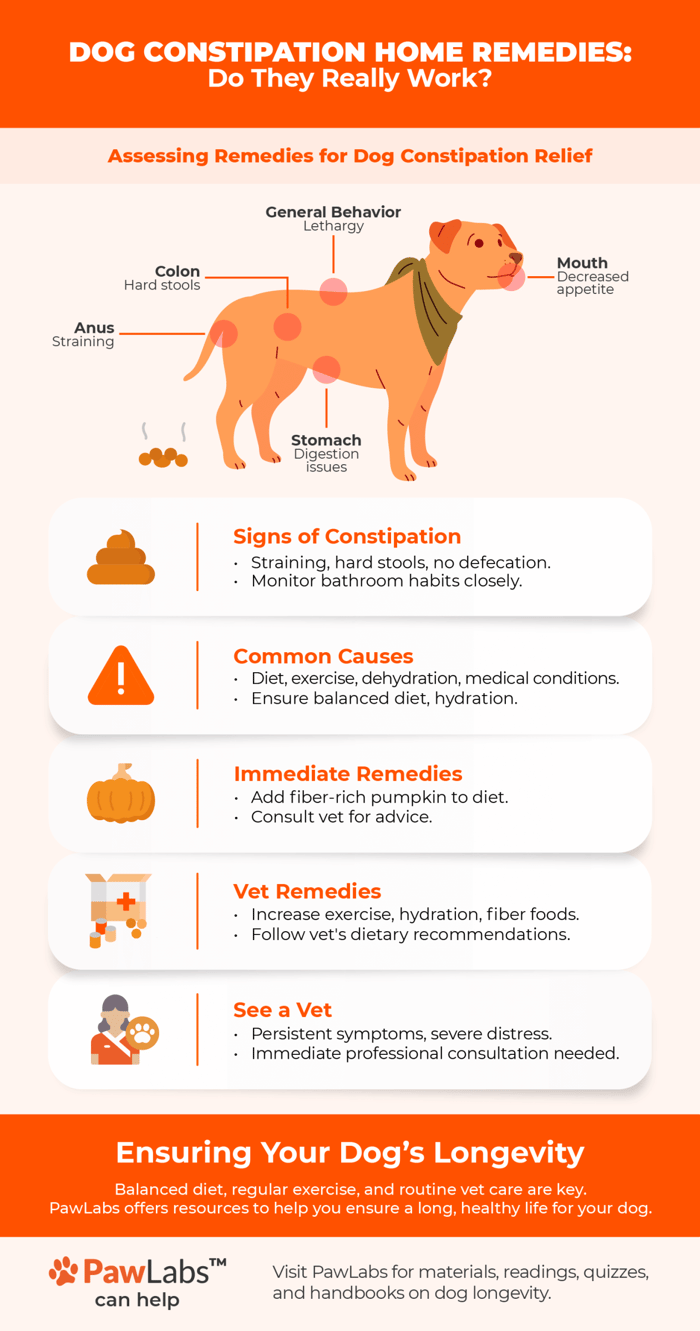
Diet changes, dehydration, and intestinal blockages are common causes of dog constipation.
I’ve worked with veterinarians and pet owners for years, so I know dog constipation causes inside and out. This guide breaks down why constipation happens, how vets diagnose it, proven treatments, and practical prevention tips you can use today. Read on to get clear, trustworthy advice and real-life tips that help dogs feel better fast.
:strip_icc()/dog-constipation-causes-and-treatment-4129096_v2-eee4b07bcc3f44c0b27a1e4ebea38805.jpg)
Common dog constipation causes
Many things can lead to dog constipation causes. Some are simple and easy to fix. Others need vet care right away.
- Diet changes: A sudden switch in food can slow digestion and cause constipation.
- Low fiber intake: Dogs that eat little fiber are more likely to have hard, dry stools.
- Dehydration: Not drinking enough water makes stool firm and hard to pass.
- Ingested foreign objects: Chewed toys, bone fragments, and other items can block the colon.
- Bones and hairballs: Cooked bones and heavy hair ingestion can form plugs in the gut.
- Medications: Pain meds, certain antacids, and some supplements can cause constipation.
- Metabolic or hormonal issues: Conditions like hypothyroidism and kidney disease may slow bowel motility.
- Spinal or pelvic injury: Nerve damage can reduce the ability to pass stool.
- Tumors or strictures: Growths in the colon or rectum can block stool movement.
- Age and inactivity: Older or sedentary dogs often have slower gut transit and weaker bowels.
From my clinic visits, I saw many cases start after an owner switched kibble or fed lots of table scraps. Small fixes like adding fiber often helped when no blockage was present.

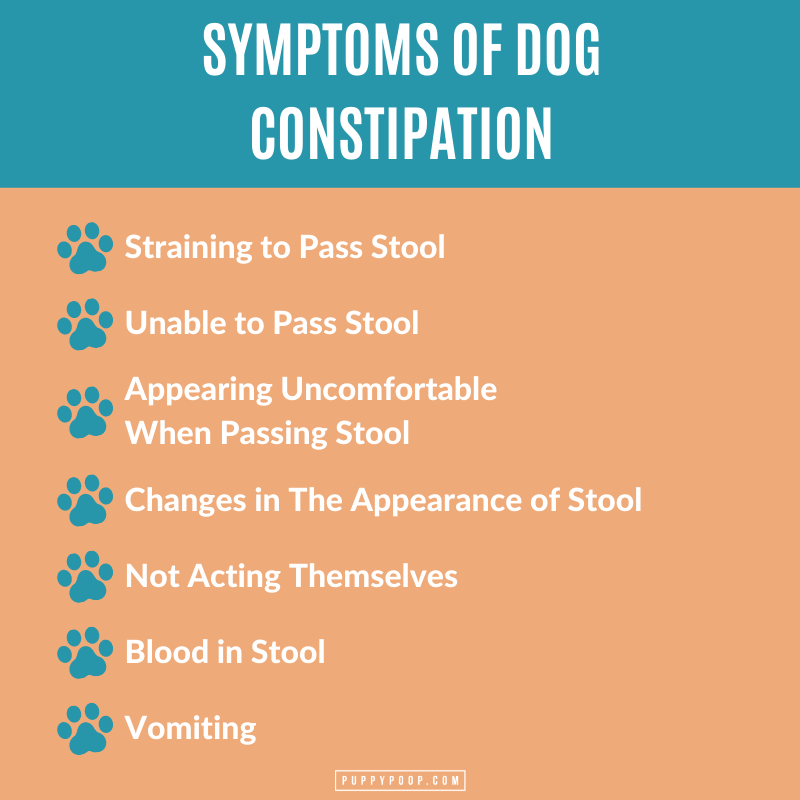
Symptoms to watch for
Spotting signs early speeds recovery. Watch your dog closely for changes.
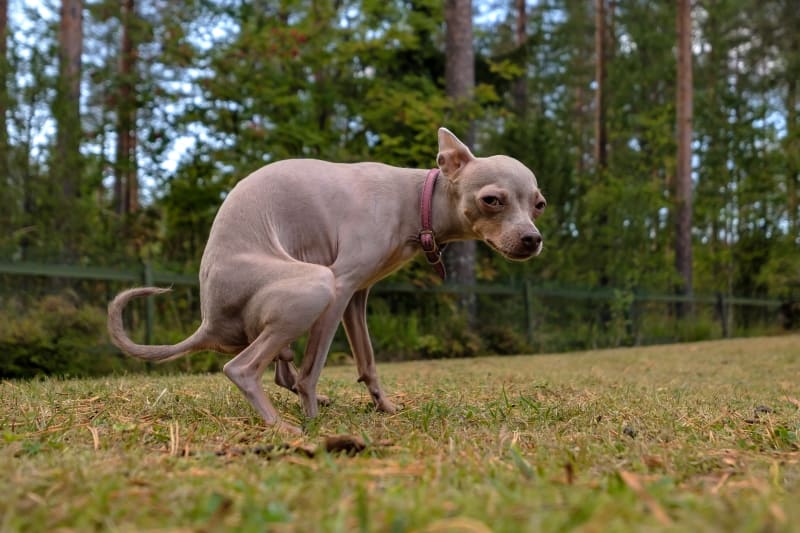
- Straining to defecate: Prolonged pushing with little or no stool.
- Hard, dry, or small stools: Stool may be pellet-like or crumbly.
- Less frequent bowel movements: Missing a regular daily stool is a warning.
- Loss of appetite and lethargy: Pain and discomfort make dogs eat less.
- Vomiting or abdominal discomfort: Can signal a more serious blockage.
- Scooting or licking the rear: Dogs try to relieve irritation or pain.
If your dog shows mild straining for a short time, try home care. If symptoms worsen or last more than 48–72 hours, see a vet.
How vets diagnose dog constipation causes
Vets use a stepwise approach to find root causes of dog constipation causes. Diagnosis is often quick but thorough.
- Detailed history: The vet asks about diet, medications, and recent behavior changes.
- Physical exam and abdominal palpation: A doctor can often feel a firm colon or mass.
- Rectal exam: This checks for obstructions, strictures, or pain in the lower bowel.
- X-rays or ultrasound: Imaging reveals blockages, foreign objects, or constipation severity.
- Bloodwork and urinalysis: Tests look for metabolic causes like dehydration or thyroid disease.
- Fecal exam: This rules out parasites and infection that can change stool consistency.
In practice, clear history plus a simple X-ray often pinpoints whether constipation comes from diet, an object, or a medical issue.
Treatment options for dog constipation causes
Treatment depends on the cause and severity. Many cases respond to gentle, low-risk measures. Severe obstruction needs urgent care.
- At-home remedies: More water, canned pumpkin, and added fiber can soften stool for mild cases.
- Increased exercise: Movement helps stimulate bowel function.
- Oral laxatives and stool softeners: Vets may recommend osmotic agents or stool softeners for short-term use.
- Enemas and manual removal: Performed by a veterinarian when stool is impacted.
- Fluid therapy: IV or subcutaneous fluids correct dehydration and help soften stool.
- Surgery: Required for foreign body removal, tumors, or severe strictures that block the colon.
I once treated a middle-aged Labrador that became constipated after eating cooked bones. After an X-ray confirmed a blockage, a quick surgical removal resolved the issue. Early vet care prevented complications.
Prevention and long-term care
Simple habits reduce the chance of recurring dog constipation causes. Consistency is key.
- Keep a stable diet: Avoid abrupt food changes and limit table scraps.
- Add fiber safely: Canned pumpkin or vet-recommended fiber supplements can help regularity.
- Encourage hydration: Fresh water, wet food, or water fountains increase intake.
- Regular exercise: Daily walks support bowel motility and overall gut health.
- Avoid risky chews: Do not give cooked bones or items that splinter.
- Monitor medications: Ask your vet about constipation risk and possible alternatives.
- Routine vet checks: Annual exams catch medical issues that can cause constipation.
From experience, owners who add a small amount of pumpkin and increase walks see marked improvement in weeks.
When constipation is an emergency
Some signs mean you must get immediate veterinary help. Don’t wait if you see these.
- Repeated vomiting with no stool passed for over 24 hours.
- Severe abdominal swelling or pain that makes your dog whine or cry.
- Bloody stools or bright red blood after straining.
- Complete inability to pass stool for 48–72 hours with weakness.
- Signs of shock: pale gums, rapid breathing, or collapse.
In my work, dogs with prolonged obstruction can develop bowel necrosis or systemic illness quickly. Fast action saves lives.
Frequently Asked Questions of dog constipation causes
What are the most common dog constipation causes?
The most common causes are diet change, low fiber, dehydration, and swallowed foreign objects. Medications and age-related slow transit are also frequent factors.
Can a change in food cause constipation?
Yes. Sudden switches can upset digestion and slow stool movement. Transition slowly over 7–10 days to reduce risk.
Is canned pumpkin safe for constipation in dogs?
Plain canned pumpkin is safe and often effective when used in small amounts. Use 1–4 teaspoons for small dogs and 1–4 tablespoons for larger dogs, depending on size.
How long is too long to wait before seeing a vet?
If constipation lasts more than 48–72 hours or is accompanied by vomiting, severe pain, or bleeding, see a vet right away. Faster care is better for possible obstructions.
Can senior dogs be more prone to constipation?
Yes. Older dogs can have slower gut motility, less water intake, and medical conditions that increase constipation risk. Regular monitoring and vet checks help prevent chronic problems.
Conclusion
Dog constipation causes range from simple diet issues to serious blockages. Spotting symptoms early and using practical steps—hydration, fiber, exercise—often resolves mild cases. If signs persist, seek veterinary diagnosis and treatment without delay. Take action today: check your dog’s diet, encourage water and walks, and schedule a vet visit if problems continue. Leave a comment with your experience or subscribe for more pet health guides.
