
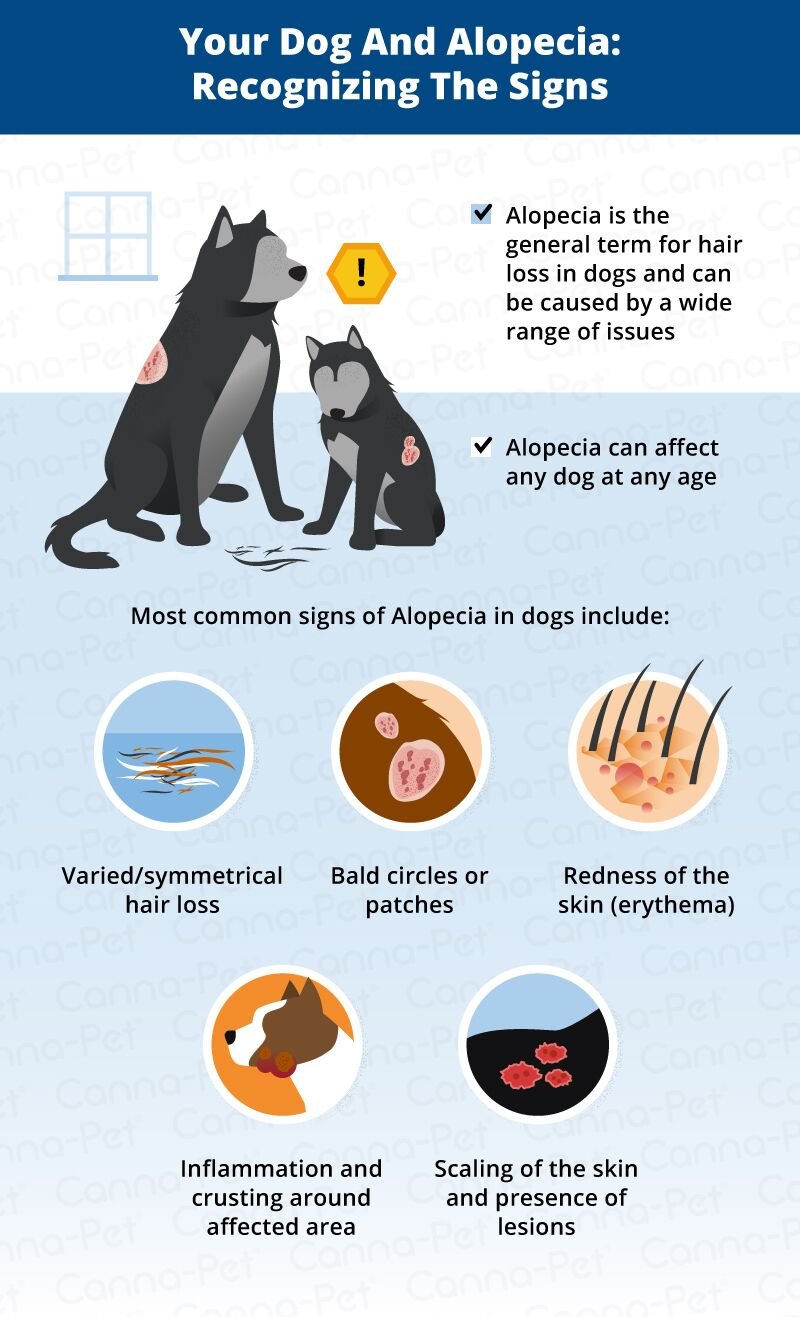
Dog hair loss patches often point to allergies, parasites, infections, or stress and need vet assessment.
As a long-time canine groomer and writer who has helped dozens of owners spot and treat dog hair loss patches, I know how worrying a bare spot can feel. This guide explains why patches appear, how to check them, common causes, practical treatments, and when to see your vet. Read on for clear, experience-based advice that helps you act fast and wisely for your dog.
What causes dog hair loss patches?
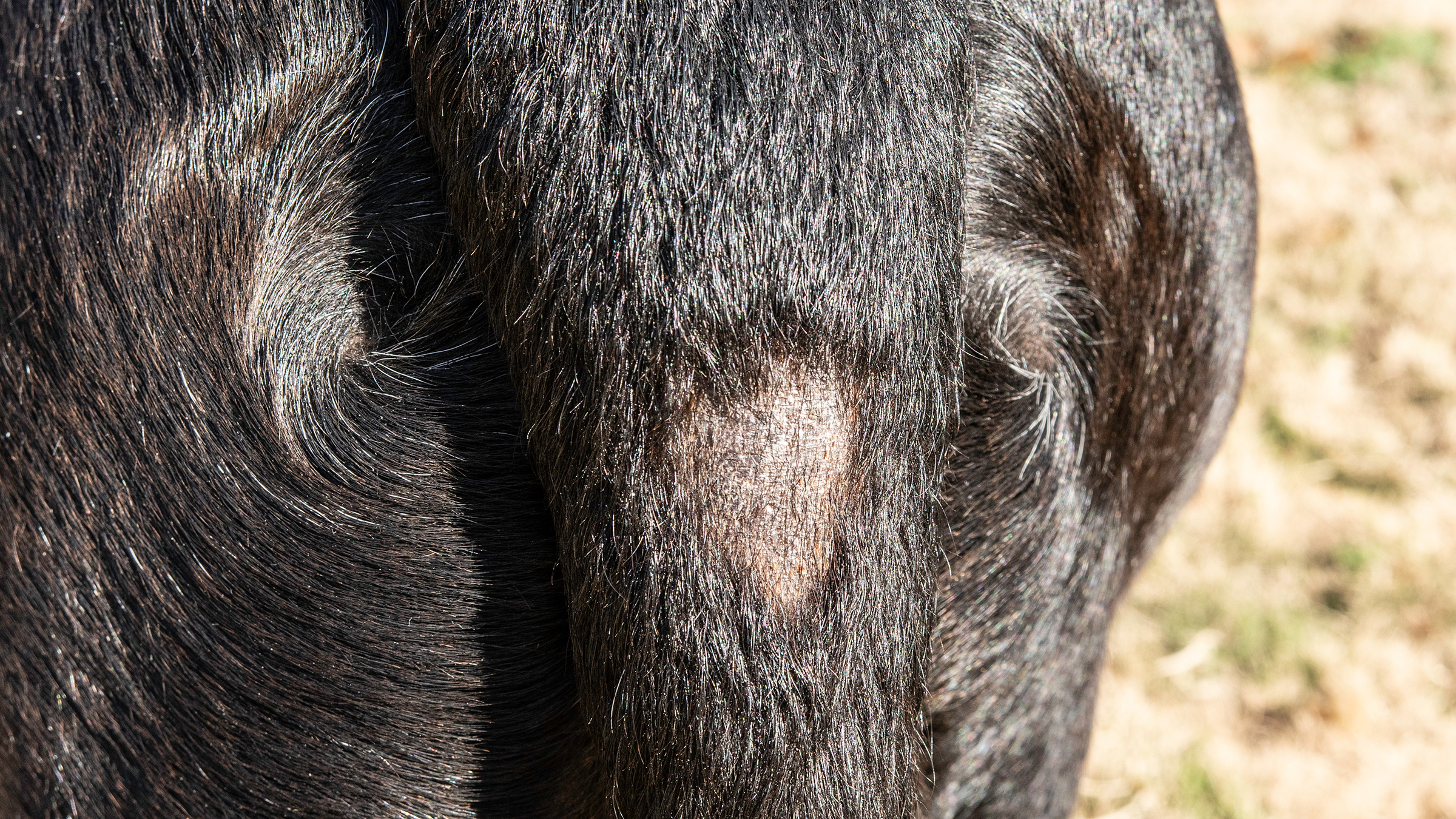
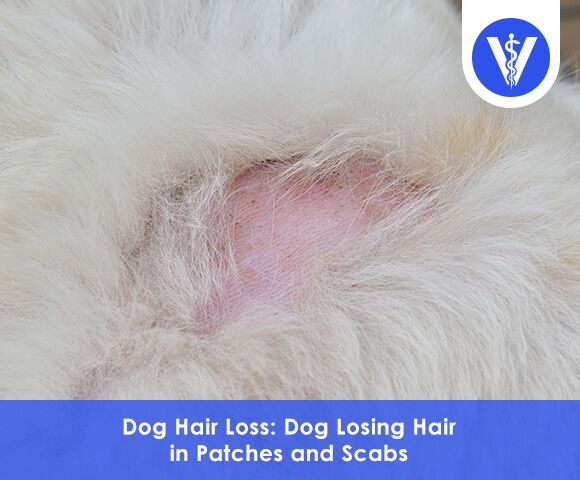
Dog hair loss patches can come from many reasons. Some causes are easy to fix. Others need medical care.
- Allergies can cause itchy patches and repeated chewing.
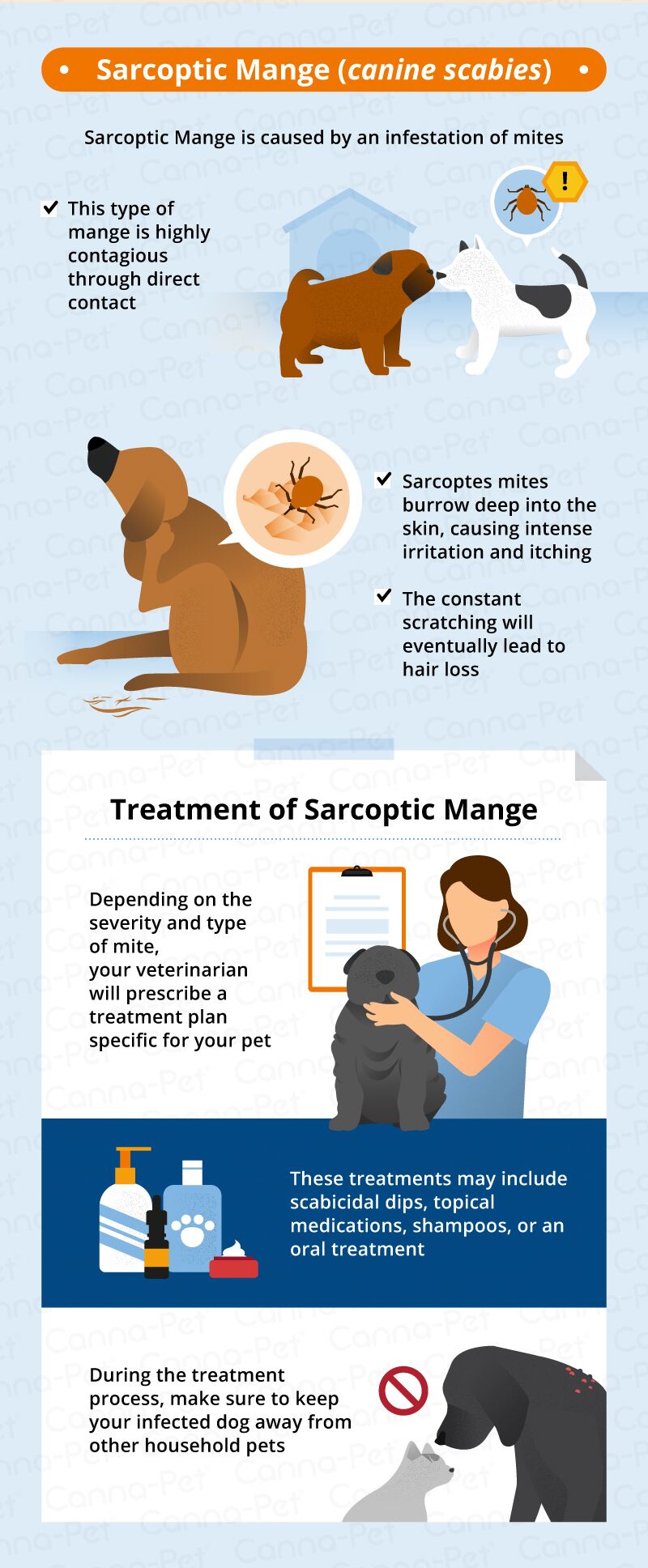
- Fleas and mites often make local hair loss and redness.
- Fungal infections like ringworm create round, flaky patches.
- Hormonal issues such as hypothyroidism can cause wider thinning.
- Stress and boredom sometimes lead to licking and hair loss.

How to diagnose dog hair loss patches
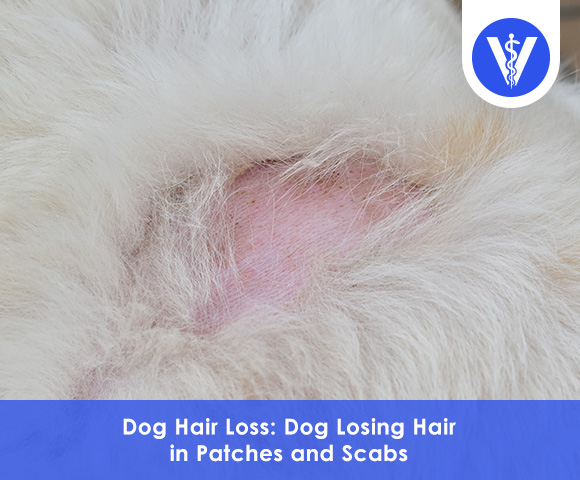
Start with a calm, visual check. Note size, shape, redness, and if the skin is scaly or wet. Collect simple clues before calling the vet.
- Look for symmetry: mirrored patches often suggest hormones.
- Check for itch: heavy scratching points to parasites or allergies.
- Use a flashlight to inspect closely and part the fur.
- Take photos to track changes and share with your vet.
Types and patterns of dog hair loss patches
Different patterns hint at different causes. Knowing common patterns helps you decide the next step.
- Localized round patches often mean ringworm or a bite.
- Widespread thinning may signal hormones or chronic allergies.
- Seasonal shedding is normal, but small bald patches are not.
- Hot spots are wet, painful sores that can remove hair fast.
Treatment options for dog hair loss patches
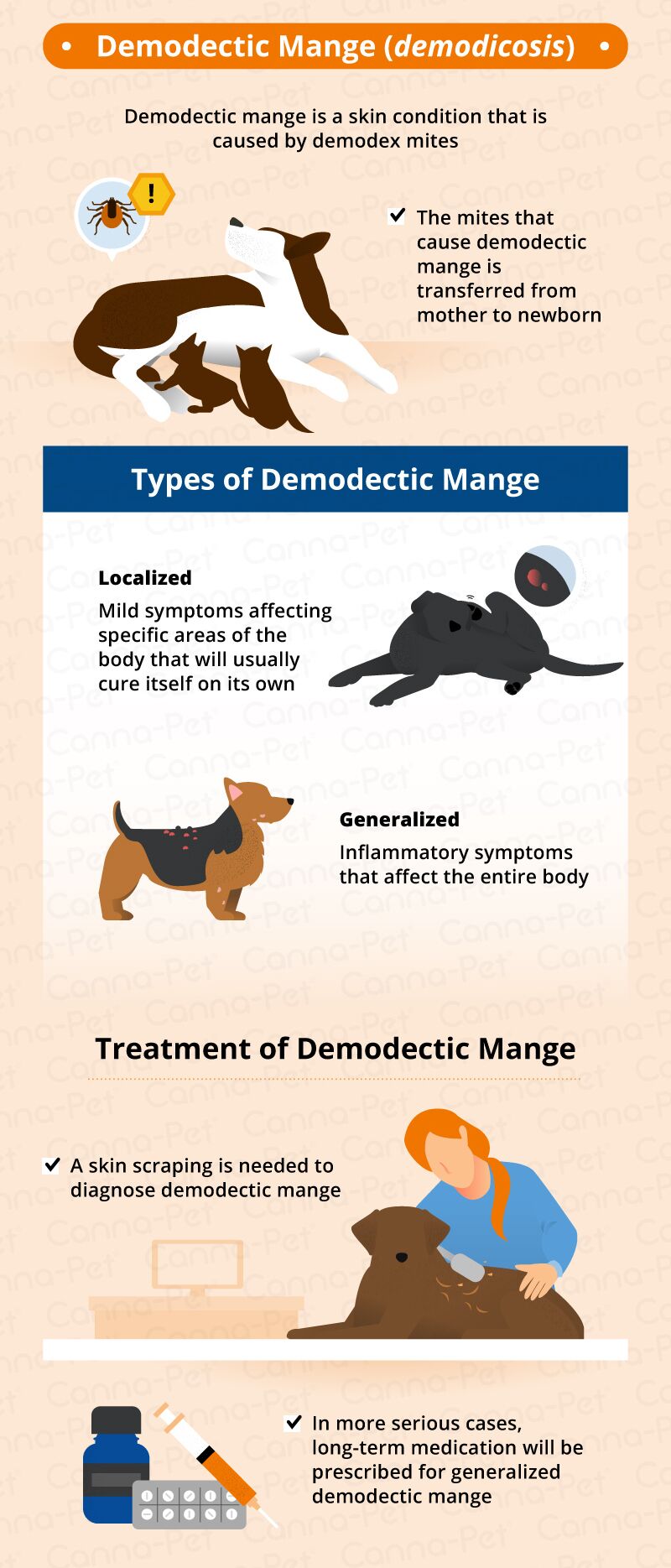
Treatments must match the cause. A good plan blends vet care with home support.
- Parasite control: flea and mite treatments clear many cases.
- Antifungal or antibacterial meds for infections.
- Anti-inflammatory drugs or allergy plans for itchy dogs.
- Hormone therapy for diagnosed endocrine problems.
- Topical care: medicated shampoos and gentle creams.
I once treated a terrier with round patches that looked like allergies but proved to be ringworm. A short antifungal course fixed the patches in weeks. That taught me not to guess and to test early.
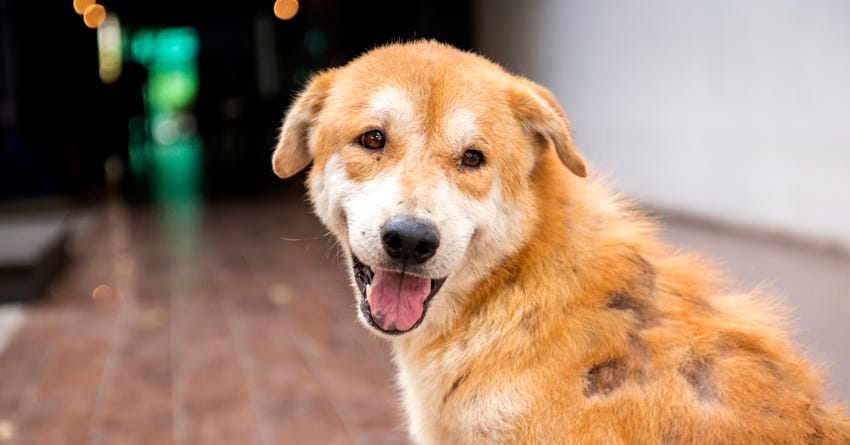
Home care and prevention for dog hair loss patches
Daily care can stop small problems from growing. Keep routines simple and consistent.
- Keep your dog clean with gentle, vet-approved shampoos.
- Use regular flea and tick prevention all year.
- Feed a balanced diet rich in omega fats for skin health.
- Reduce stress with exercise, toys, and predictable routines.
- Clean bedding and grooming tools to avoid re-infection.
Choosing the right products for dog hair loss patches
Product choice matters. Pick safe, vet-approved items and avoid human drugs unless told.
- Look for shampoos labeled for dogs and the specific condition.
- Choose topical treatments made for pets and follow dose rules.
- Consider supplements with omega-3s after vet approval.
- Avoid steroid creams unless prescribed by a veterinarian.
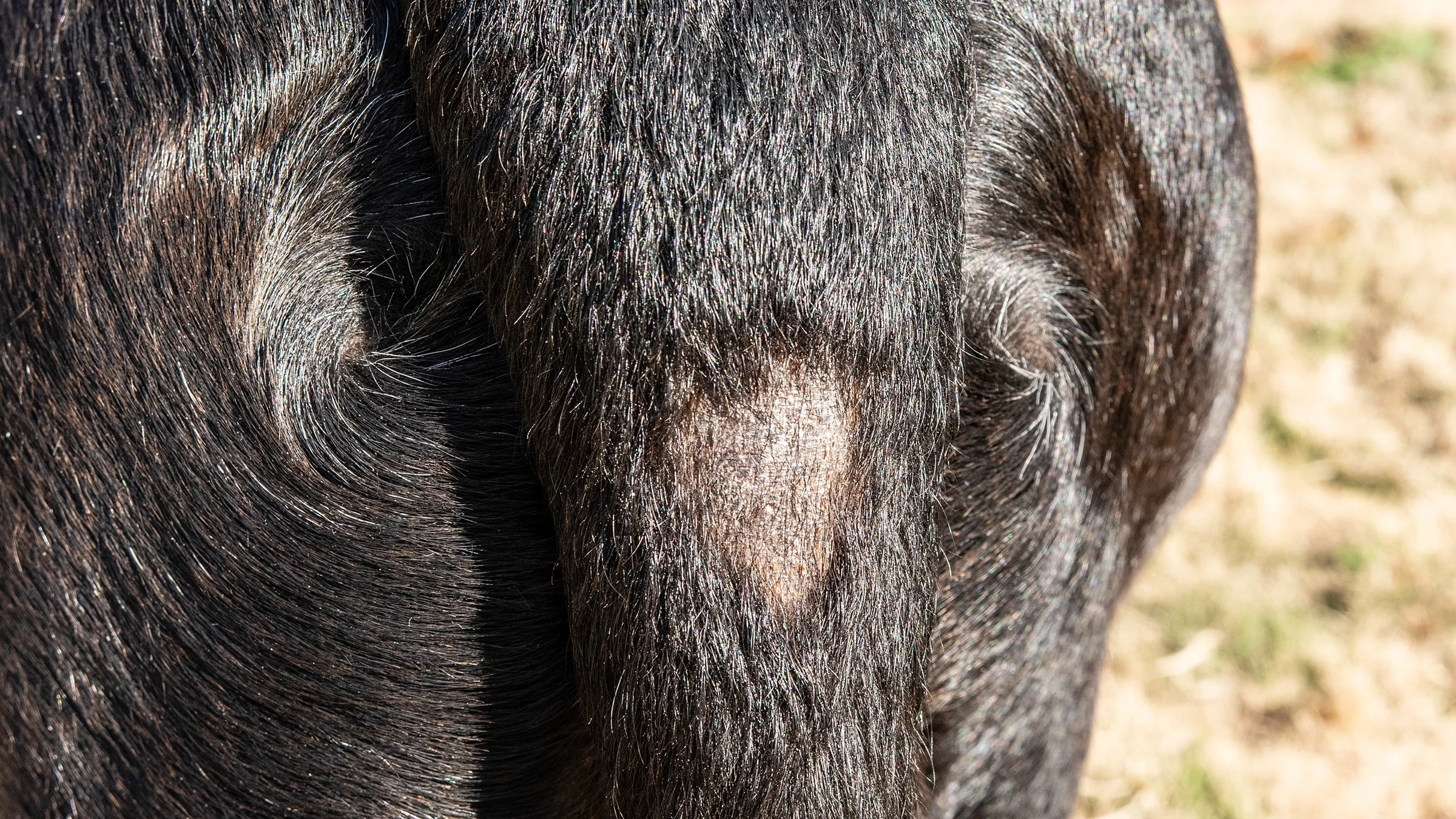
Risks and complications of untreated dog hair loss patches
Left unchecked, small patches can become bigger problems. Quick action lowers risk.
- Infections can deepen and become painful.
- Chronic scratching can create open wounds and scarring.
- Untreated mites or fleas can spread to other pets and people.
- Long-term hormonal issues affect overall health and weight.
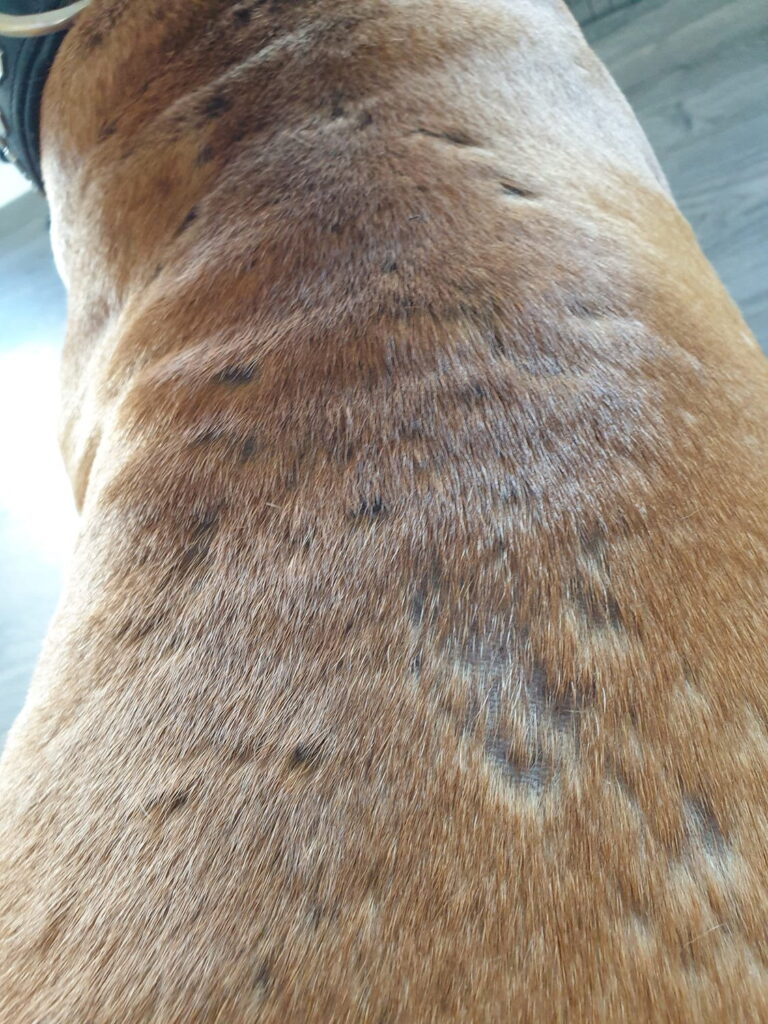
When to see a veterinarian about dog hair loss patches
See a vet if the patch grows, is painful, or your dog seems unwell. Fast checks are better than long waits.
- Seek care if the patch is spreading over days.
- Visit the vet for severe itch, oozing, or fever signs.
- Ask for skin scrapings, fungal tests, or blood work as needed.
Practical tips from my experience with dog hair loss patches
Small habits make a big difference. These tips come from hands-on work and real cases.
- Photograph patches weekly to watch progress.
- Keep a simple log: diet, new products, and symptoms.
- Try one change at a time so you know what helps.
- Be patient—skin healing takes weeks, not days.
How to support healing and speed hair regrowth
Patience and care help fur return. Support the skin while addressing the root cause.
- Use gentle cleaning and avoid over-bathing.
- Add vet-approved supplements for skin and coat.
- Protect healing skin from sun and rough play.
- Follow the full medication course even if things seem better.
Frequently Asked Questions of dog hair loss patches
What does a round hairless patch mean on my dog?
A round patch commonly points to a fungal infection like ringworm or a localized bite. A vet test can confirm and guide antifungal treatment.
Can allergies cause dog hair loss patches?
Yes. Allergies often cause intense itch that leads to licking and patchy hair loss. Allergy testing and management help reduce recurring patches.
Will dog hair grow back after treatment?
Hair often grows back if the skin is healthy and the cause is resolved. Some long-standing damage may leave thin or scarred areas.
Are dog hair loss patches contagious to humans?
Some causes, like ringworm and certain mites, can pass to people. Practice good hygiene and seek vet advice if you suspect a zoonotic issue.
How long before a treatment shows improvement?
You may see improvement in days for itch and weeks for hair regrowth. Full recovery can take one to three months depending on the cause.
Can diet change prevent hair loss patches?
A balanced diet helps skin health and can reduce allergic reactions in some dogs. Work with your vet before making large diet changes.
Conclusion
Dog hair loss patches are common but often fixable with the right steps. Start with careful observation, get a proper diagnosis, and follow a clear treatment plan. Stay patient and consistent, and keep your vet involved for better results. Try one practical change today, track progress, and ask your vet for a tailored plan. Leave a comment with your experience, or subscribe to get more guides on dog skin care.
