
Most dogs scratch with no fleas because of allergies, skin infections, mites, or dry skin.
I’ve worked with dogs and consulted vets for years, so I know how worrying constant scratching can be. This guide on dog scratching no fleas explains why your dog itches, how to find the real cause, and what you can do today to help. Read on for practical steps, tests, and treatments that will save you time and calm your dog’s skin fast.

Common causes of dog scratching no fleas
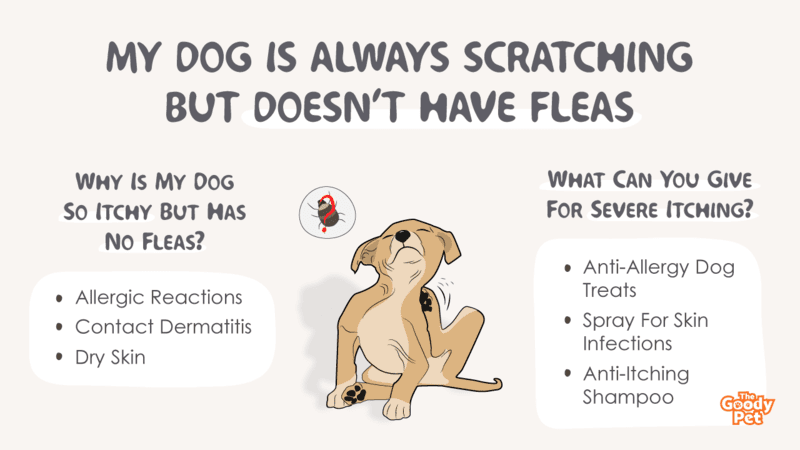
Dogs often scratch with no fleas for many reasons. Allergic reactions top the list. Dogs get allergic to pollen, dust, mold, and food. Atopy is a common environmental allergy. Food allergies show up as itchy skin too.
Skin infections also cause itching. Bacterial pyoderma and yeast infections make skin sore and smelly. Mites like sarcoptic mange or demodex can cause intense itching but are not fleas. Contact dermatitis from cleaners, fabrics, or plants causes localized itch. Dry skin in winter or from poor diet can also lead to scratching.
Behavioral causes matter too. Dogs that are stressed or bored may chew and scratch. Anal gland problems or ear infections can make a dog scratch near the tail or ears without fleas being present.
Common causes at a glance:
- Environmental allergies such as pollen or dust
- Food allergies and intolerances
- Bacterial or yeast skin infections
– Mange and microscopic mites - Contact irritants like chemicals or plants
- Dry skin, poor diet, or hormonal issues
- Behavioral or stress-related scratching
I’ve seen dogs with severe itching where owners were sure fleas were the problem. Often the real cause was a food allergy or a small skin infection that needed antibiotics. Knowing the full list of causes helps you and your vet find the real issue faster.

How to diagnose dog scratching no fleas
Start with a close look. Use a flea comb even if you don’t see fleas. Check for flea dirt and for patterns of hair loss, redness, or scabs. Smell the skin — yeast infections often have a sweet or musty odor. Note when the scratching is worse: at night, after walks, or after meals.
Key tests vets use:
- Skin scraping to check for mites
- Cytology to find bacteria or yeast under the microscope
- Allergy testing for environmental triggers
- Elimination diet trial for food allergies
- Fungal culture if ringworm is suspected
- Blood tests for hormonal or systemic causes
Keep a simple log at home. Note time of day, recent treats, shampoos, or walks. Photos help track progress. Share the log with your vet. This makes the diagnosis of dog scratching no fleas faster and more precise.
From my experience, a clear picture of symptoms and routine speeds up care. Small clues often solve big problems.

Treatment options for dog scratching no fleas
Treatment depends on the cause. Here are common approaches:
For allergies:
- Short-term: anti-inflammatory meds like antihistamines or prescribed steroids to control flare-ups
- Long-term: immunotherapy or allergy shots for environmental allergies
- Diet: strict elimination diet to test food triggers
For infections:
- Antibiotics for bacterial infections
- Antifungal treatments for yeast
- Medicated shampoos that reduce yeast and bacteria
For mites:
- Veterinarian-prescribed mite treatments such as topical or oral medications
- Repeat skin checks to confirm cure
For dry skin and mild cases:
- Omega-3 supplements to improve coat and skin
- Fragrance-free, moisturizing shampoos
- Humidifier in dry climates
For behavioral causes:
- Increase exercise and play
- Enrich the environment with toys and puzzles
- Consult a behaviorist for chronic chewing or licking
Always follow your vet’s advice. Don’t use over-the-counter treatments without guidance. In my clinic experience, owners often try human creams or unproven remedies that can worsen the problem. Proper medication and follow-up tests give the best chance to stop dog scratching no fleas for good.
Home care and prevention for dog scratching no fleas
Good home care reduces flare-ups and prevents new problems.
Daily and weekly care tips:
- Brush your dog regularly to remove loose hair and dirt
- Bathe with a vet-recommended gentle shampoo every 1–4 weeks as advised
- Use omega-3 fish oil supplements to support skin health
- Wash bedding and vacuum floors to cut down on dust and molds
- Use a humidifier in dry seasons to prevent dry skin
Diet and environment:
- Feed a high-quality diet with proven protein sources
- Try a limited-ingredient diet if food allergy is suspected
- Keep plants and cleaning products away from dog areas
- Avoid perfumes and strong fabric softeners near your dog
When using topical products, test a small area first. I once had a dog develop a rash from a scented soap. A patch test would have avoided a painful week. Preventive care cuts visits to the vet and keeps your dog comfortable when dog scratching no fleas becomes a pattern.

When to see a vet for dog scratching no fleas
See a vet right away if:
- Your dog scratches so much it bleeds or has open sores
- The skin is hot, very red, or has a strong odor
- Your dog is losing hair rapidly
- Scratching is accompanied by lethargy, fever, or loss of appetite
Schedule a vet visit soon if:
- Home care does not reduce itching in a week or two
- Itching is frequent or affects sleep
- You notice repeated ear infections or repeated hot spots
Early vet care often prevents chronic problems. If the cause is an allergy or mite, treatment now saves months of discomfort. From my work, prompt testing and the right treatment plan end most cases of dog scratching no fleas quickly.

Frequently Asked Questions of dog scratching no fleas
Why is my dog scratching a lot but there are no fleas?
Dogs can scratch due to allergies, mites, bacterial or yeast infections, dry skin, or stress. Fleas are common but not the only reason dogs itch.
Can food cause my dog to scratch without fleas?
Yes. Food allergies often cause itchy skin and hot spots. A vet-supervised elimination diet can identify food triggers.
How can I tell if mites are the cause of itching?
Vets use skin scrapings and microscope exams to find mites like sarcoptic mange. Some mites are hard to see and need repeated tests.
Are home remedies effective for dog scratching no fleas?
Some home steps like omega-3 oils and gentle shampoos help mild cases. Serious infections or parasites need vet-prescribed treatments.
Do I still need flea prevention if my dog has no fleas?
Yes. Flea prevention helps avoid future infestations and can prevent secondary infections from flea bites. Your vet can recommend a safe product.
When should I worry about scratching that wakes my dog at night?
If itching disrupts sleep or causes wounds, see a vet quickly. Nighttime scratching is often a sign of a deeper allergy or mite problem.
Conclusion
Dog scratching no fleas can feel confusing, but most causes are treatable. Look for patterns, try basic home care, and work closely with your vet for tests and targeted treatment. Start with a clear log, a flea comb check, and a vet visit if itching is severe. Take action now to ease your dog’s discomfort and prevent long-term skin problems. Share your experience or questions below and consider subscribing for more pet health guides and tips.
