
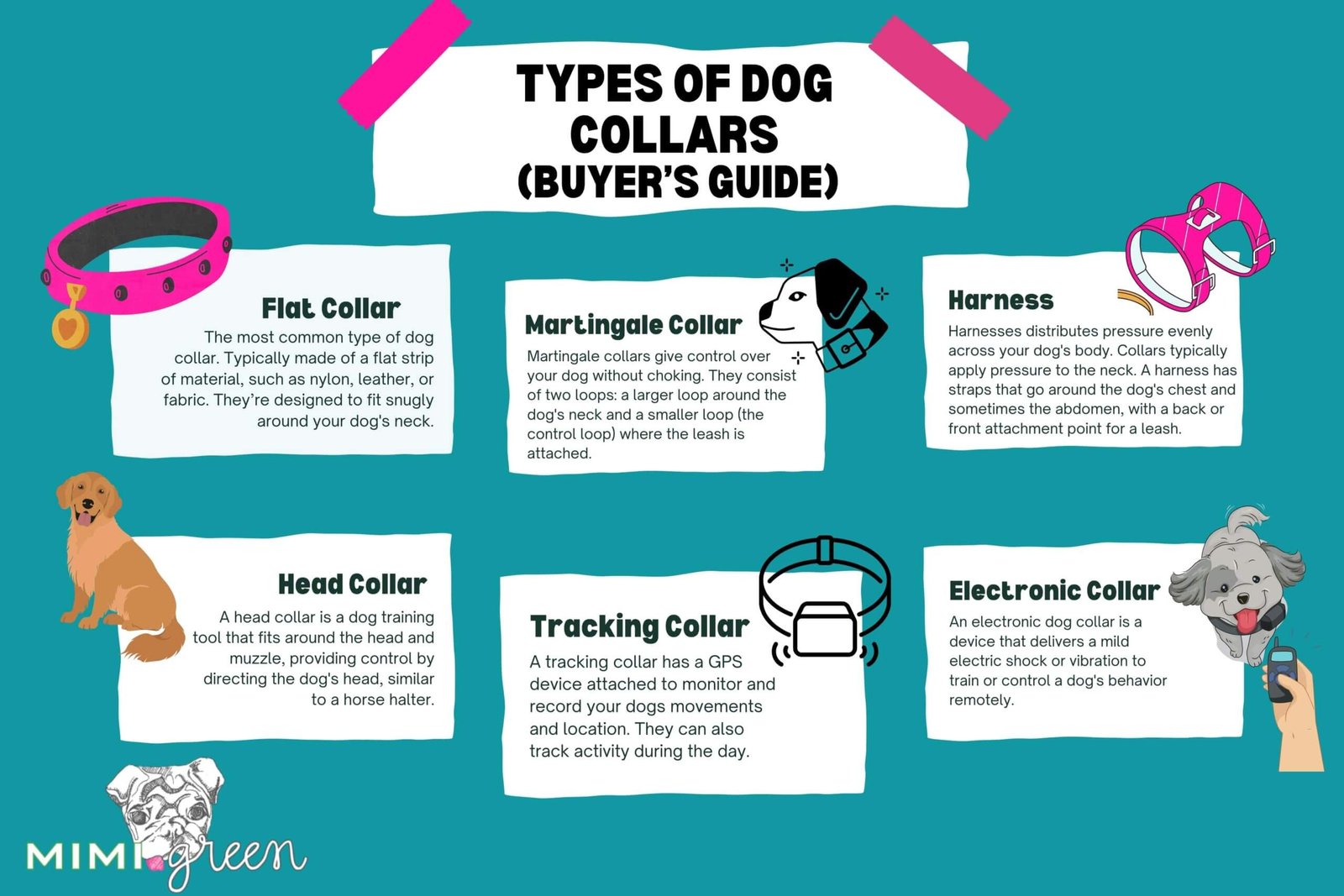
Most dog training collars fall into several types, each made for specific behavior and training goals.
I’ve trained dogs for years and helped many owners choose the right tools. This guide explains dog training collar types clearly, compares pros and cons, and gives safe, practical tips you can use today. You’ll learn which collar fits your dog, how to use it humanely, and common mistakes to avoid so you can train with confidence.
Common dog training collar types
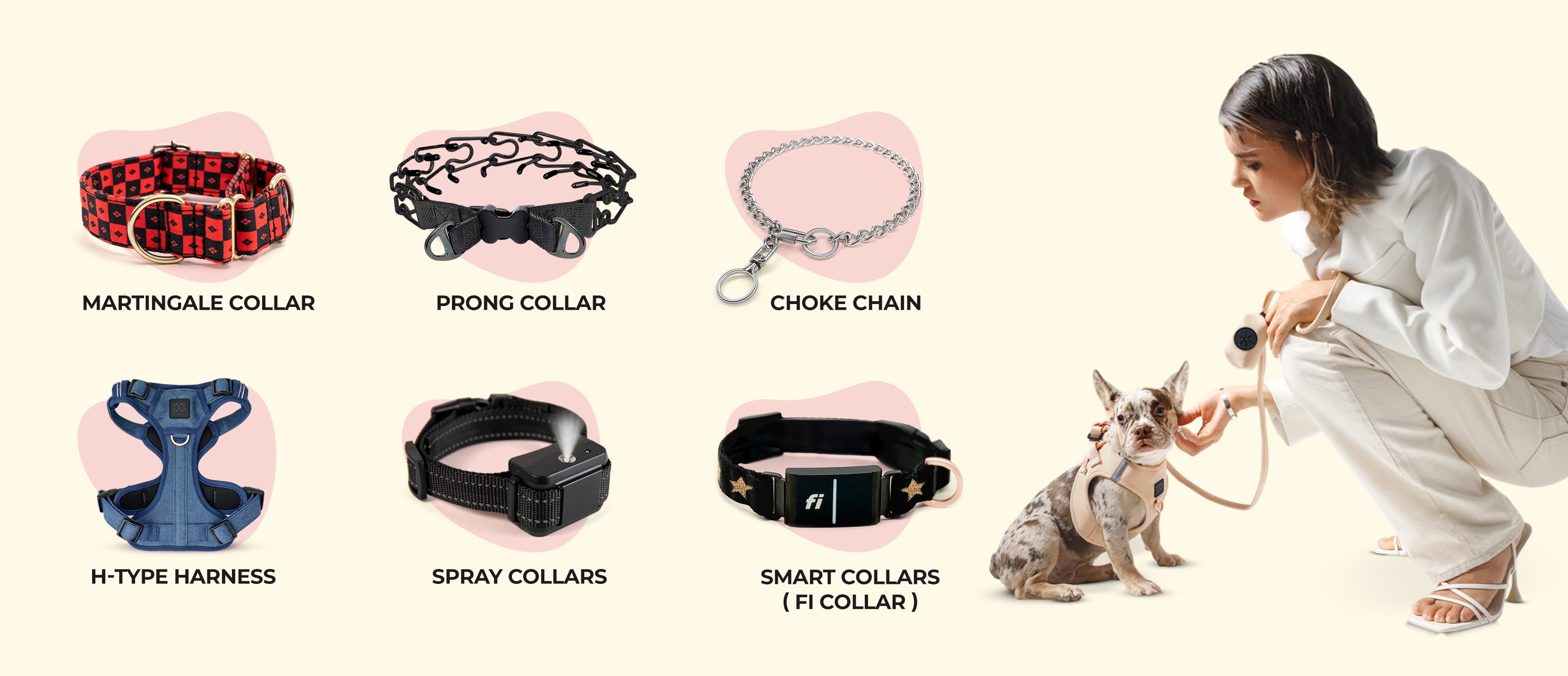
Below are the main dog training collar types you’ll encounter. I describe how each works, the usual uses, and quick pros and cons so you can compare options fast.
-
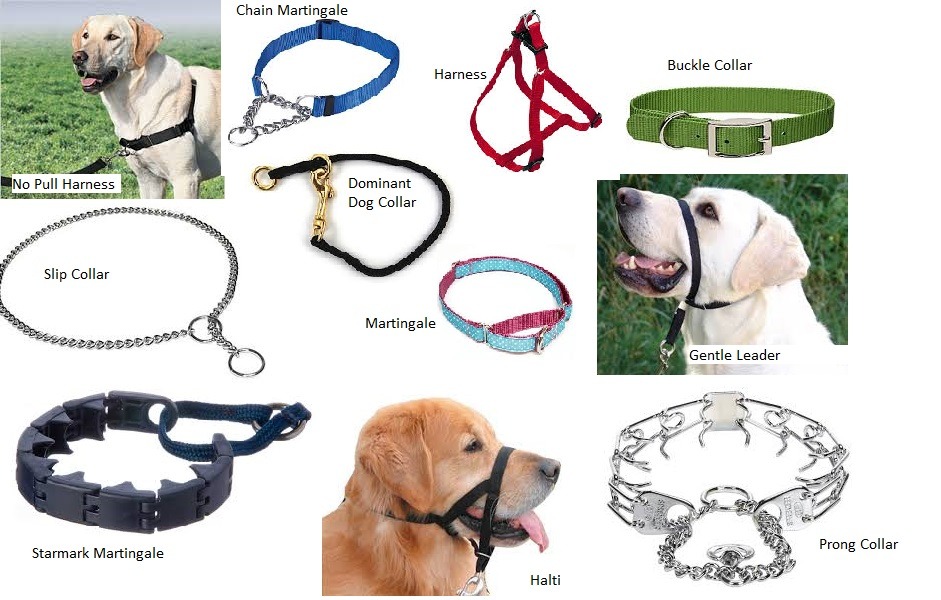
Flat buckle collar
- Simple strap with buckle or snap. Good for everyday ID and leash walks.
- Pros: inexpensive, comfortable, simple. Cons: not for strong pulling or escape artists.
-
Martingale collar
- Tightens slightly when the dog pulls, preventing slipping out. Common for sighthounds.
- Pros: humane alternative to choke collars, good for dogs with narrow heads. Cons: needs proper fit and monitoring.
-
Prong (pinch) collar
- Metal links with inward-facing prongs that apply pressure around the neck. Intended to mimic corrective mother-dog pressure.
- Pros: effective for heavy pullers when used properly. Cons: can injure or cause fear if misused; requires training knowledge.
-
Choke (slip) collar
- Slips tighter when the dog pulls. Historically common but now discouraged by many trainers.
- Pros: simple and cheap. Cons: high risk of injury and misuse.
-
Head halter (headcollar)
- Fits over the dog’s muzzle and nose, giving greater control of the head.
- Pros: excellent for strong pullers and big dogs. Cons: can cause resistance if introduced poorly; not for prolonged unsupervised wear.
-
Harness (back-clip and front-clip)
- Back-clip for regular walking; front-clip for control and reducing pull.
- Pros: distributes pressure across chest, prevents neck strain. Cons: back-clip harnesses don’t stop pulling well.
-
Remote e-collar (electronic training collar)
- Receiver on the collar delivers stimulation controlled by a handheld remote. Stimulation types include vibration, tone, and static.
- Pros: useful for distance recall and off-leash control. Cons: misuse can harm trust; choose humane settings and proper training.
-
Vibration and tone collars
- Deliver sound or vibration rather than static shock. Often used for noise-triggered training or deaf dogs.
- Pros: humane, useful for alerts and cues. Cons: less effective for some dogs that ignore vibration.
-
Citronella spray collar
- Sprays a burst of citronella as a deterrent, commonly used for barking.
- Pros: non-electric alternative for bark control. Cons: some dogs don’t mind the spray; can startle.
-
GPS and tracking collars
- Not a training tool per se, but helpful for lost dogs and remote tracking during off-leash training.
- Pros: peace of mind when training outdoors. Cons: heavier, and not a behavior tool.
Each of these dog training collar types has a place. Your dog’s breed, size, temperament, and the behavior you want to change guide the best choice.
How to choose the right dog training collar types for your dog
Choosing among dog training collar types is about matching tool to goal. Follow these steps.
-
Define the training goal
- Decide if you need to stop pulling, curb barking, improve recall, or prevent escapes. Different collar types target different problems.
-
Consider dog size, breed, and age
- Small puppies need gentle tools. Sighthounds often need martingales. Strong working breeds may need sturdier options.
-
Evaluate temperament and history
- Nervous or reactive dogs do better with gentle, reward-based tools. Aggressive dogs may need professional assessment before aversive tools are considered.
-
Check fit and comfort
- A collar should sit correctly and allow two fingers under the strap. Proper fit reduces injury risk and improves results.
-
Consult professionals when in doubt
- Work with a certified trainer or vet, especially if you’re considering prong or e-collars. Their experience reduces risk and improves outcomes.
-
Consider legal and ethical limits
- Some jurisdictions or clubs restrict certain collar types. Always verify local rules and the latest welfare standards.
Pick a collar that supports positive training. The best choice is often the one you can use consistently, safely, and paired with reward-based methods.

How to use dog training collar types safely and humanely
Using any training collar safely matters more than the brand. Follow these core safety rules.
-
Learn correct fitting and placement
- Read instructions and have a pro check fit. Improper fit causes pain or escape.
-
Start with the least aversive option
- Try harnesses, head halters, or vibration/tone before prong or static. Less forceful tools often work when used correctly.
-
Pair correction with positive reinforcement
- Offer treats and praise immediately after the desired behavior. This builds trust and speeds learning.
-
Use the collar only during training sessions
- Avoid leaving corrective collars on unsupervised dogs. Limit wear time and monitor skin and fur.
-
Gradually introduce aversive tools under guidance
- If using e-collars or prong collars, learn from a qualified trainer. Use the lowest effective level and rely on timing and cues.
-
Keep sessions short and consistent
- Short, frequent sessions (5–15 minutes) beat long, frustrating ones. End on a positive note.
-
Watch for signs of stress or pain
- Cowering, lip licking, yawning, or sudden avoidance can mean the collar causes fear. Stop and reassess immediately.
I once started a stubborn hound on a head halter incorrectly and saw the dog freeze and refuse to move. After switching to a gradual introduction with treats, the dog relaxed and the halter became a helpful tool. That taught me to always prioritize slow, reward-based introductions.

Pros and cons of major dog training collar types
Compare commonly used dog training collar types side-by-side so you can weigh trade-offs quickly.
-
Flat buckle collar
- Pros: cheap, comfortable, great for tags. Cons: poor training tool for pulling or escapes.
-
Martingale collar
- Pros: prevents slipping, humane when fitted. Cons: not for strong corrections; needs correct use.
-
Prong collar
- Pros: effective for severe pulling with trained handlers. Cons: high risk of misuse, possible physical and emotional harm.
-
Head halter
- Pros: strong control over head; reduces pulling. Cons: needs patient introduction.
-
Harness (front-clip)
- Pros: reduces pulling without neck pressure. Cons: can encourage leaning if not trained properly.
-
Remote e-collar (vibration/tone/static)
- Pros: great for distance and recall. Cons: ethical concerns; must be used with training knowledge.
-
Citronella collar
- Pros: non-electric option for barking. Cons: may only startle and not solve root causes.
The right tool depends on the dog and the handler. When used properly, many collar types can help train calmly and effectively.

My experience, mistakes, and practical tips using dog training collar types
I’ve worked with dozens of dogs and tried most collar types. Here are honest lessons I learned.
-
Start simple and escalate only if needed
- I once reached for a prong collar too fast. It fixed pulling but damaged the dog’s trust. Now I try a front-clip harness or head halter first.
-
Learn from pros before using aversive collars
- Proper timing makes or breaks e-collars. A trainer taught me low-level conditioning with tone before any static, and outcomes improved fast.
-
Fit matters more than brand
- A well-fitted martingale beats a cheap, loose prong collar. Measure twice and check frequently.
-
Combine collars with clear cues and rewards
- A collar is a tool, not a teacher. Use commands, treats, and praise so the dog knows what you want.
-
Watch behavior, not just obedience
- If a collar stops a behavior but creates fear, it’s the wrong tool. Always ask: “Is the dog learning or just hiding the problem?”
Practical tip: keep a training notebook. Jot the collar type used, settings, duration, and the dog’s response. Over weeks you’ll spot what works and what to change.

Frequently Asked Questions of dog training collar types
What collar is best for puppy training?
Use a soft flat collar or a lightweight harness. Focus on positive reinforcement and short sessions rather than corrective collars for young pups.
Are prong collars cruel?
Prong collars can be harmful if misused. When handled by skilled professionals at low pressure they can work, but many experts recommend safer alternatives first.
Do e-collars work for recall training?
Yes, when used responsibly and with proper conditioning, remote e-collars can improve off-leash recall at distance. Always start with the lowest effective setting and combine with rewards.
How do I fit a martingale collar correctly?
Place the martingale high on the neck, behind the ears. Adjust so it tightens slightly but never chokes; two fingers should fit under the collar when relaxed.
Can a harness stop pulling completely?
A front-clip harness reduces pulling by redirecting the dog but doesn’t teach polite leash manners alone. Pair it with reward-based walking drills for best results.
Are vibration collars effective for deaf dogs?
Yes, vibration collars can be very useful for deaf dogs because vibration is a clear, physical cue they can feel and respond to.
Conclusion
You now have a clear map of dog training collar types, how they work, and how to use them safely. Match the collar to your training goals, prioritize humane methods, and seek expert help before using aversive tools. Try gentle options first, pair any tool with rewards, and track progress in short, consistent sessions. Take action today: review your dog’s needs, pick one responsible tool to trial, and commit to a positive training plan. Share your results or questions below — I’d love to hear what worked for your dog.
