
Angelfish are easier for beginners; discus demand stable water and advanced care.
I have kept both angelfish and discus for years. I write from hands-on experience and research. This guide compares angelfish vs discus fish in clear, practical detail. Read on for care tips, tank plans, and how to pick the right species for your home aquarium.
Physical differences
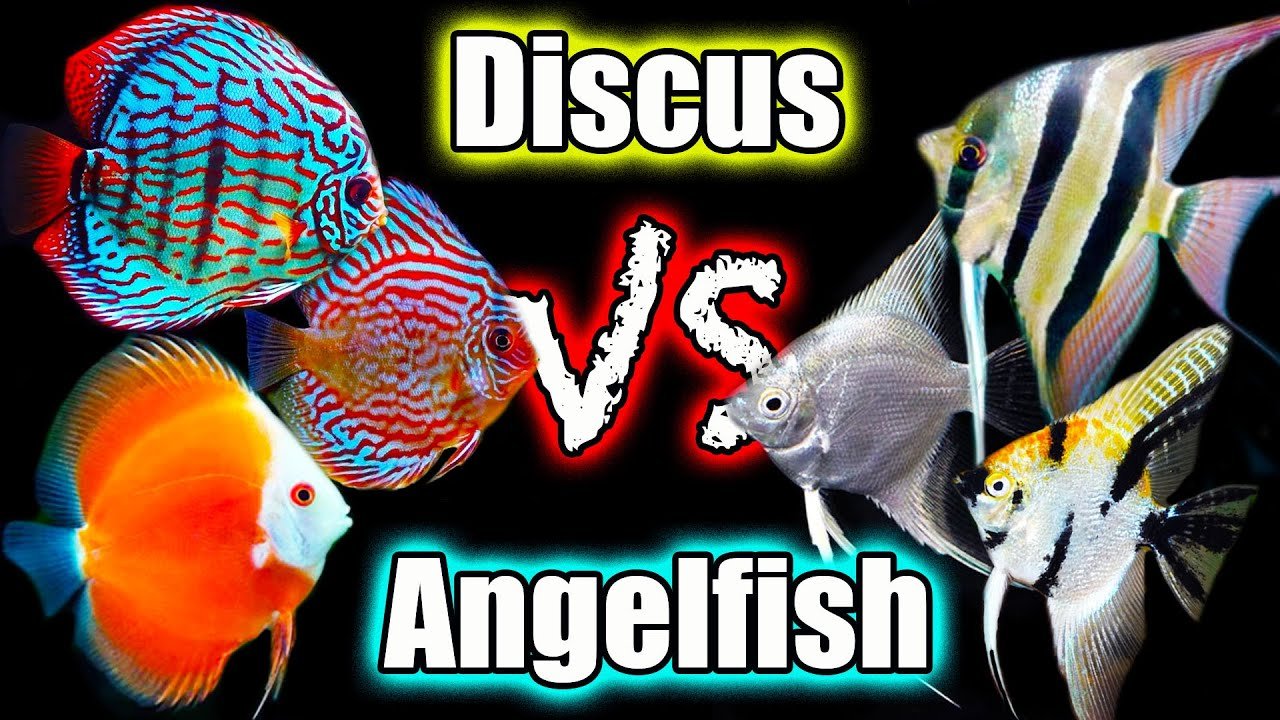
Angelfish and discus look different at a glance. Angelfish are tall and triangular. Discus are round and flat like a dinner plate. These shapes affect swimming, tank layout, and space needs.
Key physical contrasts
- Angelfish body shape: tall, laterally compressed, often with long fins.
- Discus body shape: circular, deep-bodied, smooth fins.
- Size: adult angelfish reach 6–8 inches tall; discus reach 6–8 inches wide.
- Color and patterns: both have many color strains, but discus often show intense, vivid hues.
I learned to spot stress signs by watching fin and color changes. Pale color often meant water issues. The two species show stress in different ways.

Source: youtube.com
Behavior and temperament
Angelfish are semi-aggressive at times. They may show territorial acts, especially during breeding. Discus are shy and peaceful. They prefer calm tanks and gentle companions.
Behavior highlights
- Angelfish: bold, curious, may chase smaller fish.
- Discus: peaceful, schooling, stressed by sudden changes.
- Social needs: discus do better in groups of 5 or more; angelfish can live singly or in pairs.
- Activity: angelfish patrol mid and top levels; discus stay mid-level and move slowly.
From my tanks, angelfish tested boundaries but adapted fast. Discus required patience and quiet. I had one discus that refused food after a filter change. It took careful water checks to bring it back.

Source: reddit.com
Tank requirements
Tank setup matters a lot for both species. Discus need very stable water. Angelfish tolerate a wider range of conditions.
Basic tank needs
- Minimum tank size: angelfish 20 gallons per pair; discus 50 gallons for a small group.
- Water temperature: angelfish 76–82°F; discus 82–86°F.
- pH: angelfish 6.5–7.5; discus 6.0–7.0, often softer and slightly acidic.
- Filtration: strong, stable filtration for angelfish; very gentle flow for discus.
- Decor: provide vertical spaces for angelfish and open, soft-lit zones for discus.
I set up a 75-gallon tank with driftwood and Amazonian plants for my discus. The tank held steady temps and soft water. That stability made a huge difference in fish health.

Source: youtube.com
Feeding and diet
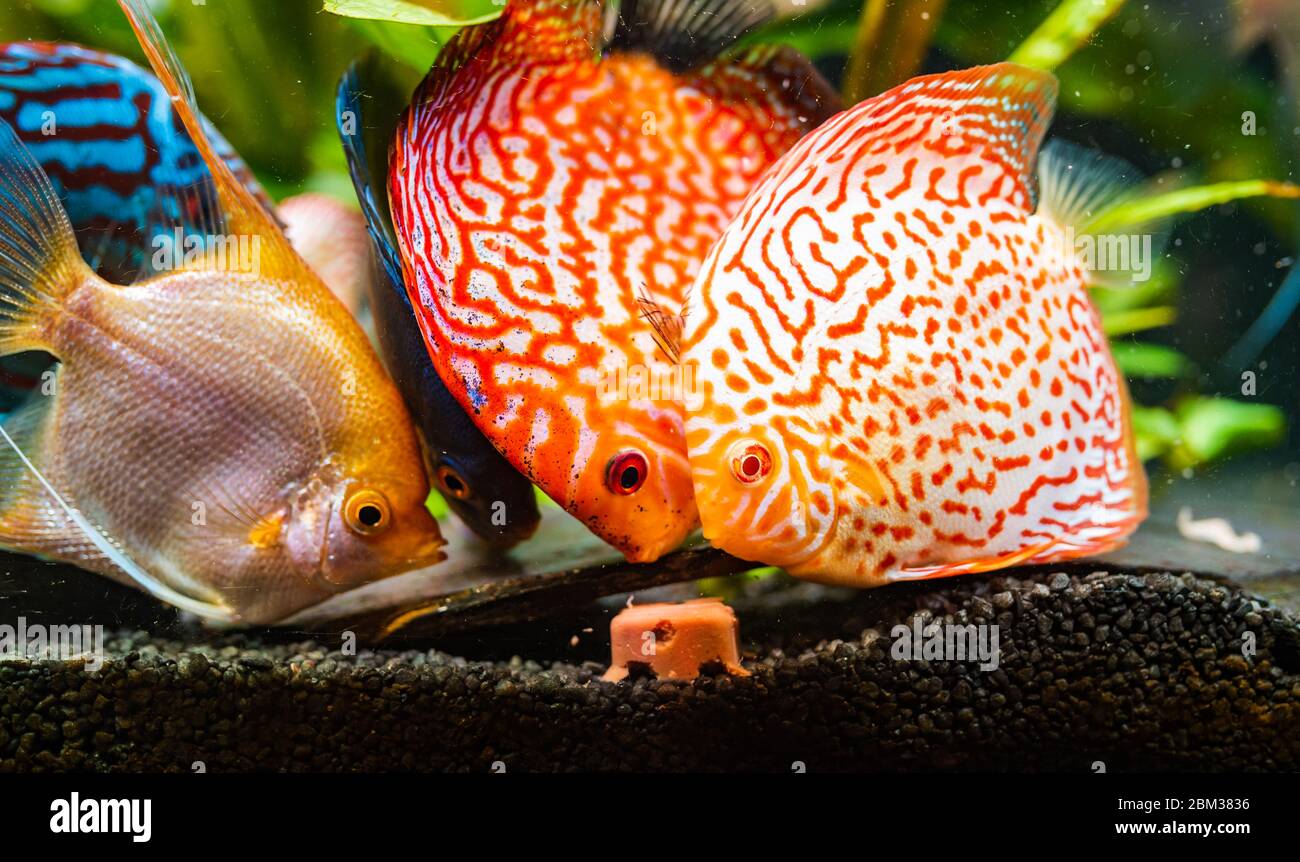
Both fish eat prepared and live foods but habits differ. Discus are picky and need varied protein. Angelfish eat a wider range.
Feeding tips
- Angelfish diet: flake, pellets, frozen bloodworms, brine shrimp.
- Discus diet: high-quality pellets, beef heart mixes, frozen foods, occasional live foods.
- Feeding frequency: adult fish twice daily; juveniles three times daily in small amounts.
- Vitamin boost: soak dry food in liquid vitamins occasionally to add nutrients.
I feed discus soaked pellets and frozen beef heart three times a day during growth. For angelfish, a varied diet on alternate days worked well. Watch for leftover food to avoid water fouling.
Source: alamy.com
Compatibility and tank mates
Choosing tank mates requires care. Angelfish may eat or bully tiny fish. Discus need calm, non-aggressive companions.
Good tank mate ideas
- Compatible with angelfish: tetras larger than neon, gouramis, larger peaceful corydoras.
- Compatible with discus: cardinal tetras, rummy nose tetras, peaceful dwarf corydoras.
- Avoid with both: fin nippers, overly aggressive cichlids, very small fry.
- Stocking tips: keep groups for discus; monitor angelfish aggression when full grown.
When I added angelfish to a community tank, aggression rose briefly. I adjusted numbers and hiding spots. For discus tanks, I chose peaceful tetras and kept lighting low. The discus settled much faster.

Source: youtube.com
Can Angelfish and Discus Live Together?
Yes, but it takes a larger, carefully set-up tank rather than a simple drop-in — this is one of the more debated combinations in the hobby, and outcomes vary a lot by tank size and individual fish temperament.
What makes it workable
- Tank size: plan for at least 75–80 gallons (roughly 300 liters) for a small mixed group, larger if you’re keeping full groups of 5+ of each species. Cramped tanks are where most compatibility problems start.
- Temperature: angelfish (76–82°F) and discus (82–86°F) don’t fully overlap, but 80–85°F works as a livable middle ground for both.
- pH: both prefer slightly acidic to neutral water, so a target around 6.5–7.0 suits each species reasonably well.
The real sticking point: water hardness
- Angelfish tolerate moderately hard water, while discus need noticeably softer water to thrive long-term. This mismatch gets less attention than temperature or pH, but it’s often the harder parameter to compromise on — soft-water setups (driftwood, peat, RO-blended water) generally favor the discus without causing problems for angelfish.
Behavior to watch for
- Angelfish are the more assertive of the two and can out-compete discus for food, especially in a tank that’s too small for both species to keep their own space.
- Discus are shy and slow feeders by comparison — feed in multiple spots around the tank so they aren’t crowded out at mealtimes.
- Introducing both species as juveniles of similar size, rather than adding adult angelfish to an established discus tank, generally leads to calmer long-term dynamics.
One myth worth addressing: some hobbyists avoid mixing the two over fears that angelfish transmit disease to discus (sometimes called “discus plague”). This isn’t well supported — disease risk comes from poor quarantine practices and water quality, not from the species pairing itself. Quarantining any new fish for 2–4 weeks before adding it to an established tank addresses this regardless of which species you’re introducing.
Breeding and lifespan
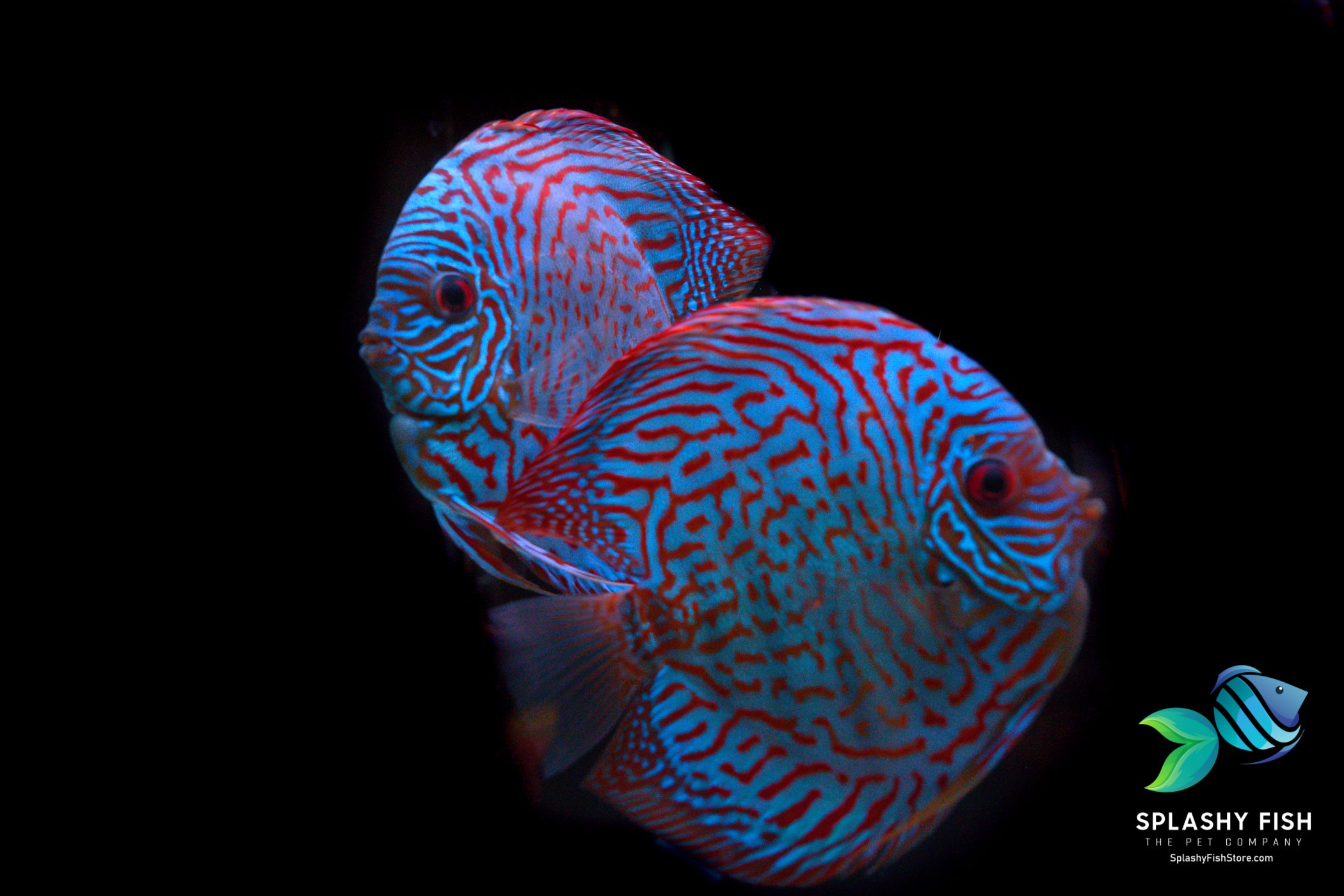
Breeding and lifespan differ by species and care. Discus breeding is more demanding. Angelfish breed more readily.
Breeding and life facts
- Breeding ease: angelfish easy to breed in home tanks; discus require perfect water and patience.
- Parental care: angelfish brood eggs on flat surfaces; discus raise fry and feed mucus to young.
- Lifespan: angelfish 8–12 years with care; discus 10–15 years in ideal conditions.
- Juvenile care: discus fry need special foods and stable water; angelfish fry are hardier.
I spawned angelfish in a community tank by isolating a pair. The pair guarded eggs well. My discus breeding attempts required a dedicated brood tank and strict water checks. That taught me to value water stability above all.
Source: splashyfishstore.com
Choosing which is right for you
Deciding between angelfish vs discus fish depends on your goals. Match species to your time, budget, and tank space. Use this checklist to choose.
Decision checklist
- Skill level: choose angelfish for beginner to intermediate; choose discus for advanced keepers.
- Time commitment: discus need daily monitoring; angelfish need regular care but less intensive checks.
- Space and equipment: discus need larger, dedicated tanks and stable heating; angelfish fit mixed communities.
- Budget: discus cost more for fish, food, and water treatment.
If you want a striking centerpiece and can manage daily checks, discus reward with great beauty. If you want a lower-stress option that still looks dramatic, angelfish are a solid pick.

Source: youtube.com
Frequently Asked Questions of angelfish vs discus fish
Which is better for beginners, angelfish or discus?
Angelfish are better for beginners. They tolerate a wider range of water conditions and are easier to feed and breed.
How much space do discus need compared to angelfish?
Discus need larger tanks per fish and prefer groups, so plan for at least 50 gallons for a small group. Angelfish can do well in smaller tanks but need height for their fins.
Can angelfish and discus live together?
They can coexist in specific setups if water needs align and tankmates are calm. Match water temperature and pH and watch for aggression from angelfish.
What water parameters do discus require?
Discus prefer warm, soft, mildly acidic water with stable temperature around 82–86°F. Maintain low nitrate and gentle filtration for best health.
How often should I feed these fish?
Feed adults twice daily in small amounts, and juveniles three times daily. Remove uneaten food quickly to keep water clean.
Can angelfish and discus live together?
Yes, with the right setup — a tank of at least 75–80 gallons, a temperature compromise around 80–85°F, and soft, slightly acidic water that leans toward what discus need. See the full breakdown above for tank size, water hardness, and feeding considerations.
Can angelfish and discus live together?
They can coexist in specific setups if water needs align and tankmates are calm. Match water temperature and pH and watch for aggression from angelfish.
Conclusion
Angelfish are forgiving and bold. Discus are delicate and stunning. Your choice should match your experience, tank size, and willingness to monitor water closely. Start with angelfish if you want lower maintenance. Choose discus if you can commit to strict water care and a peaceful tank.
Take action: assess your tank, plan water parameters, and choose the species that fits your routine. Share your tank story or questions in the comments and subscribe for more care guides.
