

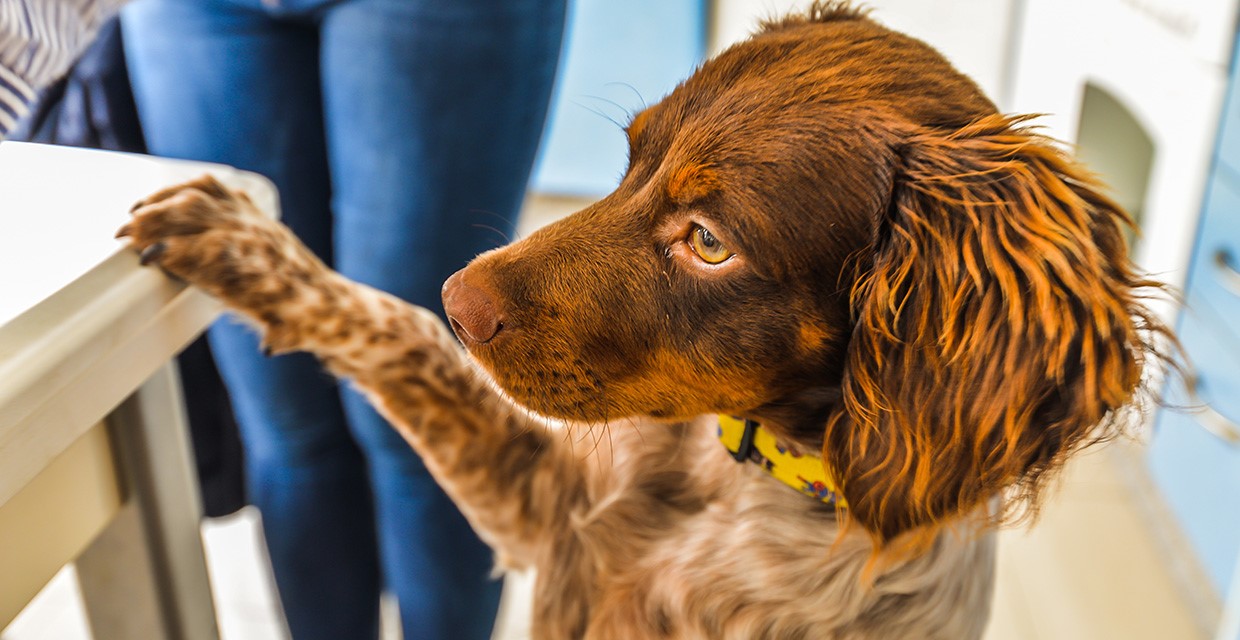
Dog begging behavior happens when dogs learn that begging gets them food, attention, or rewards.
Dog begging behavior is one of the most common habits dog owners notice at home. A dog may stare at your plate, paw your leg, whine, or sit with those familiar puppy eyes during meals. While this can look cute, the habit often grows stronger when dogs receive rewards for it.
After working with dogs and studying everyday training patterns, one thing becomes clear: begging is not usually about a dog being stubborn. It is a learned behavior. Dogs repeat actions that bring good results, and food from the dinner table is a powerful reward.
Many American families enjoy sharing daily routines with their pets, including breakfast, dinner, and holiday meals. Teaching healthy boundaries during these moments helps dogs stay polite while keeping family life peaceful.
What Is Dog Begging Behavior?
Dog begging behavior describes actions dogs use to request food, treats, or attention from people. Common signs include staring, whining, barking, pawing, drooling, or sitting close during meals.
Begging is a natural behavior because dogs are designed to seek valuable resources. However, household dogs learn specific begging methods based on what works in their environment.
A dog that receives a small piece of chicken from the table may quickly understand that sitting near a person during dinner can bring a reward.
- ✦ Food-focused begging
The dog watches meals, follows people in the kitchen, or tries to get human food.
- ✦ Attention begging
The dog uses whining, nudging, or pawing to get interaction from family members.
- ✦ Learned habit
The behavior continues because the dog has experienced success in the past.
Why Do Dogs Beg for Food?
Dogs beg because food is highly rewarding and because they are excellent at reading human behavior. They notice when owners look at them, talk to them, or share food.
The biggest reason behind dog begging behavior is reinforcement. If begging works even once in a while, dogs may continue trying because they remember the reward.
Some dogs also beg because they feel included in family activities. Mealtime is social for humans, and many dogs want to be part of that moment.

- ✦ Previous rewards
Giving table scraps teaches a dog that begging can produce tasty results.
- ✦ Strong smell of food
Dogs have a powerful sense of smell, making human meals very attractive.
- ✦ Social connection
Some dogs beg because they want attention and interaction, not only food.
How Dogs Learn Begging Patterns
Dogs learn through cause and effect. When a behavior creates a positive result, dogs are more likely to repeat it.
For example, a dog that receives cheese after whining at the table may start whining faster the next day because it remembers what happened.
- ✦ Reward creates repetition
A successful begging attempt makes the habit stronger.
Common Signs of Dog Begging Behavior
Dog begging behavior does not always look the same. Some dogs are quiet and use eye contact, while others become vocal and persistent.
Recognizing early signs makes training easier. Owners can respond before the behavior becomes a strong daily habit.

- ✦ Intense staring
The dog watches food closely and maintains eye contact with the person eating.
- ✦ Pawing or touching
The dog may tap a person’s leg or arm to request attention.
- ✦ Whining and barking
Some dogs use sounds because they have learned humans respond to them.
- ✦ Following people
The dog may follow family members around during food preparation.
How to Stop Dog Begging Behavior
Stopping dog begging behavior requires patience and consistency. Dogs need clear rules so they understand which actions earn rewards.
The goal is not to punish the dog. The goal is to teach a better behavior that works for both the dog and the owner.
Many professional trainers focus on rewarding calm actions instead of only correcting unwanted actions.

- ✦ Stop feeding from the table
Avoid giving human food during meals because this directly rewards begging.
- ✦ Reward calm behavior
Give praise or treats when your dog stays relaxed away from the table.
- ✦ Create a meal routine
A consistent feeding schedule helps dogs understand when they receive food.
Use Positive Reinforcement Training
Positive reinforcement means rewarding behaviors you want to see more often. If your dog lies quietly while you eat, reward that calm choice.
This method builds trust because the dog learns what to do instead of only learning what not to do.
- ✦ Teach a place command
Train your dog to relax on a bed or mat during meals.
Mistakes That Make Begging Worse
Many owners accidentally strengthen dog begging behavior without realizing it. Small rewards can send a clear message that begging works.
Consistency is the key. If one family member ignores begging but another shares food, the dog receives mixed signals.

- ✦ Giving occasional table scraps
Random rewards make dogs try harder because they never know when success will happen.
- ✦ Talking during begging
Even attention can reward the behavior for some dogs.
- ✦ Changing rules often
Dogs learn faster when every person follows the same training plan.
Can Dog Begging Affect Health?
Dog begging behavior can become a health concern when dogs regularly eat extra calories from human foods. Many table foods contain more fat, salt, or calories than dogs need.
Weight gain can affect a dog’s comfort and mobility. A balanced diet designed for dogs is usually the safest choice.
Owners should also avoid sharing foods that are harmful to dogs, such as chocolate, grapes, onions, and certain foods with artificial sweeteners.

- ✦ Weight management
Reducing unnecessary treats helps maintain a healthy body condition.
- ✦ Safer nutrition
Dog-specific meals provide nutrients in proper amounts.
