
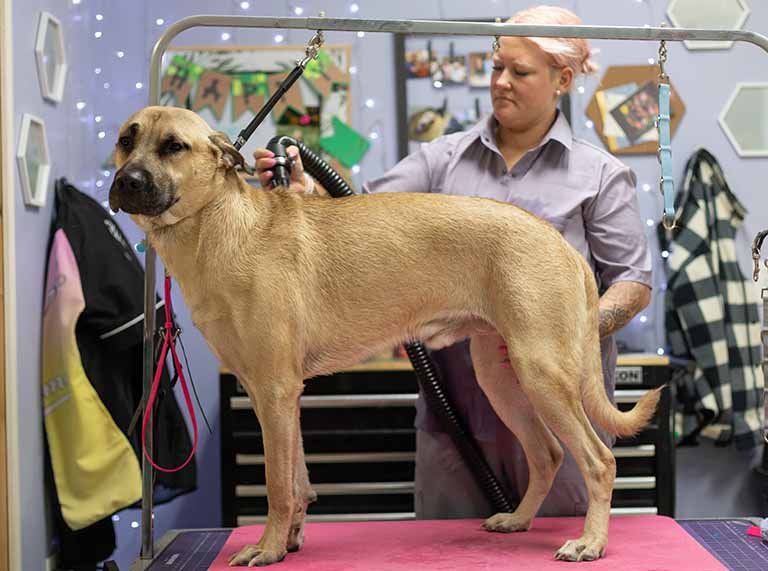
Many dogs struggle with grooming anxiety, especially during their first baths, nail trims, brushing sessions, or professional grooming visits. A dog may not understand that clippers, dryers, or scissors are harmless. These unfamiliar sounds and sensations can feel threatening.
From working with grooming routines, one thing becomes clear: patience matters more than speed. Dogs that receive gentle handling and positive experiences often become more relaxed over time. The goal is not to force a dog through grooming but to build trust step by step.

What Is Dog Grooming Anxiety?
Dog grooming anxiety is a stress response that happens when a dog feels uncomfortable during grooming activities. It can appear during brushing, bathing, nail clipping, ear cleaning, haircuts, or visits to a groomer.
Some dogs show mild nervousness, while others may panic, hide, shake, growl, or try to escape. Understanding the cause of the fear helps owners create a safer grooming routine.
- ✦ Fear of unfamiliar experiences
Dogs may feel anxious when they encounter new tools, places, smells, or people during grooming.
- ✦ Loss of control
Some dogs dislike being held still because they cannot move away when they feel unsure.
- ✦ Past negative experiences
A stressful grooming event can create fear that continues during future sessions.
Why Some Dogs Develop Grooming Fear
Every dog has a different comfort level. Puppies that are not introduced to grooming early may find new grooming tasks harder. Adult dogs can also develop fear after painful nail trims, rough handling, or scary grooming environments.
Breed traits, personality, and previous experiences all influence how a dog reacts. A sensitive dog may need more time and support than a naturally confident dog.
- ✦ Sensitive personality
Some dogs naturally react more strongly to sounds, touch, and changes in their environment.
Common Signs of Grooming Anxiety in Dogs
Recognizing early signs of dog grooming anxiety allows owners to adjust before stress becomes overwhelming. Dogs communicate through body language long before they show stronger reactions.
A calm grooming session starts with noticing small signals. A dog that turns away, licks its lips, or avoids eye contact may already feel uncomfortable.

- ✦ Physical signs
Shaking, panting, drooling, trembling, pinned ears, and a tucked tail can indicate stress.
- ✦ Behavior changes
Hiding, freezing, barking, whining, or attempting to leave may show that a dog feels unsafe.
- ✦ Aggressive warning signs
Growling, snapping, or showing teeth are signs that a dog needs more space and slower training.
Reading Your Dog’s Body Language
A dog’s body language gives important clues during grooming. Relaxed muscles, normal breathing, and willingness to interact usually show comfort.
When stress signs appear, pause the session and offer reassurance. Forcing a frightened dog can make future grooming anxiety stronger.
- ✦ Watch before reacting
Observe your dog’s signals instead of waiting until the dog becomes overwhelmed.
Main Causes of Dog Grooming Anxiety
Dog grooming anxiety can come from many sources. Finding the trigger makes it easier to create a better grooming plan.
For example, a dog may enjoy brushing but panic when hearing electric clippers. Another dog may dislike being touched around the paws because nail trims feel uncomfortable.
- ✦ Loud grooming equipment
Clippers, dryers, and vacuum sounds can scare dogs because they are loud and unfamiliar.
- ✦ Sensitive areas
Paws, ears, tails, and face areas may feel uncomfortable for some dogs.
- ✦ Unfamiliar groomers
New people and new environments can increase stress levels.
How to Reduce Dog Grooming Anxiety at Home
Home practice can make professional grooming easier. Short, positive sessions help dogs learn that grooming does not need to be scary.
Start with simple steps. Let your dog see grooming tools, reward calm behavior, and slowly introduce touch around areas that need grooming.

- ✦ Use positive reinforcement
Give treats, praise, or playtime when your dog stays calm during grooming practice.
- ✦ Keep sessions short
Several short sessions are often better than one long stressful session.
- ✦ Create a calm environment
Choose a quiet area with fewer distractions during grooming.
A Simple Training Approach
Begin by showing the tool without using it. Reward your dog for staying relaxed. Then slowly move toward gentle contact.
This process is called desensitization. It helps dogs become familiar with something that once caused fear.
- ✦ Move slowly
Increase difficulty only when your dog remains comfortable.
Helping Dogs Stay Calm During Professional Grooming
Professional groomers play an important role in managing dog grooming anxiety. A skilled groomer understands how to handle nervous dogs with patience and care.
Before booking an appointment, discuss your dog’s fears. A good groomer can adjust the approach by using slower handling, breaks, and gentle techniques.

- ✦ Choose an experienced groomer
Look for someone who has experience with fearful or sensitive dogs.
- ✦ Share your dog’s history
Tell the groomer about past fears, triggers, and behaviors.
- ✦ Avoid rushing
Some dogs need multiple visits before they feel comfortable.
When to Seek Professional Help for Severe Grooming Anxiety
Some cases of dog grooming anxiety are too intense for simple training alone. A dog that becomes extremely fearful or aggressive may need help from a veterinarian or qualified behavior professional.
Medical issues can also affect grooming behavior. Pain from skin problems, joint issues, ear infections, or injuries may make grooming uncomfortable.

- ✦ Sudden anxiety changes
A sudden fear response may signal an underlying health or pain issue.
- ✦ Extreme reactions
Dogs that cannot stay safe during grooming may need expert guidance.
