
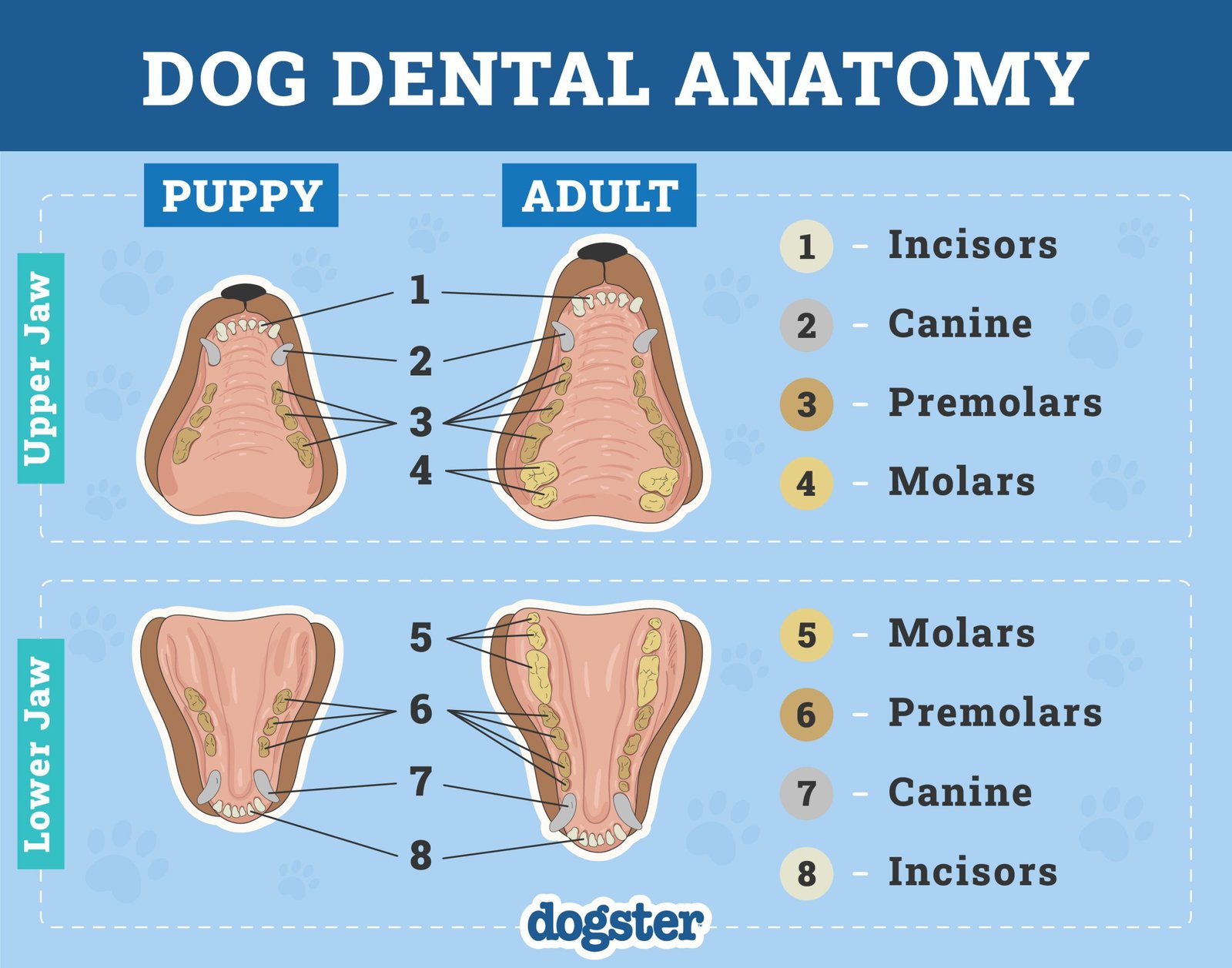
Dog dental development is an important part of a puppy’s growth. A puppy’s mouth changes quickly during the first year, and these changes affect eating, chewing, comfort, and overall health. Many American pet owners notice teething behaviors before they understand what is happening inside their dog’s mouth.
From my experience studying canine care topics, I have found that owners who learn about tooth stages early can spot problems faster. Knowing when teeth appear, fall out, and mature helps families build better dental habits for their dogs.

What is dog dental development?
Dog dental development describes how a dog’s teeth grow, change, and mature from birth through adulthood. Puppies are born without visible teeth, but their jaws begin preparing for their first set soon after birth.
Dogs are different from humans because they replace their first teeth with a permanent set. This process supports their natural behaviors, including chewing food, carrying objects, and exploring their environment.

- ✦ Two dental stages
Dogs have deciduous teeth, also called baby teeth, and permanent adult teeth.
- ✦ Purpose of teeth changes
Growing adult teeth provide stronger chewing ability and better support for an adult diet.
Stages of puppy teeth development
The first stage of dog dental development begins when puppies grow their baby teeth. These small, sharp teeth help puppies transition from nursing to eating solid food.
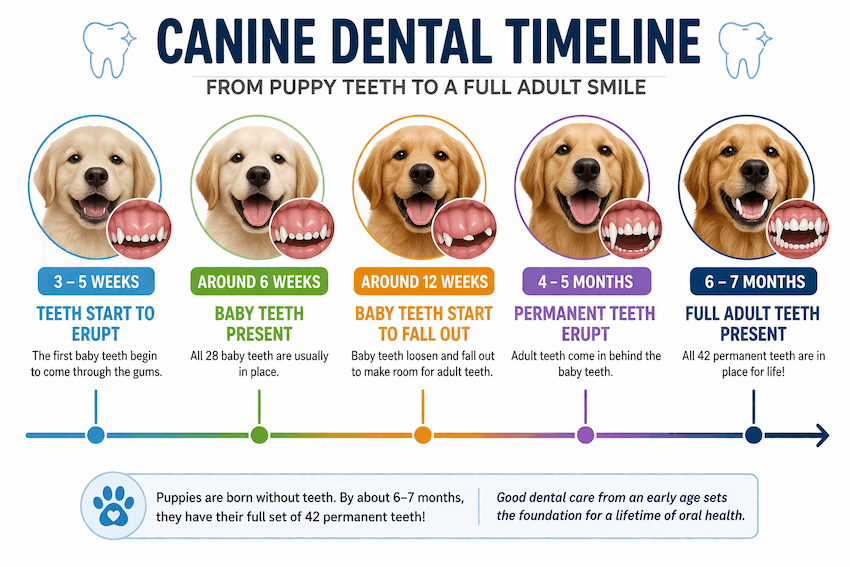
Most puppies begin getting teeth around three to four weeks of age. By eight weeks, many puppies have a complete set of 28 baby teeth.
- ✦ Birth to three weeks
Puppies usually have no visible teeth and depend on nursing.
- ✦ Three to eight weeks
Baby teeth appear and puppies start learning to chew.
Why puppy teeth are important
Baby teeth guide jaw growth and help puppies practice chewing. They also prepare the mouth for permanent teeth that appear later.
- ✦ Learning stage
Puppies learn bite control while interacting with their littermates.
When do dogs lose their baby teeth?
A major part of dog dental development is the replacement of baby teeth with adult teeth. This usually begins around three to four months of age.
Most puppies finish losing baby teeth by six to seven months. During this period, owners may find tiny teeth on the floor or notice more chewing behavior.

- ✦ Common teething signs
Chewing toys, mild gum discomfort, drooling, and increased biting can happen during teething.
- ✦ Retained baby teeth
Some dogs keep baby teeth longer than expected, which may require veterinary attention.
How many teeth do adult dogs have?
Adult dog dental development results in a complete set of 42 permanent teeth. These teeth include incisors, canines, premolars, and molars.
Each tooth type has a special role. Incisors help with nibbling, canines help grip objects, and back teeth help crush and chew food.

- ✦ Incisors
Small front teeth used for scraping and grooming.
- ✦ Canines
Long pointed teeth designed for holding and tearing.
- ✦ Molars and premolars
Back teeth that help break down food.
Common dental problems during dog dental development
Although most dogs develop healthy teeth, some experience problems during growth. Early checks can prevent small issues from becoming painful conditions.
Veterinarians in the United States often recommend regular oral exams because dental problems can affect a dog’s comfort and daily life.
- ✦ Retained puppy teeth
Baby teeth that do not fall out can crowd adult teeth and trap bacteria.
- ✦ Misaligned teeth
Some dogs develop bite problems that change how teeth meet.
- ✦ Gum irritation
Teething can cause temporary gum sensitivity.
How to support healthy dog dental development
Good dental habits should begin during puppyhood. Simple routines make dogs more comfortable with mouth handling and future dental care.
Owners can create positive experiences by using gentle brushing, safe chew toys, and regular veterinary visits.
- ✦ Start brushing early
Introduce a dog toothbrush slowly and reward calm behavior.
- ✦ Use safe chewing options
Choose products designed for dogs and avoid items that can damage teeth.
- ✦ Schedule dental checks
Professional exams help detect hidden dental problems.
Building a lifelong dental routine
A consistent routine helps dogs accept dental care as a normal part of life. Small daily actions often create better results than occasional care.
- ✦ Consistency matters
Regular care supports cleaner teeth and healthier gums.
