
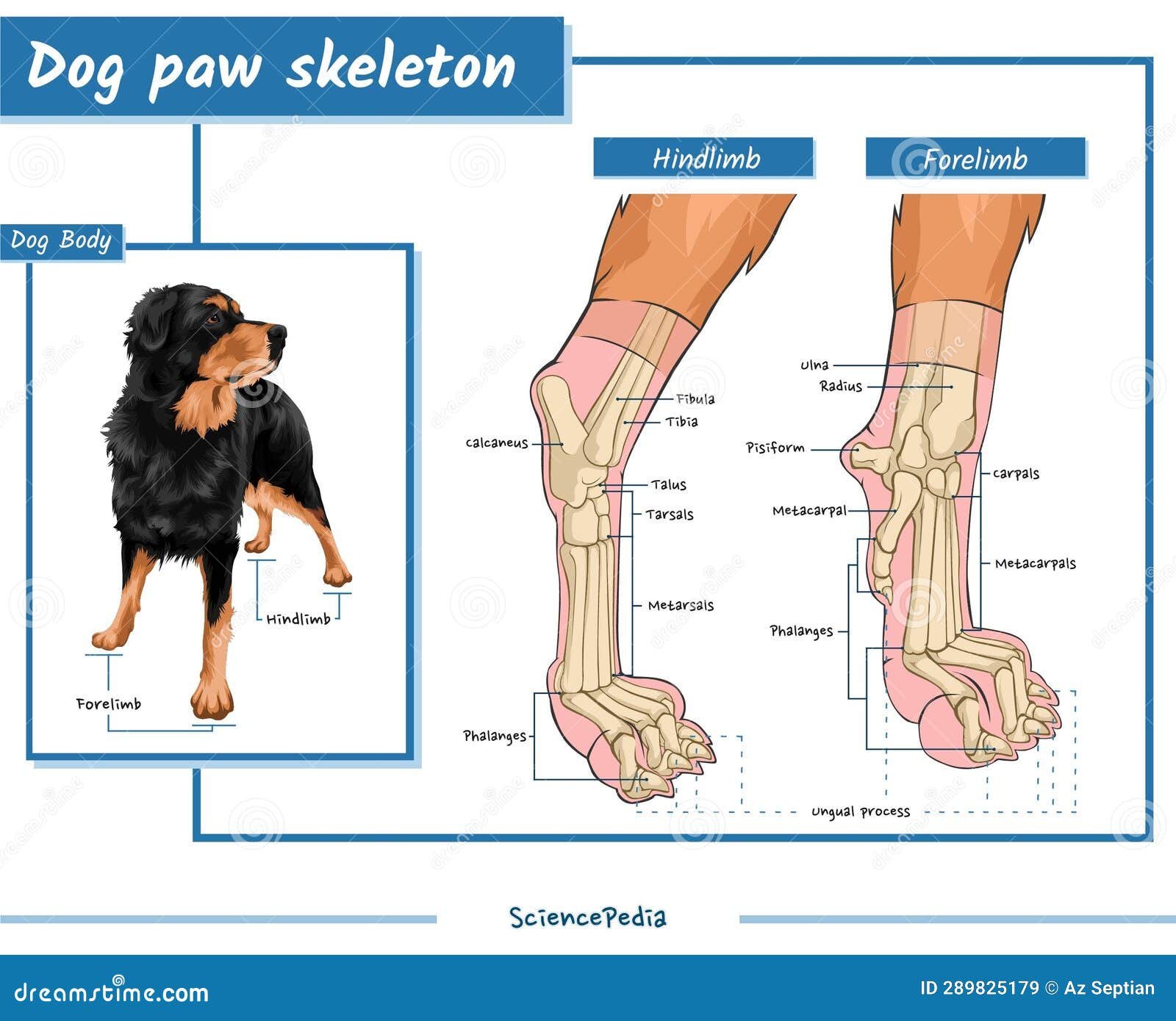
Dog paw anatomy includes pads, nails, bones, joints, skin, and tissues that support movement.
A dog’s paws are built for balance, traction, and protection. Every part has a purpose, from the tough paw pads that absorb impact to the claws that provide grip. Understanding dog paw anatomy helps owners in the United States care for their pets during daily walks, outdoor play, and seasonal changes.
After studying canine structure and observing common paw issues, one thing becomes clear: small changes in a dog’s paws can reveal larger health concerns. A cracked pad, broken nail, or unusual licking habit may be an early sign that your dog needs attention.
What Is Dog Paw Anatomy?
Dog paw anatomy describes the physical parts that make up a dog’s foot. These parts include bones, joints, paw pads, nails, skin, nerves, blood vessels, and connective tissues.
A dog’s paw works like a natural shock absorber. It helps reduce stress on the legs while walking, running, jumping, and playing. The design allows dogs to move across many surfaces, from grass and soil to sidewalks.
- ✦ Paw pads
Thick cushions under the paw that protect bones and provide grip.
- ✦ Nails and claws
Hard structures used for traction, digging, and protection.
- ✦ Bones and joints
Internal structures that create movement and support weight.
Why Understanding Paw Structure Matters
Knowing dog paw anatomy makes routine care easier. Owners can check each part and spot problems such as swelling, cuts, or changes in texture.
Many paw problems become worse when ignored. Regular inspection after walks is a simple habit that supports long-term paw health.
- ✦ Early detection
Regular checks help identify injuries before they become painful.
Main Parts of a Dog Paw
The main parts of a dog paw each perform a unique job. Together, they help dogs stay stable and comfortable during movement.
The visible outside of the paw only shows part of the structure. Under the skin, muscles, bones, and nerves work together to control every step.

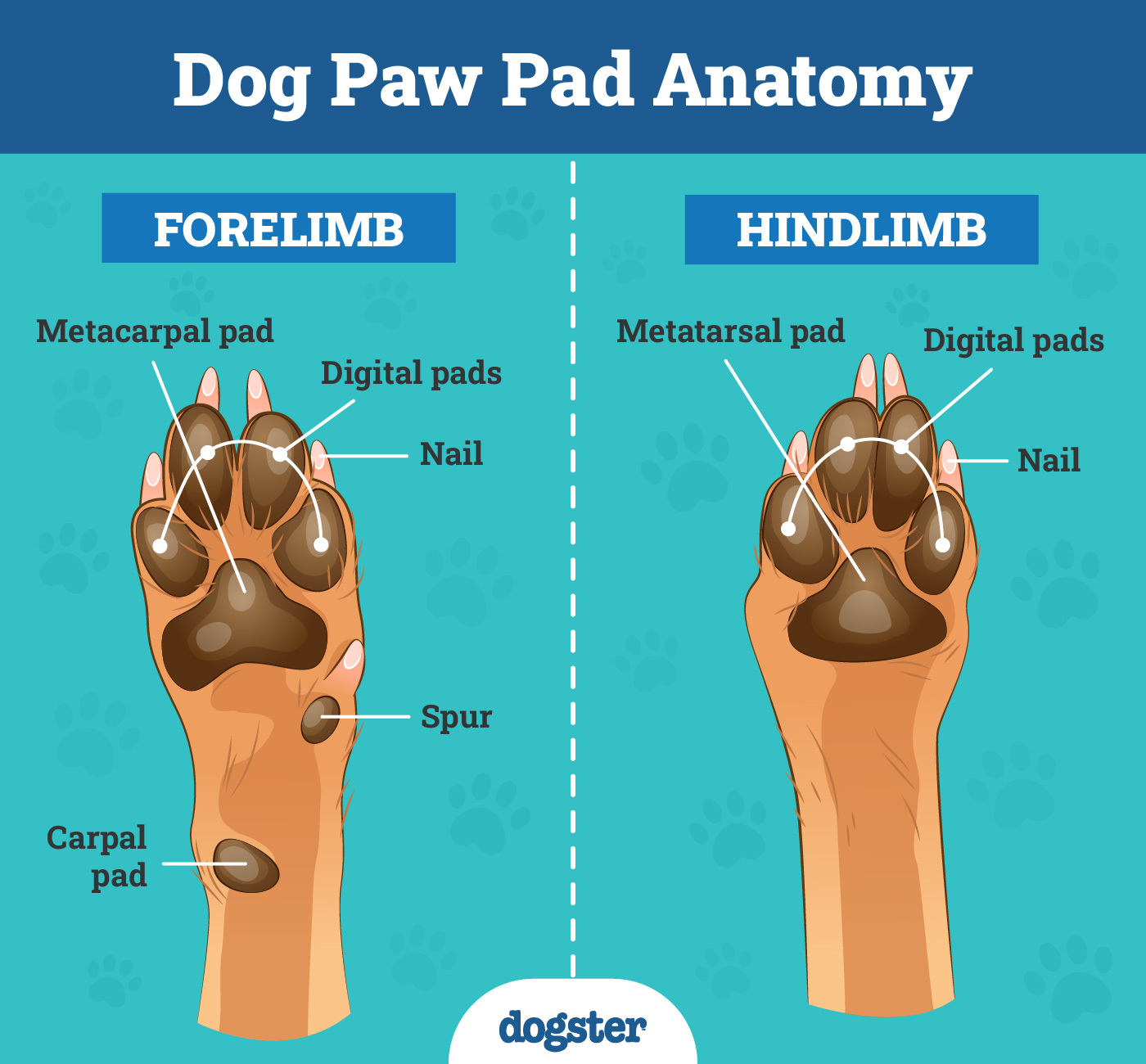
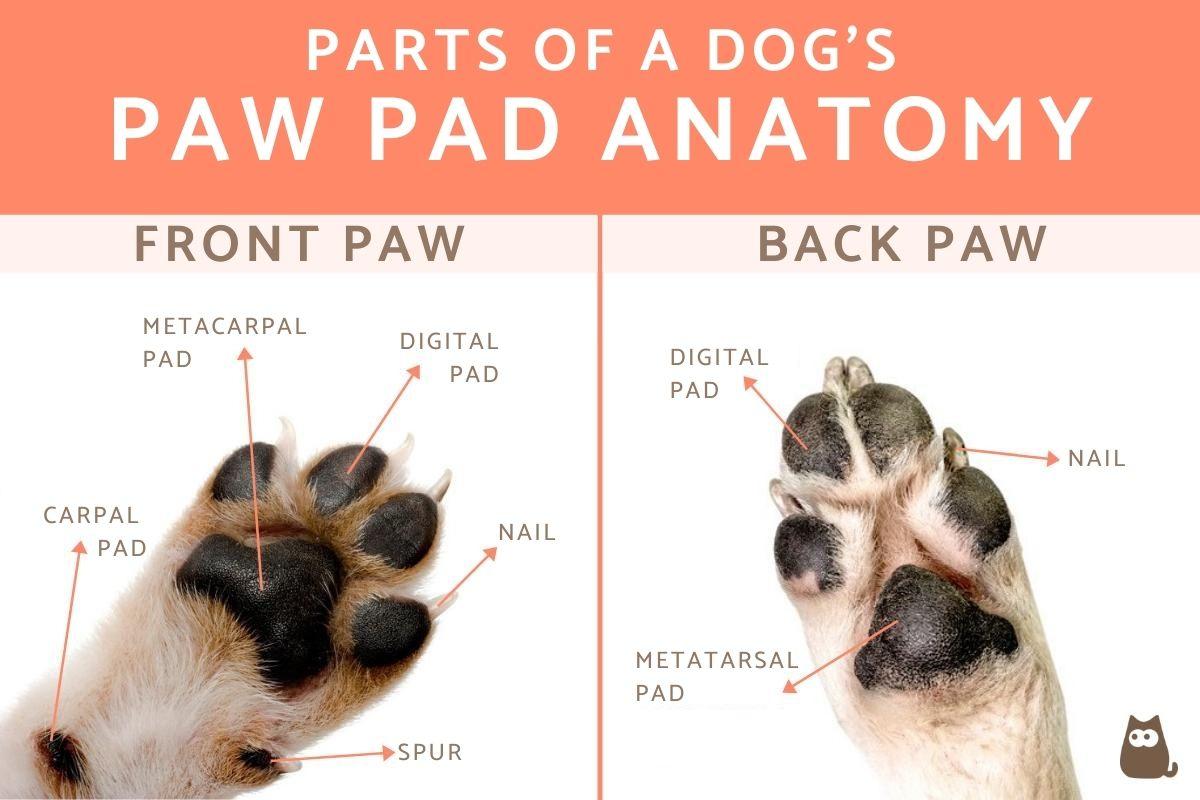
- ✦ Digital pads
Small pads located under each toe that help absorb pressure.
- ✦ Metacarpal and metatarsal pads
Large central pads that carry much of the dog’s body weight.
- ✦ Carpal pad
A higher pad on the front legs that helps with stopping and movement control.
Dog Paw Pads: The Natural Protection System
Paw pads are one of the most important parts of dog paw anatomy. They contain thick skin and fatty tissue that protect the feet from impact and rough ground.
Dogs have different pad textures based on genetics, activity level, and environment. A working dog that spends time outdoors may develop tougher pads than a dog that mainly walks indoors.
- ✦ Shock absorption
Pads reduce pressure on bones and joints during movement.
- ✦ Temperature protection
Pads provide some protection from hot and cold surfaces.
- ✦ Traction
Pad texture helps dogs avoid slipping while walking.
Common Paw Pad Problems
Dryness, cracks, burns, and cuts are common paw pad issues. Hot pavement during American summers can damage sensitive paws, especially during long walks.
A dog that suddenly avoids walking or constantly licks its feet may have discomfort that needs checking.
- ✦ Cracked pads
May happen because of weather, rough surfaces, or irritation.
Dog Paw Bones, Joints, and Internal Structure
The internal structure of a dog paw includes small bones connected by joints and supported by tendons and ligaments. These structures allow flexible movement while carrying body weight.
The front and back paws have different roles. Front paws often handle more weight and braking force, while back paws provide power during running and jumping.

- ✦ Toe bones
Small bones inside each toe that support movement.
- ✦ Joints
Connections between bones that allow controlled motion.
- ✦ Ligaments and tendons
Soft tissues that stabilize and move the paw.
Dog Nails and Claws: Function and Care
Dog nails are part of dog paw anatomy and play an important role in grip and movement. Unlike human nails, dog claws contain a sensitive inner area called the quick, which contains blood vessels and nerves.
Long nails can change the way a dog walks. Over time, they may place extra pressure on joints and affect posture.
- ✦ Regular trimming
Keeps nails at a healthy length and supports comfortable walking.
- ✦ Checking the quick
Avoids cutting into the sensitive inner nail area.
How to Care for Your Dog’s Paws
Good paw care is simple and should become part of your dog’s normal routine. A few minutes of checking can prevent many painful problems.
For dogs living in the United States, seasonal care is especially important. Snow, ice, salt, hot pavement, and dry weather can all affect paw health.

- ✦ Inspect paws often
Look for swelling, cuts, redness, or unusual smells.
- ✦ Clean after walks
Remove dirt, chemicals, and outdoor debris.
- ✦ Protect during extreme weather
Use proper protection when conditions are harsh.
