
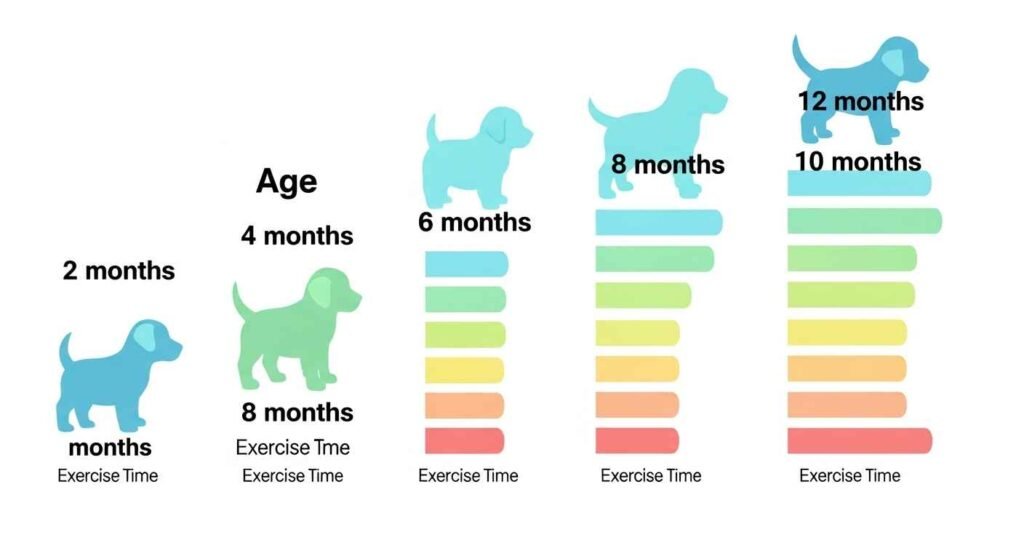
Understanding dog exercise by age helps owners create routines that keep their pets healthy without pushing them too hard. A young puppy, an active adult dog, and a senior companion all have different limits and needs. Exercise should support the dog’s body, mind, and daily happiness.
From my experience studying dog care routines, many behavior problems come from either too little activity or the wrong type of exercise. A balanced plan includes walks, play, training, and rest. In the United States, where many dogs spend long hours indoors while owners work, a proper exercise routine can make a major difference in a dog’s quality of life.
Why Dog Exercise by Age Matters
Dogs change throughout their lives. Their muscles, bones, joints, energy levels, and recovery time are different at every stage. This is why a single exercise plan does not work for every dog.
Dog exercise by age helps owners avoid common mistakes. Too much activity can harm growing puppies, while too little movement can lead to weight gain, stiffness, and boredom in adult and senior dogs.
- ✦ Supports physical health
Regular movement helps maintain healthy muscles, joints, heart function, and body weight.
- ✦ Improves behavior
Dogs with enough exercise often show fewer signs of boredom, stress, and destructive behavior.
- ✦ Builds confidence
Safe walks and play help dogs explore their world and develop better social skills.
Factors That Change Exercise Needs
Age is only one part of the picture. Breed size, personality, health conditions, and energy level also affect how much exercise a dog needs.
A young Labrador may need more activity than an older Chihuahua, while a calm adult dog may need less than a high-energy working breed.
Dog Exercise by Age: Puppy Exercise Guidelines
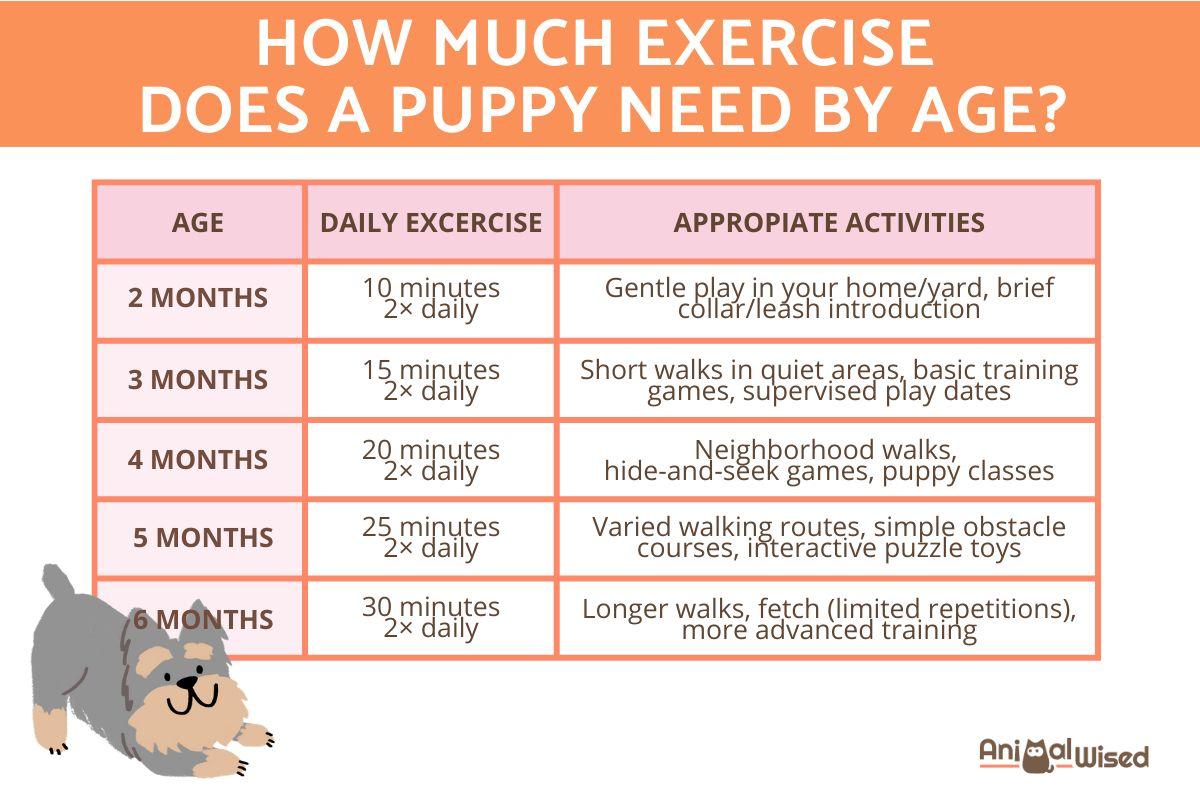
Puppies have lots of energy, but their bodies are still developing. Their bones and joints need time to grow before they can handle long runs, intense jumping, or high-impact activities.
The best dog exercise by age approach for puppies focuses on short sessions. Gentle walks, supervised play, and training games help puppies learn while protecting their growing bodies.

- ✦ 8 to 12 weeks old
Use short play sessions, basic training, and safe exploration. Avoid forced running or long walks.
- ✦ 3 to 6 months old
Increase activity slowly with short walks, play, and simple training exercises.
- ✦ 6 to 12 months old
Many dogs can handle longer walks, but intense exercise should still match their breed and growth rate.
The Puppy Exercise Rule
Many owners follow a simple guideline of around five minutes of structured exercise per month of age, twice daily. This is only a general guide and does not replace advice from a veterinarian.
Puppies also need rest. Sleep supports growth, learning, and recovery after activity.
Exercise Needs for Adult Dogs
Adult dogs usually have stronger bodies and can enjoy more regular exercise. However, the right amount depends on breed, health, and lifestyle.
Dog exercise by age for adults often includes daily walks, active play, training, and mental challenges. A balanced routine prevents both physical and emotional problems.
- ✦ Low-energy adult dogs
Short walks and gentle play may be enough for relaxed breeds or dogs with health concerns.
- ✦ Medium-energy adult dogs
Daily walks combined with games and training usually provide good activity levels.
- ✦ High-energy adult dogs
Working and sporting breeds may need longer exercise sessions and more mental challenges.
Combining Physical and Mental Exercise
Exercise is not only about running. Puzzle toys, scent games, obedience training, and new walking routes challenge a dog’s brain.
Mental stimulation can tire a dog in a healthy way and reduce unwanted habits caused by boredom.
Dog Exercise by Age for Senior Dogs
Senior dogs still need exercise, but their routine should become gentler. Aging dogs may have slower movement, joint changes, or less stamina.
The goal of senior dog exercise is not maximum activity. It is maintaining comfort, mobility, and a healthy daily routine.
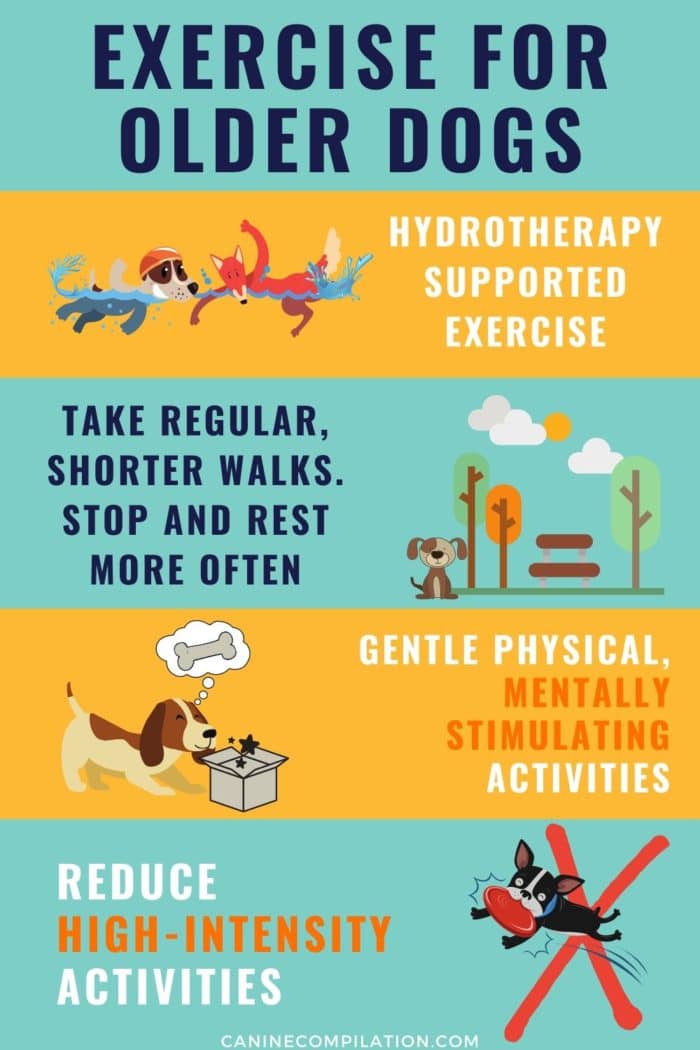
- ✦ Choose low-impact activities
Walking, swimming, and gentle play are often easier on older joints.
- ✦ Watch for fatigue
Slow down if your dog shows heavy breathing, pain, limping, or unusual tiredness.
- ✦ Adjust regularly
Exercise plans should change as your senior dog’s health and abilities change.
Helping Older Dogs Stay Active
Older dogs benefit from consistency. A short daily walk is often better than rare long activities.
Comfortable surfaces, proper weight management, and veterinary care can help senior dogs stay active longer.
How Breed Size Affects Dog Exercise by Age
Breed size changes how dogs grow and how they handle exercise. Small dogs may mature faster, while large breeds often need more careful activity during growth.
Large puppies can be more vulnerable to joint stress, so owners should avoid excessive jumping and intense exercise during development.

- ✦ Small breeds
Small dogs often need frequent play but may tire faster during long walks.
- ✦ Medium breeds
Medium dogs often do well with balanced daily activity and training.
- ✦ Large breeds
Large dogs need controlled exercise to protect developing joints and bones.
Signs Your Dog Needs More or Less Exercise
Every dog communicates through behavior and body language. Learning these signs helps owners adjust exercise levels before problems develop.
A good routine leaves a dog satisfied and relaxed. It should not cause extreme exhaustion or frustration.
- ✦ Signs of too little exercise
Common signs include chewing, excessive barking, restlessness, and attention-seeking behavior.
- ✦ Signs of too much exercise
Watch for soreness, limping, reluctance to move, or unusual tiredness.
- ✦ Healthy exercise response
A properly exercised dog should be calm, comfortable, and ready to rest.
