
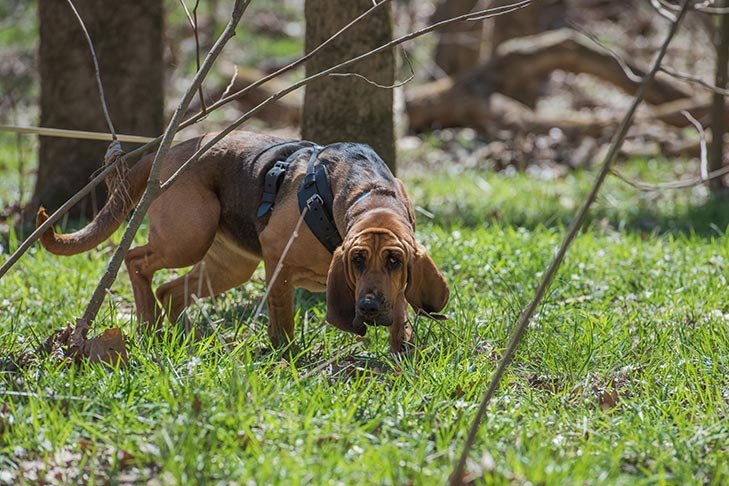
Dog scent tracking behavior is one of the most fascinating abilities in the canine world. A dog does not simply smell something and know where it is. Instead, the dog collects many small scent clues and builds a picture of the world through odor.
From family pets searching for hidden treats in a U.S. backyard to trained working dogs helping in search and rescue operations, scent tracking shows how powerful canine senses can be. Understanding this behavior helps owners create better training routines and respect natural dog instincts.

What Is Dog Scent Tracking Behavior?
Dog scent tracking behavior describes the way dogs use smell to locate, follow, and identify a specific scent. This behavior appears when a dog lowers its nose, sniffs repeatedly, changes direction, and follows an invisible odor path.
Unlike humans, dogs depend heavily on smell to understand their surroundings. A walk around the neighborhood becomes a collection of scent stories that tell a dog about other animals, people, and changes in the environment.
- ✦ Scent identification
Dogs can recognize unique odors from people, animals, food, and objects.
- ✦ Scent trail following
Dogs follow odor patterns left on surfaces, in the air, or across outdoor areas.
- ✦ Environmental reading
Dogs use smells to understand events that happened around them.
Why Dogs Naturally Track Scents
Tracking scents helped wild canines find food, avoid danger, and communicate with others. Modern dogs still carry these instincts even when they live as household pets.
Many owners notice this during daily walks. A dog may stop suddenly, sniff a tree, and spend several seconds gathering information that humans cannot detect.
- ✦ Survival instinct
Smell helps dogs locate resources and understand possible threats.
How Dogs Follow a Scent Trail
Dog scent tracking behavior depends on the ability to detect tiny odor particles. Every person, animal, and object releases chemical signals that create a unique scent profile.
When tracking, dogs may use both air scent and ground scent. Air scent moves through the environment, while ground scent stays on surfaces such as soil, grass, and pavement.

- ✦ Nose scanning
Dogs move their noses to collect changing odor information from different areas.
- ✦ Pattern recognition
The dog’s brain compares scent information to previous experiences.
Air Scent vs Ground Scent Tracking
Air scent tracking happens when dogs search for floating odor particles. Search and rescue dogs often use this method when locating people over large areas.
Ground tracking focuses on scent left behind on surfaces. Tracking breeds such as Bloodhounds are known for carefully following these trails.
- ✦ Air tracking
Useful for finding moving targets or people in open spaces.
- ✦ Ground tracking
Useful for following a specific path left by a person or animal.
The Science Behind a Dog’s Powerful Sense of Smell
A dog’s nose is built for advanced scent detection. Their nasal structure allows them to separate different smells instead of mixing them together like humans often do.
The brain also plays a major role in dog scent tracking behavior. Dogs process scent information in areas connected with memory, learning, and decision-making.

- ✦ Large scent-processing ability
Dogs dedicate a significant part of their brain function to understanding smells.
- ✦ Scent memory
Dogs can remember familiar odors and connect them with past experiences.
Why Some Breeds Track Better Than Others
All dogs can smell well, but some breeds have been developed for stronger tracking abilities. Breeds like Bloodhounds, Beagles, and German Shepherds often excel in scent-based tasks.
Training, motivation, and individual personality also affect tracking success. A family dog can enjoy scent games even without professional tracking skills.
- ✦ Breed traits
Certain breeds have physical and behavioral traits that support scent work.
Common Reasons Dogs Use Scent Tracking
Dogs use scent tracking for many daily activities. A pet dog searching for a family member or finding a toy is showing the same basic behavior used by trained working dogs.
In the United States, scent dogs support many fields, including search and rescue, law enforcement, hunting, and detection work.

- ✦ Finding people
Search dogs follow human scent trails during rescue missions.
- ✦ Finding objects
Detection dogs can locate specific items through trained scent recognition.
- ✦ Exploring nature
Dogs use scent to understand outdoor environments.
How Owners Can Encourage Healthy Scent Tracking
Scent games are a simple way to support dog scent tracking behavior at home. They provide mental stimulation and allow dogs to use natural skills.
Many trainers recommend starting with easy activities, such as hiding treats or toys and allowing the dog to search. The goal is not speed but confidence and focus.

- ✦ Hide and seek games
Hide treats around a safe area and let your dog search using smell.
- ✦ Nose work training
Structured scent exercises teach dogs how to find specific odors.
- ✦ Outdoor tracking walks
Allowing sniff time during walks supports natural exploration.
Training Tips for Beginners
Start with short sessions and reward effort. Dogs learn faster when scent activities feel like games.
Avoid forcing a dog to track. Natural curiosity creates better results than pressure.
- ✦ Use rewards
Positive reinforcement helps dogs enjoy scent training.
