
Dog navigation abilities are among the most impressive skills in the animal world. A family dog can often remember walking paths, recognize familiar areas, and return to places that feel safe. These skills come from millions of years of canine evolution and survival behavior.
From my experience studying dog behavior topics, I have found that many owners underestimate how much information dogs collect during a simple walk. A dog is not just following a path. It is reading smells, sounds, landmarks, and changes in the environment.

How dog navigation abilities work
Dog navigation abilities depend on several senses working together. Dogs do not use one single system like a human using a map. Instead, they build a picture of their surroundings through smell, sight, sound, and memory.
A dog walking through a neighborhood learns many details. It remembers trees, houses, turns, sounds, and scent patterns. These details help the dog understand where it is and where it needs to go.
- ✦ Scent information
Dogs use smell to identify locations, people, animals, and previous paths.
- ✦ Environmental memory
Dogs remember familiar routes and important places from past experiences.
- ✦ Sensory combination
Dogs combine different signals instead of depending on only one sense.
The role of a dog’s powerful sense of smell in navigation
The strongest part of dog navigation abilities comes from their sense of smell. A dog can detect tiny changes in scent that humans cannot notice. This helps dogs follow trails and recognize familiar locations.
During outdoor walks in the United States, many dogs pause often because they are collecting information. Each smell can tell them about other dogs, wildlife, people, and changes in the area.

- ✦ Scent trails
Dogs can follow scent paths left behind by people, animals, or objects.
- ✦ Location recognition
Familiar smells help dogs identify places they have visited before.
Why smell is more important than sight for dogs
Humans often depend on visual maps, but dogs experience the world through scent. A smell can provide details about distance, direction, and recent activity.
This ability explains why search and rescue dogs can locate missing people in large areas.
Can dogs find their way home?
Many owners wonder if dogs can return home after getting lost. Dog navigation abilities can help some dogs locate familiar areas, but success depends on many factors.
A dog may use scent trails, familiar landmarks, memory, and environmental signals. However, busy roads, new locations, weather changes, and fear can make navigation harder.
- ✦ Familiar territory
Dogs usually navigate better in places they know well.
- ✦ Distance limits
A longer distance creates more challenges because scent and landmarks change.
- ✦ Stress effects
Fear and panic may reduce a dog’s ability to make good choices.
The connection between memory and returning home
Dogs have strong spatial memory. They remember routes, locations, and experiences connected to important places.
A dog that regularly walks around a neighborhood may build a detailed internal map of that area.
Do dogs use Earth’s magnetic field for navigation?
Research suggests that some animals can sense Earth’s magnetic field, and dogs may use magnetic information in certain situations. Scientists have observed behaviors that suggest dogs may have a connection with magnetic cues.
This does not mean dogs have a built-in GPS system. Instead, magnetic signals may be one small part of a larger navigation process.

- ✦ Magnetic sensitivity
Dogs may detect natural magnetic signals that provide additional environmental information.
- ✦ Combined navigation
Magnetic clues likely work together with smell and memory.
How modern technology supports dog navigation abilities
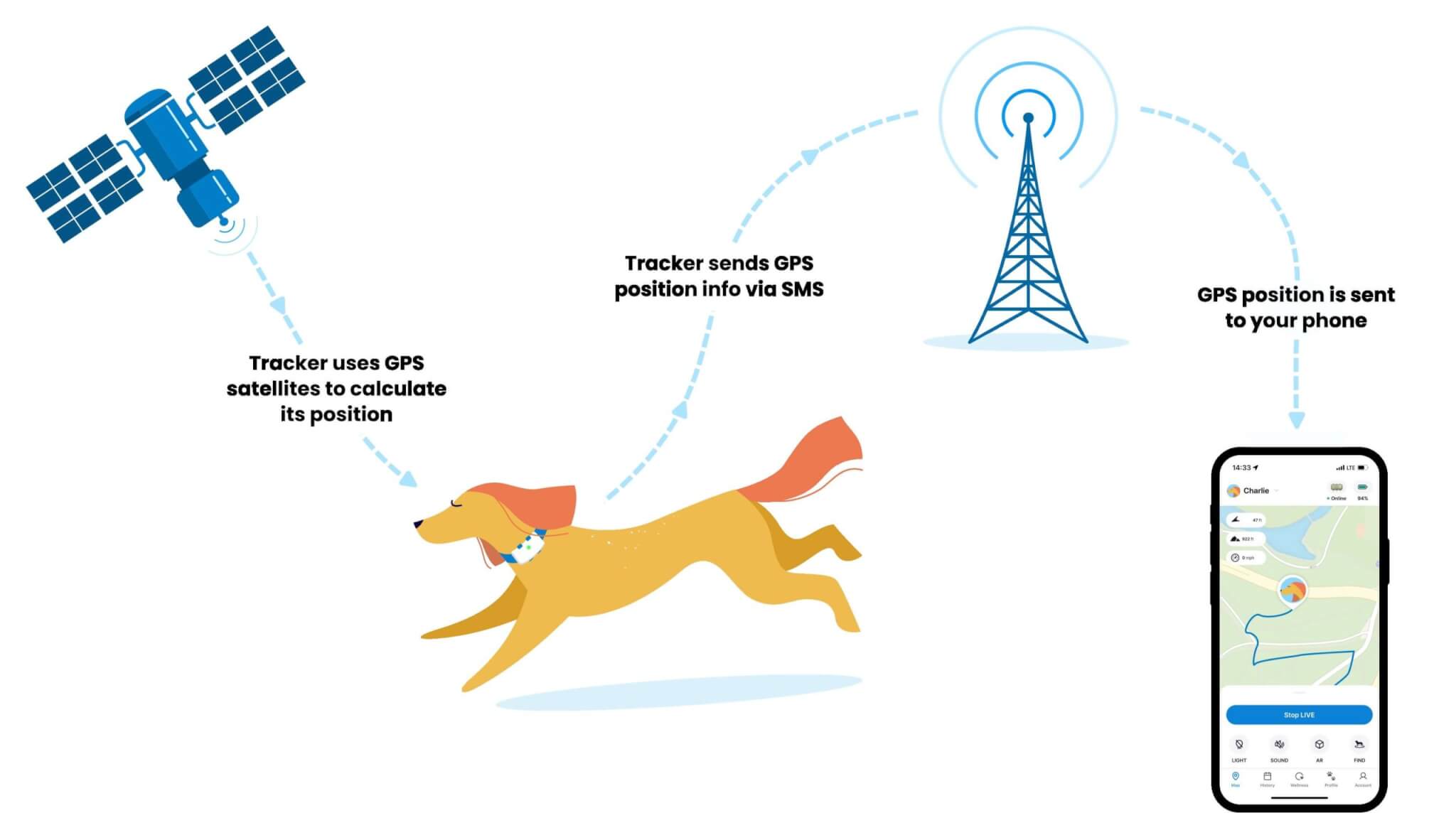
Modern pet technology can support dogs and owners when natural navigation is not enough. GPS collars help owners locate dogs if they escape or wander away.
These devices do not improve a dog’s natural skills. They provide extra safety by allowing people to track location information.
- ✦ GPS tracking collars
These devices show a dog’s location through satellite-based tracking systems.
- ✦ Safety support
Technology helps owners respond faster when a dog goes missing.
Factors that affect dog navigation abilities
Not every dog has the same navigation skills. Breed, age, training, health, and life experience can change how well a dog understands its environment.
Working breeds that were developed for tracking or hunting may show strong navigation behaviors. However, every dog can learn routes and recognize familiar places.

- ✦ Age
Older dogs may experience changes in memory or sensory ability.
- ✦ Training
Positive training can improve a dog’s confidence and awareness.
- ✦ Health
Vision, hearing, or cognitive problems may affect navigation.
