
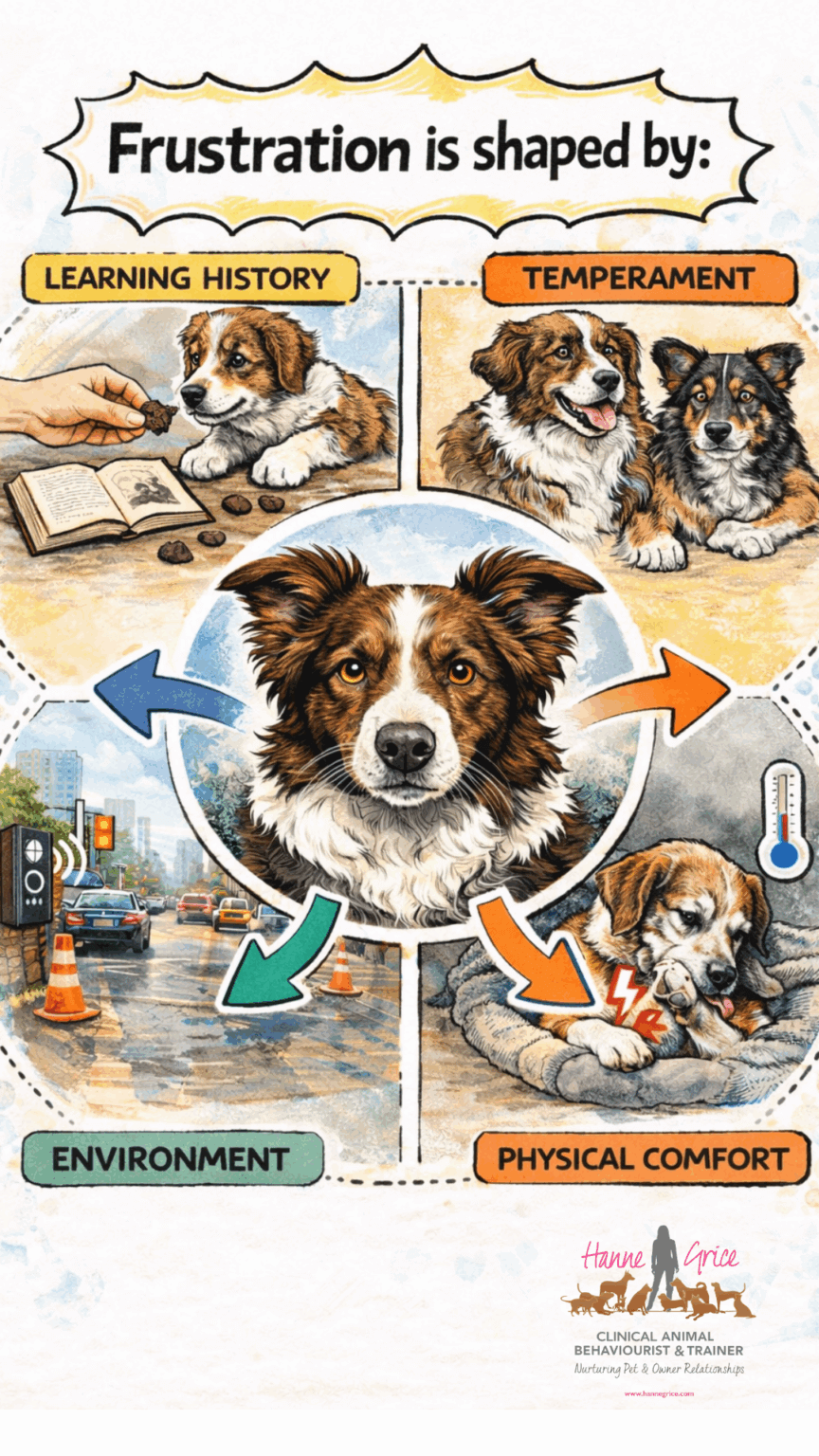
Many dog owners in the United States notice frustration when their dog pulls on the leash, barks at a closed door, or struggles to wait for food. These moments are not signs of a bad dog. They show a skill that needs practice.
Dog frustration tolerance develops over time. In my experience studying dog behavior and training methods, dogs often improve when owners stop rewarding emotional reactions and start teaching calm choices. A dog that learns patience becomes easier to live with and more confident in new situations.
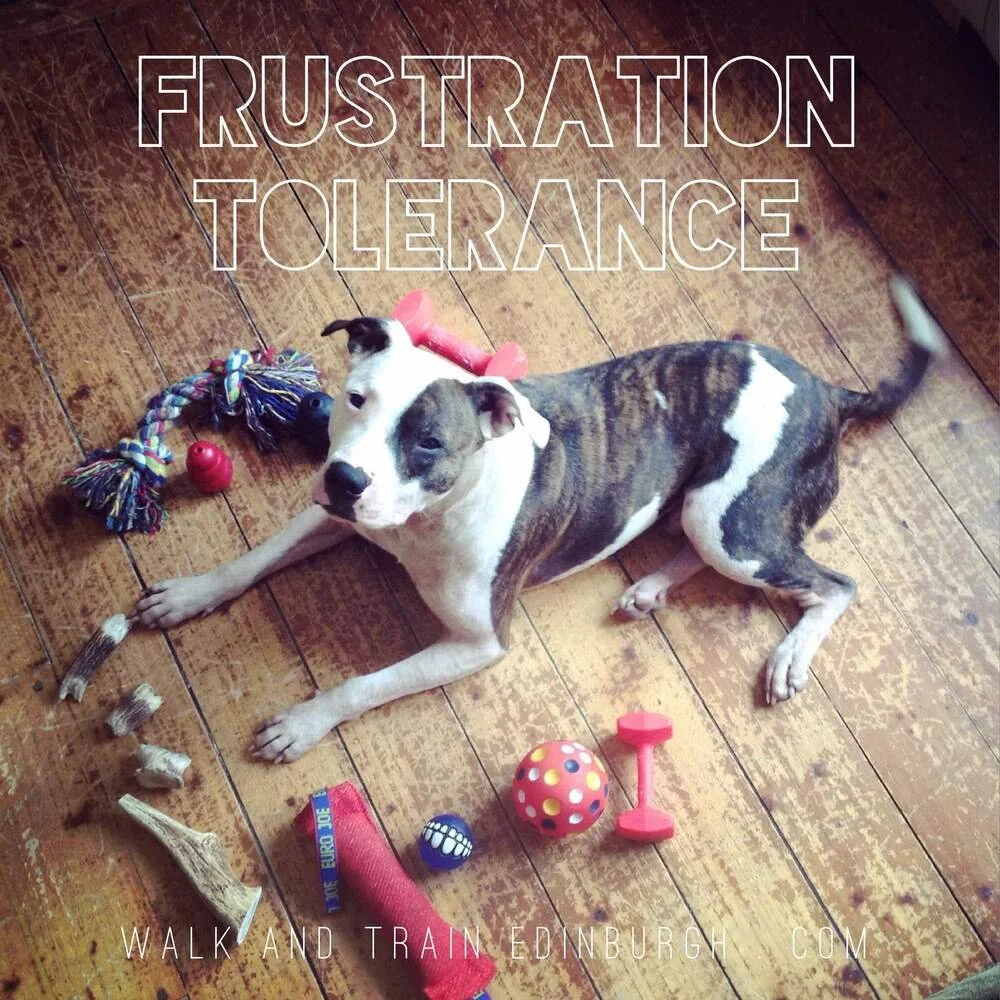
What Is Dog Frustration Tolerance?
Dog frustration tolerance describes how well a dog handles situations where rewards are delayed or unavailable. A dog with good tolerance can wait, think, and try again instead of reacting immediately.
This skill is closely linked to emotional control and impulse control. A dog does not need to avoid frustration completely. Small amounts of safe frustration help dogs learn problem solving and patience.
- ✦ Waiting calmly
The dog can wait for food, toys, attention, or access to a desired area without losing control.
- ✦ Handling challenges
The dog keeps trying when a task feels difficult instead of barking or quitting.
Why Frustration Is Part of Learning
Learning always includes small moments of difficulty. When a dog discovers that calm behavior leads to success, the dog builds stronger coping skills.
The goal is not to create stress. The goal is to create safe challenges that teach the dog how to respond.
- ✦ Healthy challenge
Simple training games create controlled situations where dogs can practice patience.
Signs of Low Dog Frustration Tolerance
Dogs with low frustration tolerance often react quickly when they cannot access something they want. The reaction may look different depending on the dog’s personality, age, and past experiences.
Some dogs become loud and active. Others shut down or avoid the challenge. Understanding these signals helps owners choose the right training approach.
- ✦ Barking or whining
The dog uses vocal behavior to express difficulty waiting or handling a limit.
- ✦ Jumping or grabbing
The dog tries to control the situation with physical actions instead of calm behavior.
- ✦ Giving up quickly
The dog loses interest when a task requires patience or repeated attempts.
Frustration Versus Disobedience
A frustrated dog is not always ignoring a command. The dog may lack the emotional skill needed to complete the task.
Training works better when owners teach the missing skill instead of adding more pressure.
- ✦ Look for the reason
Identify whether the dog feels confused, excited, tired, or overwhelmed.
Why Dogs Develop Frustration Problems
Many factors influence Dog frustration tolerance. Genetics, early experiences, training history, and daily routines can all shape how a dog reacts to challenges.
A puppy that always receives immediate rewards may struggle with waiting. A dog that has never practiced calm behavior may react strongly when limits appear.

- ✦ Limited practice
Dogs need repeated chances to practice waiting and staying calm.
- ✦ Too much excitement
High energy environments can make self-control harder for some dogs.
- ✦ Unclear expectations
Dogs learn better when rules stay consistent.
The Role of Daily Life
American households often have busy schedules, visitors, children, and many distractions. These normal events can test a dog’s ability to stay calm.
Small daily habits, like waiting before going outside, can become valuable training moments.
How to Build Dog Frustration Tolerance Through Training
Building Dog frustration tolerance requires patience and gradual progress. Training should begin with easy challenges and slowly increase difficulty.
Reward calm behavior whenever possible. Dogs repeat behaviors that bring positive results.
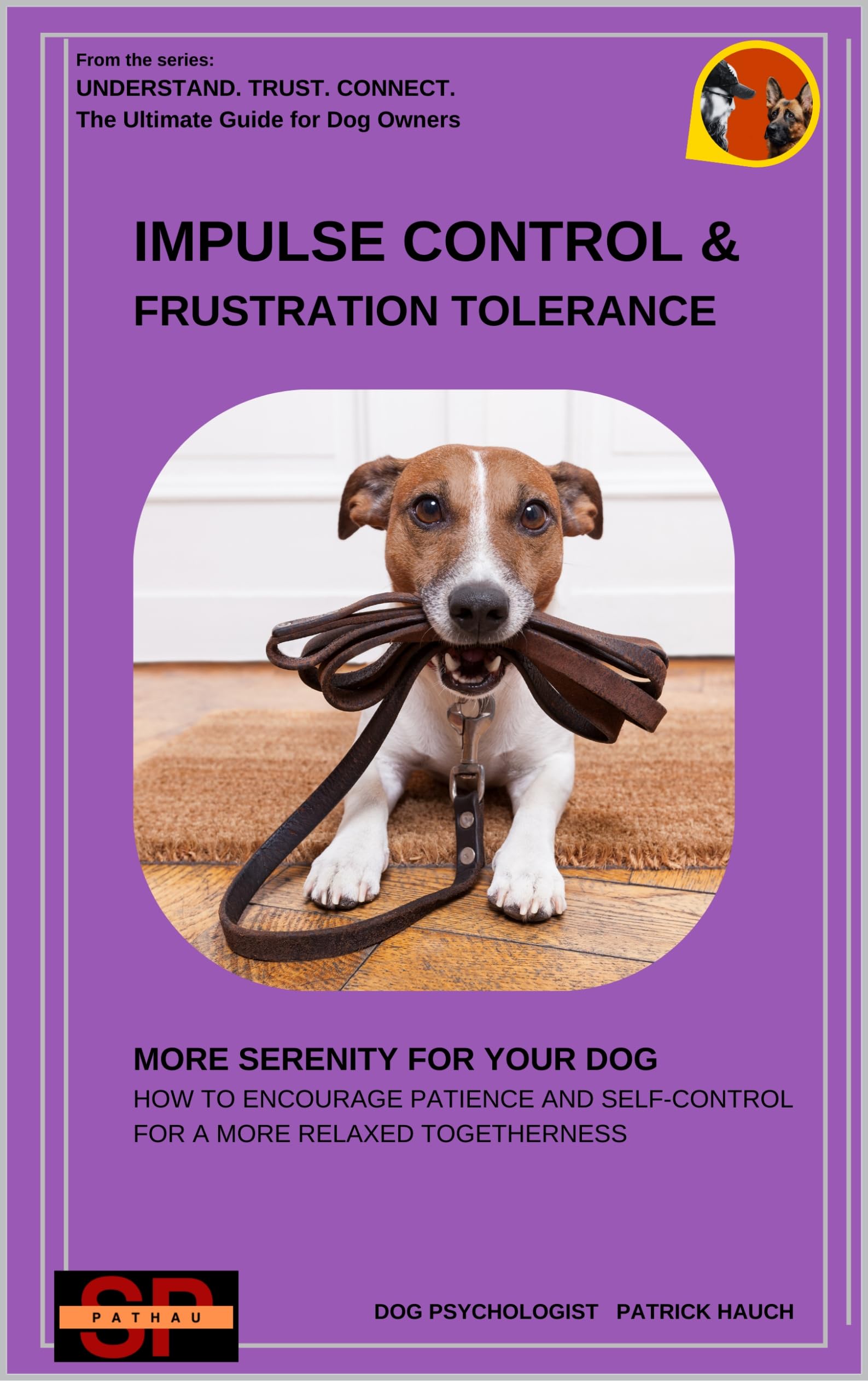
- ✦ Practice waiting games
Ask your dog to wait briefly before receiving food, toys, or attention.
- ✦ Reward calm choices
Give rewards when your dog relaxes instead of demanding.
- ✦ Increase difficulty slowly
Add distractions only after your dog succeeds at easier steps.
Useful Training Exercises
Simple games can teach patience. For example, placing a treat in your hand and waiting for the dog to stop pushing creates a lesson in self-control.
Puzzle toys, scent games, and controlled play can also improve problem solving.
- ✦ Leave it practice
Teaches dogs that ignoring an item can lead to a better reward.
- ✦ Mat training
Helps dogs learn relaxation in busy environments.
The Connection Between Frustration Tolerance and Impulse Control
Impulse control allows dogs to pause before acting. This ability supports Dog frustration tolerance because the dog can think before reacting.
Dogs with stronger impulse control often handle situations like door greetings, leash walks, and food preparation more calmly.

- ✦ Better focus
Dogs can pay attention even when exciting distractions appear.
- ✦ Safer behavior
Calm dogs are less likely to rush into risky situations.
Building Emotional Regulation
Emotional regulation does not mean a dog never gets excited. It means the dog can return to a calm state after excitement.
Regular practice helps dogs recover faster from stressful moments.
Common Mistakes When Training Frustration Tolerance
Owners sometimes increase difficulty too quickly. A dog that fails repeatedly may become more frustrated instead of learning patience.
Good training balances challenge and success. The dog should feel supported while learning new skills.
- ✦ Expecting instant results
Behavior change takes repetition and time.
- ✦ Using too much pressure
High pressure can increase stress and reduce learning.
- ✦ Ignoring small improvements
Small calm moments are important steps forward.
Creating Better Training Sessions
Short sessions often work better than long sessions. End training while your dog is still successful and engaged.
Consistency matters more than intensity.
