
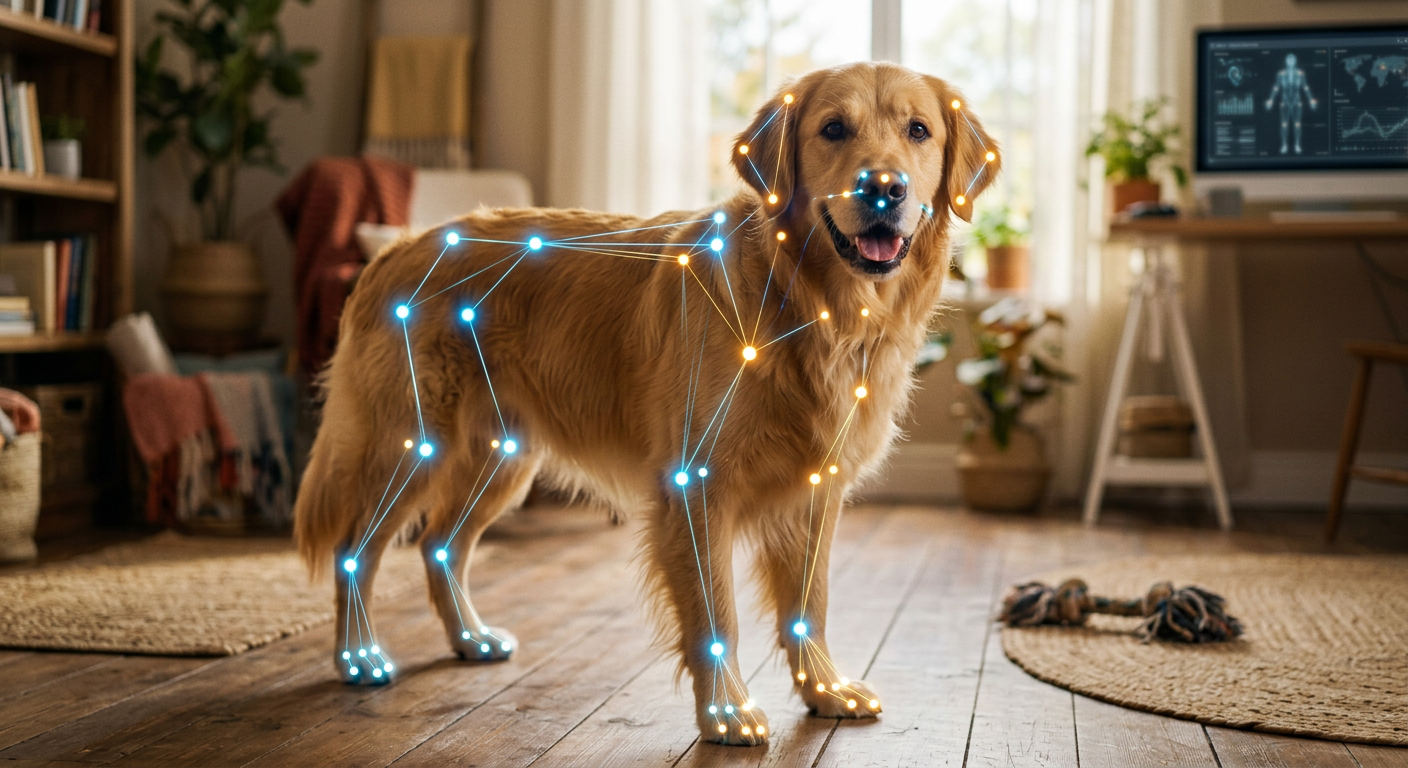
Dog human gesture recognition describes a dog’s ability to notice and understand human movements. A dog may follow a pointing finger, respond to a hand signal, or react when an owner changes body position. This skill helps dogs communicate with people in everyday life.
From my experience studying dog behavior and training methods, I have seen that many communication problems come from unclear human signals. Dogs often watch our hands, faces, and posture before they listen to our words. Understanding this process can help owners build a stronger relationship with their pets.

What is dog human gesture recognition?
Dog human gesture recognition is the ability of dogs to identify and respond to human physical signals. These signals can include pointing, waving, reaching, looking toward an object, or using a trained hand command.
Dogs do not understand gestures exactly like humans do. Instead, they connect a movement with meaning through natural ability, past experiences, and training. A dog learns that a raised hand may mean sit, while a pointed finger may show where to look.
- ✦ Visual attention
Dogs watch human movement closely because body signals often give them useful information.
- ✦ Learned association
Dogs connect repeated gestures with actions, rewards, or daily routines.
Why gestures matter to dogs
Dogs evolved as social animals that depend on communication. Reading movement helps them understand people, other dogs, and their environment.
- ✦ Better cooperation
Gestures help dogs follow human instructions during training and daily activities.
How dogs read human body movements
Dogs use several visual clues when they interpret human actions. They may notice hand position, arm movement, facial expression, eye direction, and body posture.
A dog human gesture recognition response is usually stronger when the signal is clear and consistent. Mixed signals can confuse dogs because they depend on patterns rather than complex language.

- ✦ Pointing gestures
Many dogs can follow a human pointing gesture to find an object or location.
- ✦ Body orientation
Dogs often notice where a person faces because it gives clues about attention and intention.
- ✦ Hand movement
Simple hand signals can become powerful training tools when repeated consistently.
The science behind dog human gesture recognition
Research on canine cognition shows that dogs are skilled at reading human social cues. Their ability comes from thousands of years of living alongside humans and adapting to our communication style.
Dogs combine visual information with memory. They remember what happened after a gesture and use that experience to guide future behavior.
- ✦ Social intelligence
Dogs can pay attention to human actions and adjust their behavior based on those signals.
- ✦ Memory and learning
Past rewards and experiences help dogs understand the meaning of repeated gestures.
Natural ability versus training
Some gestures are easy for dogs to understand naturally, such as following a person’s direction of attention. Other gestures require training, especially specific commands used in obedience work.
- ✦ Natural signals
Dogs often respond to pointing and body direction without formal lessons.
- ✦ Training signals
Commands like stay, sit, and come become clearer when paired with consistent hand movements.
Common human gestures dogs can understand
Many dogs learn common gestures used by owners in homes across the United States. These signals make daily routines easier because dogs can respond without hearing a spoken command.
Clear gestures are especially useful in noisy places, during distance training, or for older dogs with hearing problems.
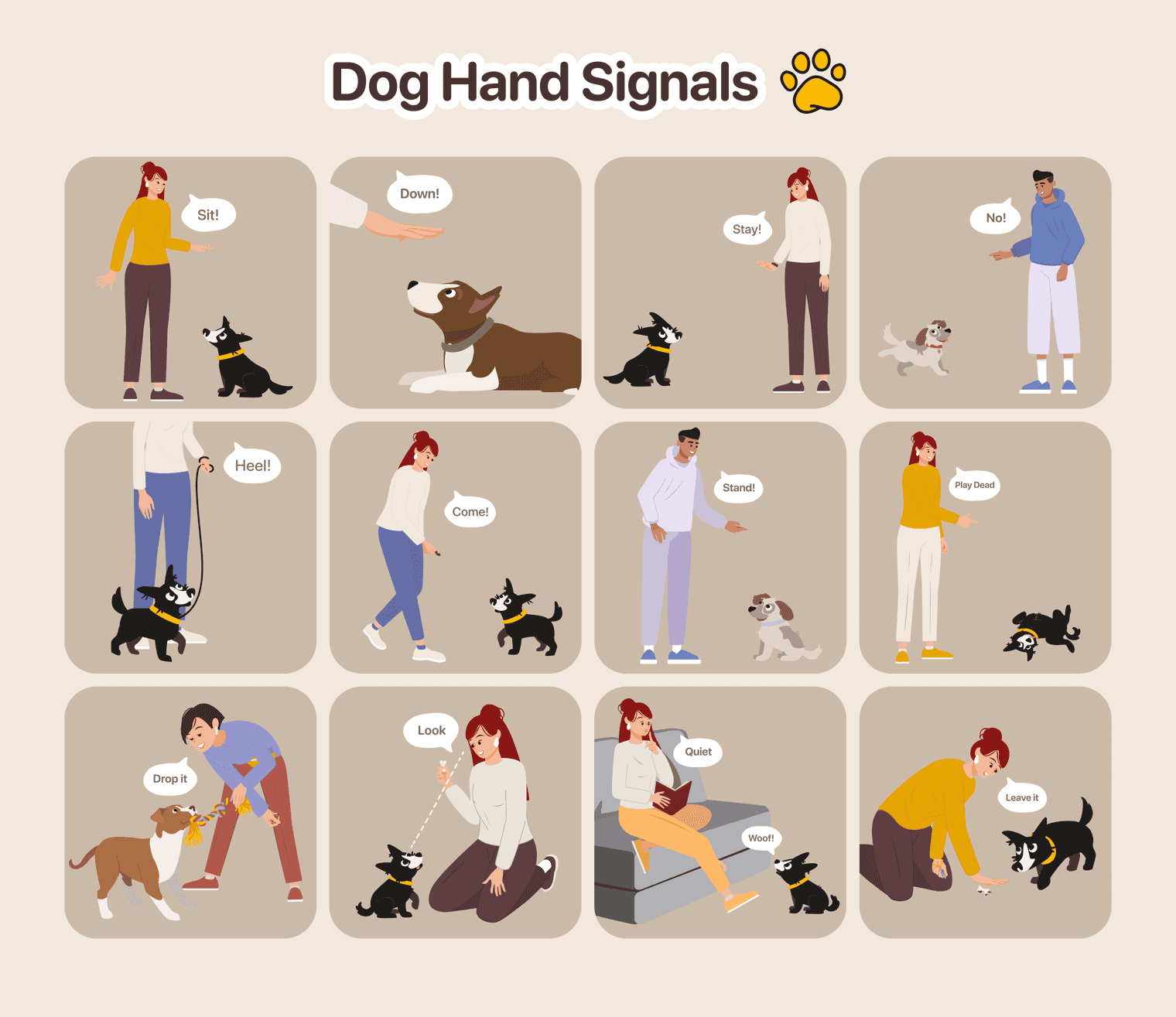
- ✦ Open palm
An open hand can be used as a stop signal or a cue for attention.
- ✦ Pointing finger
Dogs may follow a pointing gesture to locate objects or directions.
- ✦ Raised hand
Many trainers use raised hand movements for commands like sit or wait.
How to improve communication with your dog
Improving dog human gesture recognition starts with consistency. Owners should use the same gesture each time and reward the correct response.
Short training sessions work well because dogs learn through repetition and positive experiences. A calm environment helps dogs focus on the signal.

- ✦ Use simple movements
Small and clear gestures are easier for dogs to notice and remember.
- ✦ Reward correct responses
Positive feedback helps dogs connect gestures with desired actions.
- ✦ Avoid changing signals
Different gestures for the same command may slow learning.
Limitations of dog human gesture recognition
Although dogs are excellent at reading people, their understanding has limits. A dog may not understand a new gesture without context, training, or previous experience.
Age, health, breed traits, and personality can also affect how quickly a dog responds to human signals. Owners should avoid expecting every dog to learn at the same speed.
- ✦ Individual differences
Each dog has a unique learning style and level of attention.
- ✦ Environmental distractions
Noise, stress, and unfamiliar places can reduce a dog’s focus.
