
Understanding Dachshund growth and maturity helps owners provide better care during every life stage. A Dachshund puppy changes quickly during the first year, moving from a tiny newborn into a confident adult dog with its famous long body and short legs.
In my experience studying dog development and breed traits, many Dachshund owners focus only on weight. However, true maturity includes muscle growth, bone development, behavior changes, and emotional confidence. A healthy adult Dachshund is not just bigger; it is stronger, calmer, and better adjusted.
For families in the United States, Dachshunds often live in apartments, homes with yards, and busy urban areas. Knowing when your Dachshund stops growing helps you plan feeding, exercise, training, and long-term health care.

Understanding Dachshund growth and maturity stages
Dachshund growth and maturity happen through several clear stages. Each stage brings changes in size, body structure, energy levels, and behavior. Puppies grow fastest during the first six months, while later months focus more on muscle and confidence.
Dachshunds have a unique body shape because they were bred with a long back and short legs. This means owners should watch healthy development instead of encouraging fast weight gain.
- ✦ Newborn stage
Dachshund puppies depend completely on their mother and spend most of their time sleeping and feeding.
- ✦ Puppy stage
From about 8 weeks to 6 months, puppies experience rapid growth and need balanced food and gentle exercise.
- ✦ Teen stage
Between 6 and 12 months, Dachshunds gain coordination, strength, and adult body features.
- ✦ Adult stage
Adult maturity includes stable body size, stronger muscles, and more predictable behavior.
When do Dachshunds stop growing?
The timeline for Dachshund growth and maturity depends on genetics, diet, and whether the dog is a Standard or Miniature Dachshund. Most Dachshunds reach their final height around 8 to 12 months.
Although height usually stops increasing during the first year, many Dachshunds continue gaining muscle and filling out until they are about 18 months old. This later development is normal and does not always mean the dog is overweight.

- ✦ Miniature Dachshund
Miniature Dachshunds usually mature faster because of their smaller body size and lighter frame.
- ✦ Standard Dachshund
Standard Dachshunds often take longer to develop their full chest, muscle tone, and adult shape.
Signs your Dachshund has reached maturity
A mature Dachshund usually has a stable weight, stronger muscles, and a more settled personality. Growth plates close, body proportions become balanced, and puppy behaviors often decrease.
- ✦ Stable size
Your Dachshund no longer grows taller or longer over several months.
- ✦ Adult behavior
Your dog becomes more focused, confident, and consistent with training.
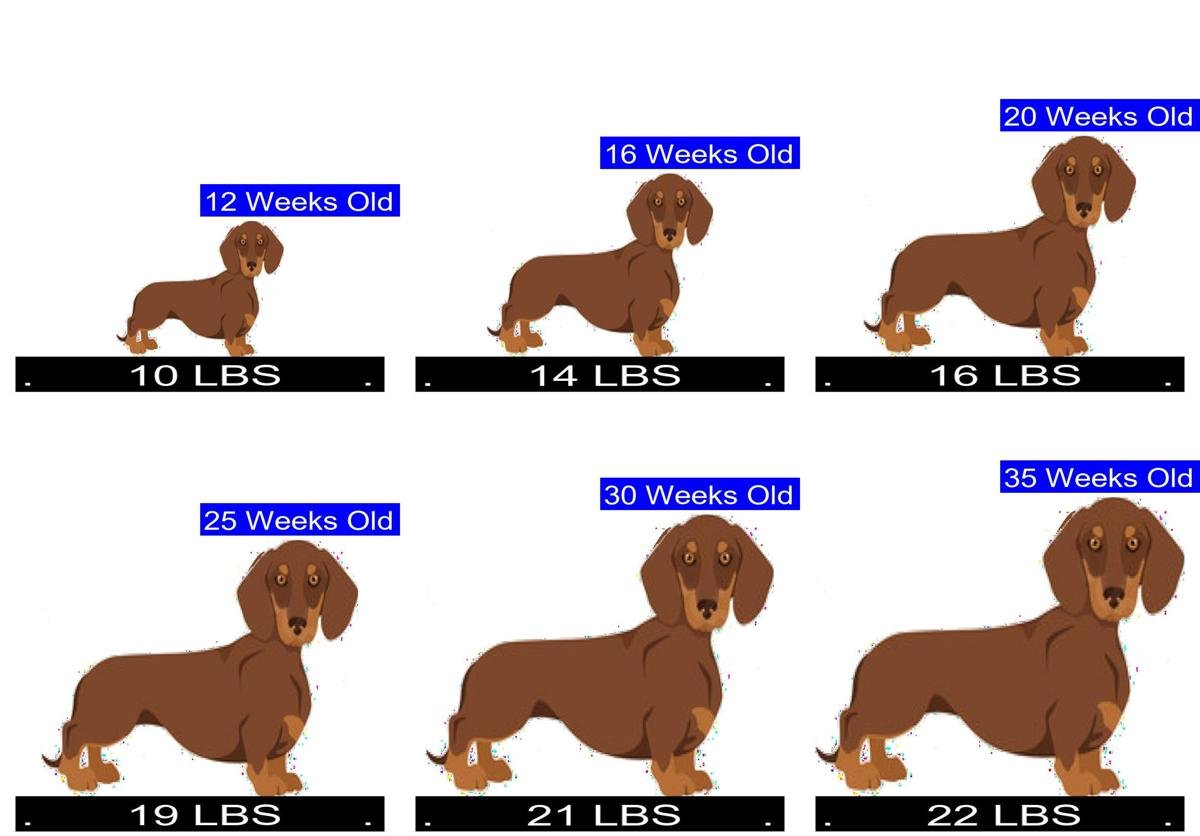
Dachshund growth chart: weight and size expectations
Tracking weight is an important part of Dachshund growth and maturity. Because Dachshunds have long backs, extra weight can place stress on their spine and joints.
Healthy weight ranges vary between individual dogs. A veterinarian can help confirm whether your Dachshund has a healthy body condition based on age, size, and activity level.

- ✦ Miniature Dachshund adult weight
Miniature Dachshunds commonly weigh around 11 pounds or less when fully grown.
- ✦ Standard Dachshund adult weight
Standard Dachshunds often weigh between 16 and 32 pounds depending on their build.
How to check healthy Dachshund body condition
You should be able to feel your Dachshund’s ribs with gentle pressure, but the ribs should not be highly visible. A visible waist from above is another sign of healthy body shape.
- ✦ Healthy signs
A defined waist, active movement, and steady energy levels usually indicate good condition.
- ✦ Warning signs
Rapid weight gain, difficulty moving, or loss of stamina may require a diet review.
Factors that affect Dachshund growth and maturity
Many factors influence Dachshund growth and maturity. Genetics determine the basic size of your dog, while nutrition and lifestyle affect how well that growth happens.
A responsible owner focuses on steady development rather than trying to make a Dachshund grow faster. Slow, healthy growth supports stronger bones and better long-term health.

- ✦ Genetics
Parents strongly influence adult size, body length, and overall structure.
- ✦ Nutrition
Balanced puppy food supports proper bone and muscle development.
- ✦ Exercise
Age-appropriate activity helps build strength without putting stress on growing joints.
- ✦ Health conditions
Certain medical issues can slow growth or affect body development.
How nutrition supports healthy Dachshund development
Nutrition plays a major role in Dachshund growth and maturity. Puppies need food that supports bone growth, muscle development, and healthy energy levels.
Overfeeding is one of the most common mistakes among Dachshund owners. Extra weight can increase pressure on the back, which is why portion control matters throughout life.

- ✦ Choose age-based food
Puppies, adults, and seniors have different nutritional needs.
- ✦ Avoid excessive treats
Treat calories should stay limited to prevent unhealthy weight gain.
Behavioral maturity in Dachshunds
Dachshund growth and maturity is not only about physical size. Mental development is equally important because Dachshunds are intelligent, independent, and sometimes stubborn dogs.
Many Dachshunds become calmer after their teenage period. However, they still need training, social interaction, and mental stimulation throughout adulthood.

- ✦ Improved focus
Adult Dachshunds often respond better to consistent training routines.
- ✦ Confidence development
Mature dogs usually become more comfortable with people, sounds, and new environments.
