
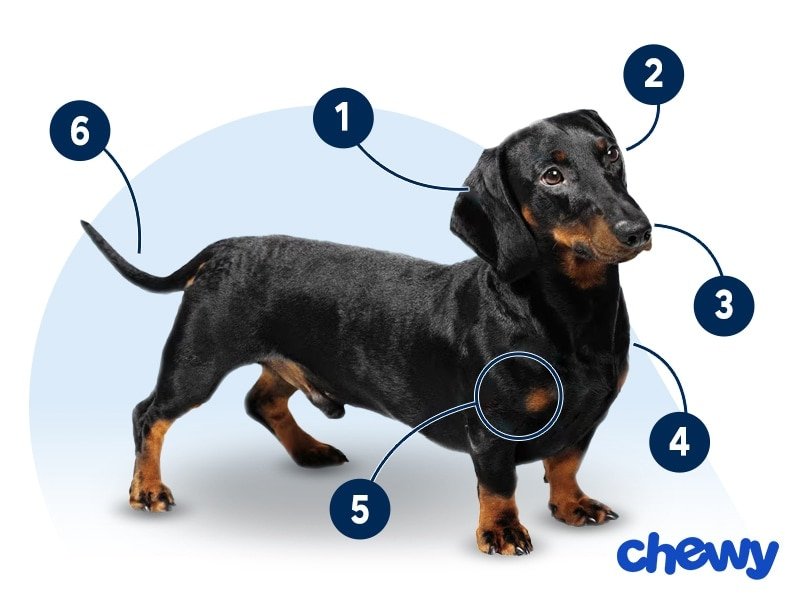
The Dachshund head ears eyes nose and tail are some of the most recognizable features of this beloved breed. Their long muzzle, soft ears, alert eyes, and balanced tail are not only attractive but also connected to their hunting history and daily behavior.
After studying breed structure and working with dog owners, one thing becomes clear: small details in a Dachshund’s face and body can tell you a lot. A healthy Dachshund should have clean ears, clear eyes, a moist nose, and a tail that moves naturally.

Understanding the Dachshund Head Shape and Structure
The Dachshund head has a long and narrow shape that matches the breed’s original purpose as a hunting dog. The extended muzzle helped these dogs follow scents through underground tunnels while hunting badgers and other small animals.
A typical Dachshund head should look balanced. The skull is slightly rounded, the stop between the forehead and muzzle is moderate, and the jaw should be strong without looking heavy.
When looking at the Dachshund head ears eyes nose and tail together, the head gives the first impression of the dog’s confidence and alert nature.

- ✦ Long muzzle
The long muzzle supports the Dachshund’s excellent sense of smell and helps it explore scents in its environment.
- ✦ Balanced skull
A proper Dachshund head has a smooth transition from forehead to muzzle without extreme features.
- ✦ Strong jaw
The jaw structure supports chewing, carrying toys, and the breed’s natural hunting instincts.
How the Head Shows Breed Personality
The Dachshund face often looks curious and confident. Many owners notice that their dogs use facial expressions to communicate excitement, concern, or interest.
A relaxed head position usually shows comfort, while a raised head and focused expression often appear when the dog notices a new sound or smell.
Dachshund Ears: Shape, Function, and Care
Dachshund ears are one of the breed’s most charming features. They are long, rounded, and naturally floppy, creating the classic look many people recognize.
These ears served a purpose during hunting. Their shape helped protect the ear canal from outside debris while the dog worked close to the ground.
The Dachshund head ears eyes nose and tail guide should always include ear care because floppy ears can collect moisture, wax, and dirt.

- ✦ Check ears weekly
Regular checks help owners notice redness, odor, or unusual discharge early.
- ✦ Keep ears dry
Dry ears reduce the chance of problems caused by trapped moisture.
- ✦ Avoid deep cleaning
Clean only the visible ear area unless a veterinarian recommends another method.
Common Dachshund Ear Concerns
Because Dachshund ears cover the opening of the ear canal, airflow can be limited. Some dogs may develop irritation if owners do not maintain regular cleaning habits.
A veterinarian should check any ear problem that includes pain, strong odor, swelling, or frequent scratching.
Dachshund Eyes: Expression and Eye Health
Dachshund eyes are usually medium-sized, oval, and full of expression. Their eyes often appear friendly, curious, and alert.
Healthy eyes should look clear and bright. Cloudiness, excessive tearing, redness, or sudden changes in appearance may need veterinary attention.
The eyes are an important part of the Dachshund head ears eyes nose and tail because they show emotion and provide clues about overall health.

- ✦ Clear appearance
Healthy Dachshund eyes should have a clean surface without unusual cloudiness.
- ✦ Natural expression
A relaxed Dachshund usually has soft eyes, while excitement creates a focused look.
Protecting Dachshund Eye Health
Owners can support eye health by keeping facial areas clean and scheduling regular veterinary visits.
Genetics, age, and lifestyle can influence eye health, so early checks are valuable.
Dachshund Nose: A Powerful Scent Tool
The Dachshund nose is one of the breed’s strongest features. These dogs were bred to track scents, and their noses remain highly active today.
A healthy Dachshund nose is usually cool and slightly moist, although normal changes can happen during the day.
The nose works together with the long head shape, making the Dachshund an excellent scent-driven explorer.

- ✦ Strong sense of smell
Dachshunds naturally use scent to investigate people, animals, and new places.
- ✦ Nose color changes
Some Dachshunds may have different nose colors depending on their coat genetics.
When to Watch for Nose Changes
A dry nose alone does not always mean illness. Owners should look at other signs such as energy level, appetite, and behavior.
Persistent discharge, bleeding, or discomfort should be checked by a veterinarian.
Dachshund Tail: Movement, Balance, and Communication
The Dachshund tail is a natural extension of the spine and plays a role in communication. Dogs use tail movement to show excitement, confidence, and interest.
A healthy Dachshund tail should move freely without stiffness or signs of pain. The tail usually follows the line of the back and should match the dog’s overall structure.
When observing the Dachshund head ears eyes nose and tail, the tail completes the picture of this energetic and expressive breed.

- ✦ Tail communication
Tail movement can provide clues about mood and interaction.
- ✦ Natural structure
A properly shaped tail supports balance and normal movement.
What Tail Behavior Can Mean
A wagging tail may show happiness, but owners should also consider body posture and facial expression.
A tucked or unusually still tail may suggest fear, discomfort, or stress.
How All Dachshund Features Work Together
The Dachshund head ears eyes nose and tail are not separate parts. They work together to help the dog communicate, explore, and interact with people.
The ears collect sounds, the eyes read movement, the nose tracks scents, and the tail communicates emotions. These features explain why Dachshunds are active and curious companions.
Understanding these traits helps American dog owners provide better care and recognize normal behavior.
- ✦ Complete body language
Owners should watch the whole dog instead of focusing on only one feature.
- ✦ Better care decisions
Knowing normal anatomy makes it easier to notice unusual changes.
