

Dog baby teeth loss is a normal part of puppy growth. Just like human children, puppies are born without visible teeth and later develop a temporary set of small, sharp teeth. These teeth help them learn how to eat solid food and explore the world.
During my years studying pet care topics, one thing I often notice is that new puppy owners worry when they find a tiny tooth on the floor or see extra chewing behavior. In most cases, this process is healthy and expected. Knowing what is normal helps owners provide better care and avoid unnecessary stress.

What Is Dog Baby Teeth Loss and Why Does It Happen?
Dog baby teeth loss is the natural process where a puppy’s temporary teeth fall out and are replaced by permanent adult teeth. These temporary teeth are also called deciduous teeth.
Puppies need smaller teeth when they are young because their jaws are still developing. As their mouth grows, larger and stronger adult teeth begin pushing out the baby teeth.
This change allows dogs to chew tougher foods and maintain a healthy adult bite. It is an important milestone in every puppy’s early life.

- ✦ Temporary teeth
Puppies usually have 28 baby teeth that appear during the first weeks of life.
- ✦ Adult teeth growth
Most adult dogs develop 42 permanent teeth after the puppy teething stage ends.
- ✦ Natural replacement process
Adult teeth slowly replace baby teeth as the puppy matures.
Why Puppies Cannot Keep Their Baby Teeth
Baby teeth are designed only for early development. They are smaller and weaker than adult teeth, so they cannot handle the long-term needs of a grown dog.
The body removes these teeth naturally as adult teeth grow underneath them. This makes room for a stronger set of teeth.
When Does Dog Baby Teeth Loss Usually Start?
The dog baby teeth loss timeline usually begins when puppies are around 3 to 4 months old. The exact timing can vary based on breed, size, and individual development.
Small breeds may have a higher chance of dental issues because their mouths are smaller. Large breeds may complete the process at a slightly different pace.
Most puppies finish losing their baby teeth by 6 to 7 months of age. At this point, adult teeth should be fully visible.

- ✦ Birth to 3 weeks
Puppies are born without visible teeth and rely on their mother for nutrition.
- ✦ 3 to 8 weeks
Baby teeth begin appearing and puppies start learning to eat solid food.
- ✦ 3 to 7 months
Baby teeth fall out while adult teeth grow in.
Signs Your Puppy Is Losing Teeth
Many puppies show clear signs during the teething stage. Some signs are easy to notice, while others are subtle.
A puppy may chew more often because chewing helps relieve pressure on sore gums.
- ✦ Increased chewing
Puppies may chew toys, furniture, or safe objects more often during teething.
- ✦ Small teeth around the home
You may find tiny teeth on floors, bedding, or toys.
Common Symptoms During Puppy Teething
Dog baby teeth loss can cause mild discomfort, but healthy puppies usually continue eating, playing, and acting normally.
Owners often notice changes in chewing habits and gum sensitivity. These changes are part of normal puppy development.
- ✦ Sore gums
Your puppy may have mild gum tenderness as teeth move through the gums.
- ✦ Drooling
Some puppies drool more during active teething periods.
- ✦ Chewing behavior
Puppies chew to reduce gum pressure and explore their surroundings.
How to Help Your Puppy During Dog Baby Teeth Loss
You can make the teething stage easier by giving your puppy safe ways to chew. The goal is to protect your home while helping your puppy feel comfortable.
Many American households use puppy-safe chew toys as part of daily training. These toys can redirect chewing away from shoes, furniture, and unsafe objects.
- ✦ Offer safe chew toys
Choose toys made for puppies that are soft enough for developing teeth.
- ✦ Avoid hard objects
Very hard items may damage young teeth and should be avoided.
- ✦ Check the mouth regularly
Gentle checks help owners notice problems early.
What Not to Do During Teething
Do not pull out loose puppy teeth unless a veterinarian recommends it. Pulling teeth at home can damage gums or leave broken pieces behind.
Avoid giving human pain medicine because many common medications can be dangerous for dogs.
Retained Baby Teeth in Dogs: When to Contact a Veterinarian
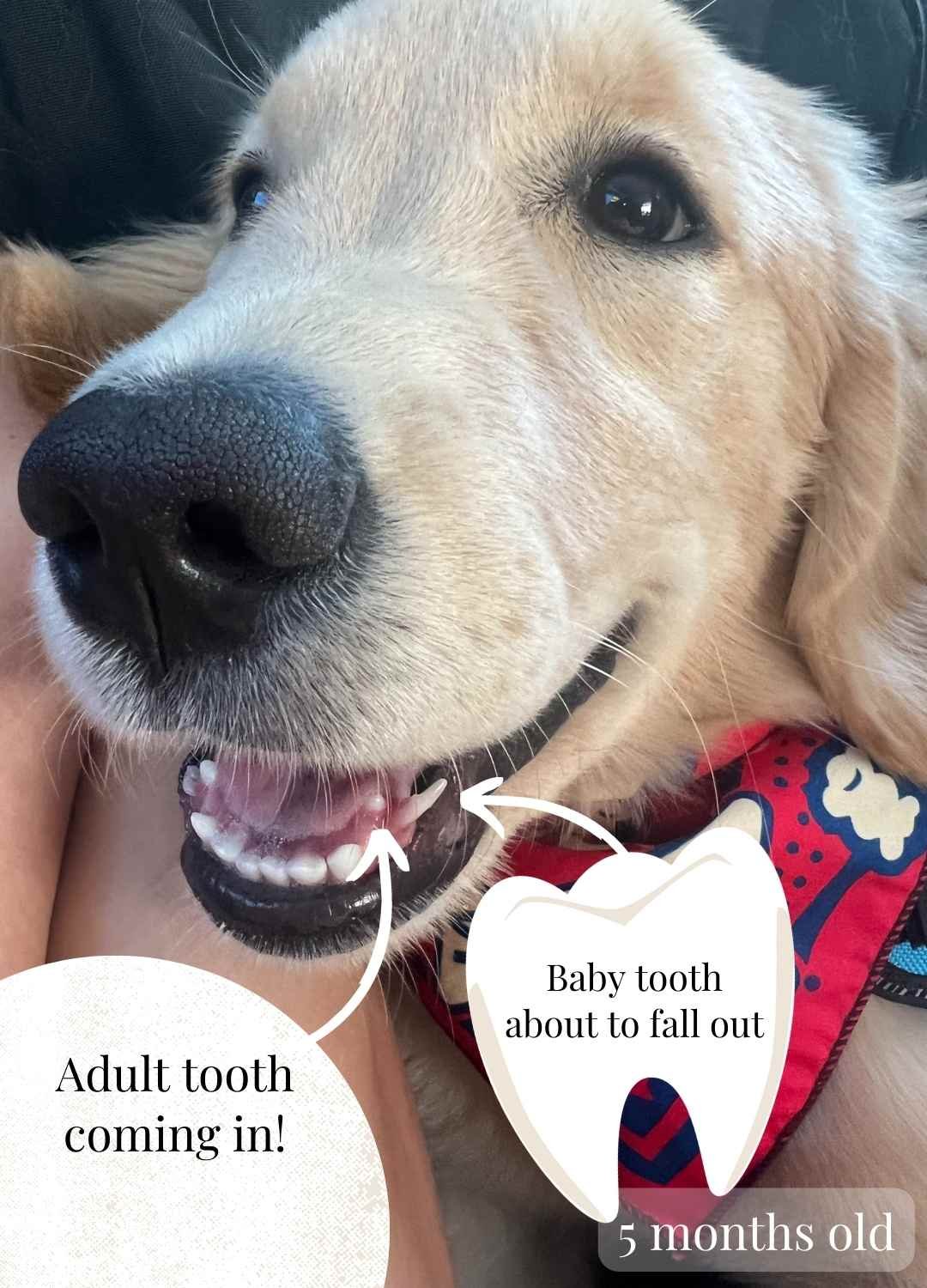
Sometimes a puppy’s baby tooth does not fall out even after the adult tooth appears. This condition is called a retained deciduous tooth.
Retained teeth can create crowded areas where food and bacteria collect. Over time, this may increase the risk of dental disease.
A veterinarian can check your puppy’s mouth during routine visits and recommend treatment if needed.

- ✦ Common location
Baby canine teeth are often the teeth most likely to remain.
- ✦ Possible problems
Crowding may affect tooth alignment and oral health.
- ✦ Professional care
Veterinarians can safely remove problem teeth when necessary.
