
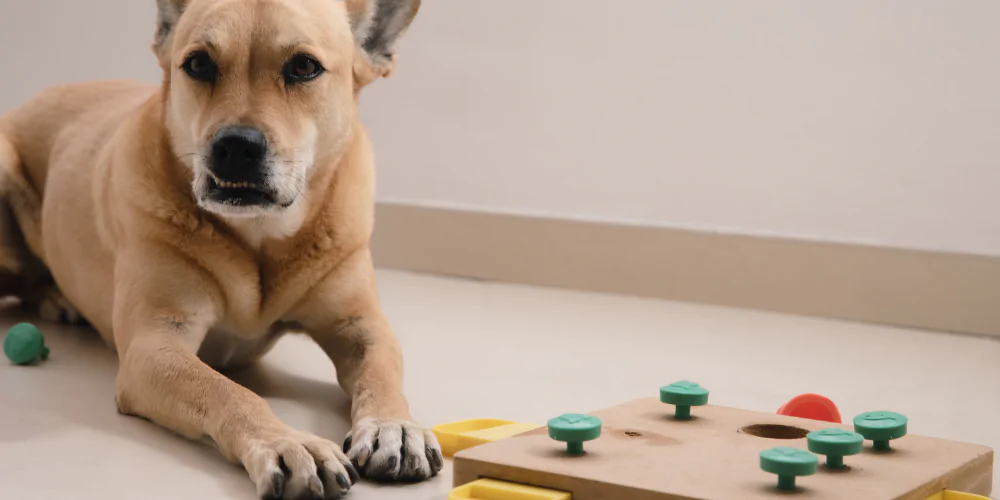
Dogs need more than food, walks, and a safe home. Their minds also need daily work. Dog cognitive enrichment gives dogs healthy ways to think, explore, and make choices.
In my experience working with dog behavior topics, many behavior problems start when dogs lack enough mental activity. A busy brain often creates a calmer and more confident dog.
For many US dog owners, busy schedules make long outdoor activities difficult every day. Dog cognitive enrichment offers practical indoor and outdoor options that fit modern lifestyles.
What Is Dog Cognitive Enrichment?
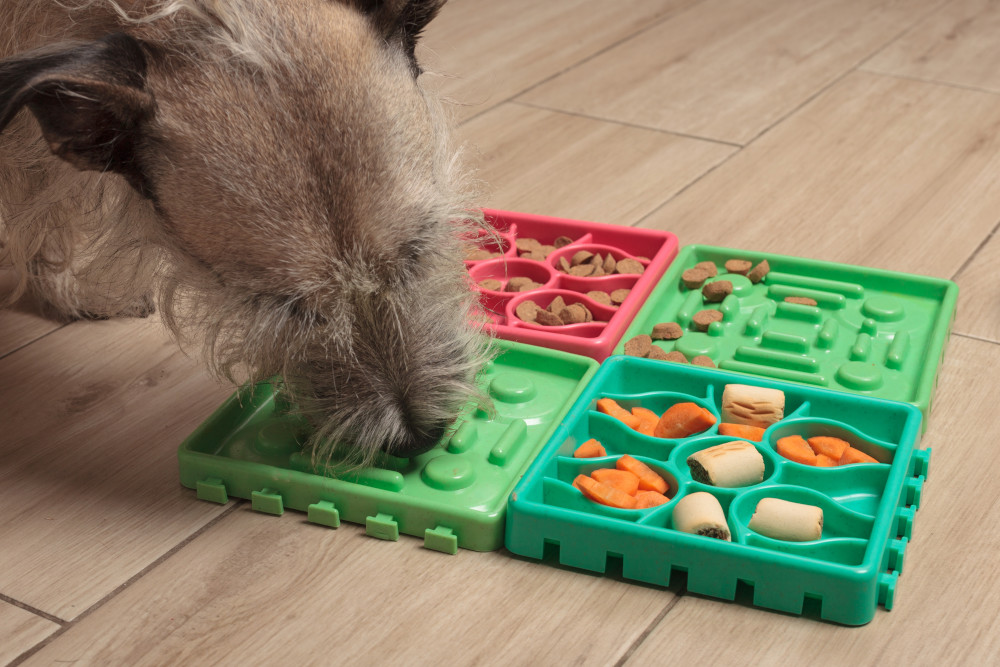
Dog cognitive enrichment means activities that make dogs think, learn, and solve small problems. These activities use natural skills like smelling, searching, remembering, and making choices.
Unlike simple exercise, cognitive enrichment focuses on mental effort. A short puzzle session can sometimes tire a dog because thinking requires focus and patience.
- ✦ Problem solving
Dogs learn how to reach a goal by exploring different actions.
- ✦ Learning skills
Training games help dogs understand cues and build confidence.
- ✦ Natural behaviors
Activities allow dogs to use instincts like sniffing and searching.
Why Mental Work Matters for Dogs
Dogs evolved to search, hunt, communicate, and adapt. Modern pets may not need those survival skills, but they still need healthy ways to use them.
Dog cognitive enrichment creates safe challenges that support curiosity and emotional balance.
- ✦ Daily engagement
Regular brain activities prevent long periods of boredom.
Benefits of Dog Cognitive Enrichment
Dog cognitive enrichment can improve many parts of a dog’s daily life. It helps dogs stay active in ways that support both behavior and learning.
A dog that receives mental challenges may become better at handling new situations. Enrichment does not replace veterinary care or training, but it supports overall wellness.

- ✦ Less boredom
Mental activities give dogs something useful to focus on.
- ✦ Better confidence
Solving simple tasks can help dogs feel more capable.
- ✦ Improved communication
Training games strengthen the connection between dogs and owners.
Supporting Calm Behavior
Many dogs show unwanted behaviors when they have too much unused energy. Chewing, barking, or digging can sometimes increase when dogs lack engagement.
Dog cognitive enrichment provides a healthy outlet for natural needs.
Types of Cognitive Enrichment Activities for Dogs
There are many ways to practice dog cognitive enrichment at home. The best activities match the dog’s age, personality, and skill level.
Start with easy tasks. Dogs learn faster when they experience success before facing harder challenges.

- ✦ Puzzle toys
Food puzzles encourage dogs to think about how to access rewards.
- ✦ Scent games
Sniffing activities let dogs use one of their strongest natural abilities.
- ✦ Training games
Short sessions teach new skills while creating mental exercise.
DIY Cognitive Games at Home
Simple household items can become enrichment tools. Hide treats around a room, create a safe search game, or teach a new trick.
The goal is not expensive equipment. The goal is giving the dog a chance to think.
- ✦ Treat search
Hide small treats and let your dog use smell to find them.
How to Create a Dog Cognitive Enrichment Routine
A good enrichment routine does not need hours each day. Small activities done consistently can create meaningful benefits.
Many American households can add enrichment before work, after dinner, or during quiet indoor time.
- ✦ Start small
Begin with simple games and increase difficulty slowly.
- ✦ Rotate activities
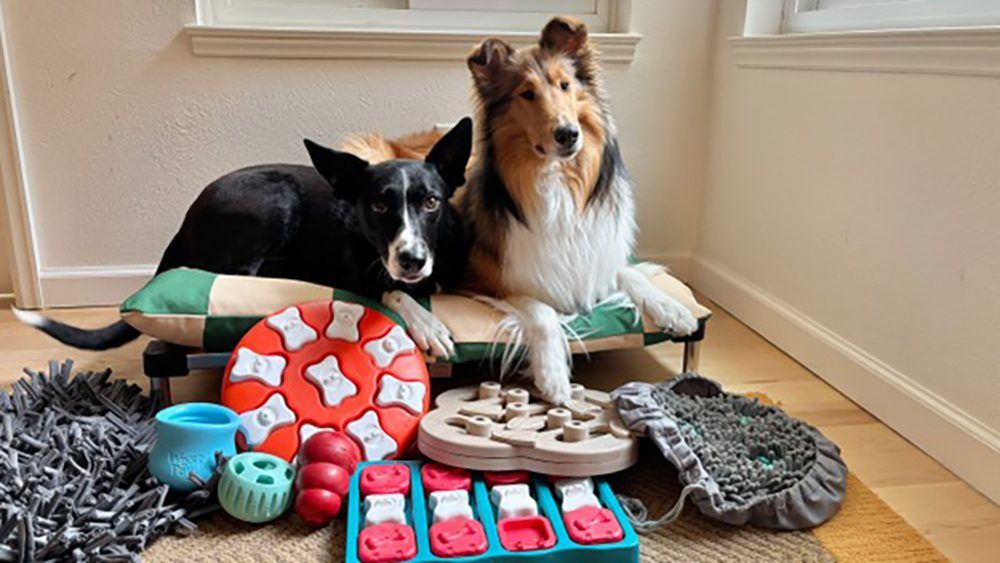
New challenges keep dogs interested and engaged.
- ✦ Watch your dog
Choose activities that match your dog’s comfort and ability.
Common Mistakes When Using Cognitive Enrichment
Dog cognitive enrichment works best when activities are safe, clear, and enjoyable. Too much difficulty can create frustration instead of learning.
Owners should focus on progress rather than perfection. Every dog learns at a different pace.
- ✦ Making tasks too hard
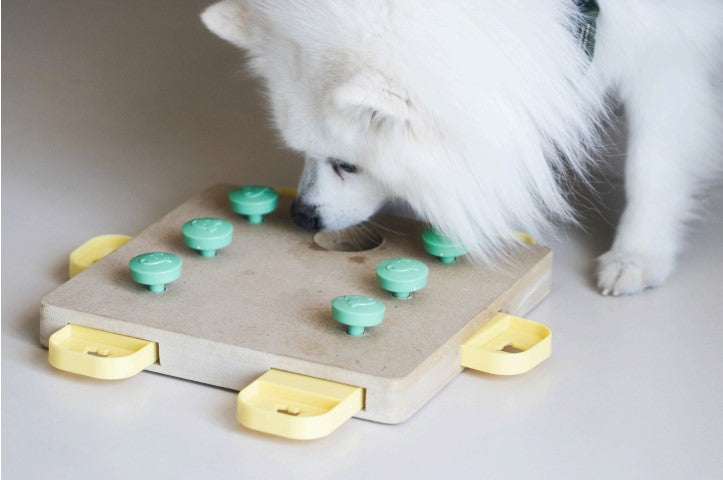
Dogs need achievable challenges to stay motivated.
- ✦ Ignoring safety
Choose toys and activities that fit the dog’s size and habits.
- ✦ Repeating the same game
Variety keeps enrichment fresh and interesting.
