
Many dog owners in the United States mistake an overstimulated dog for a stubborn or badly trained dog. In reality, the dog may simply feel overwhelmed by too much excitement, noise, movement, or attention. Learning dog overstimulation signs helps owners respond with patience instead of frustration.
After working with dogs and studying canine behavior, one pattern becomes clear: dogs often show small warning signals before they lose control. A dog that cannot settle after play, becomes mouthy, or reacts strongly to normal events may need a calmer environment and better balance in daily activities.
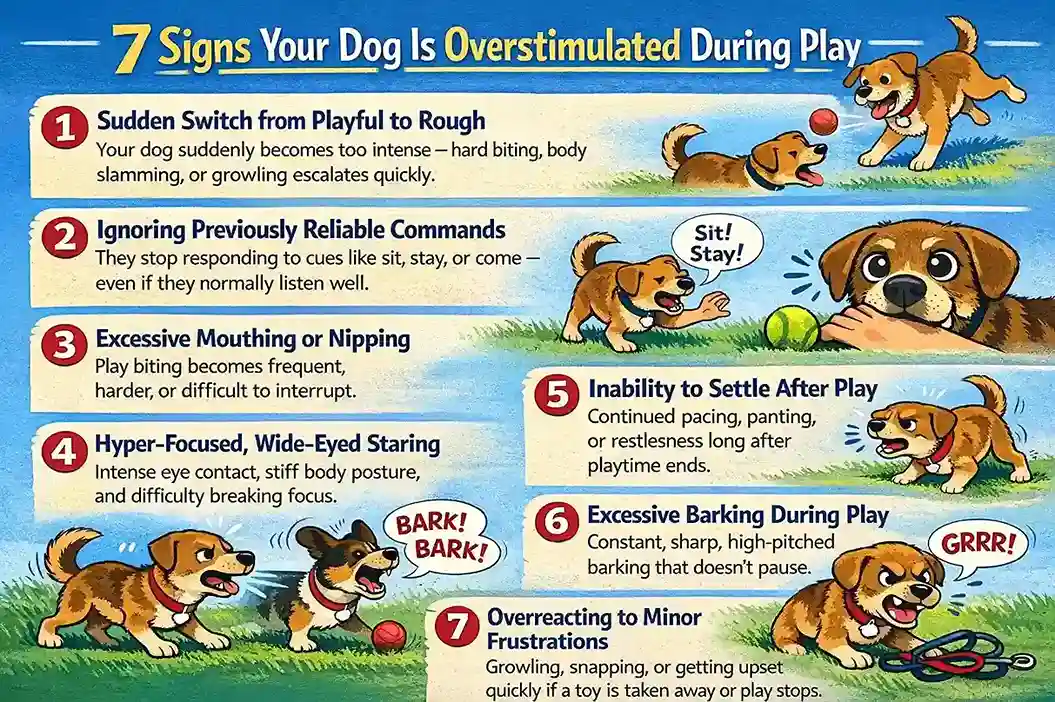
What Does Overstimulation Mean in Dogs?
Overstimulation happens when a dog experiences more excitement or sensory input than they can process. This can come from loud sounds, crowded places, intense play, new people, other animals, or constant activity.
An overstimulated dog is not always a high-energy dog. A calm breed can also become overwhelmed if the situation becomes too intense. The key difference is that an energetic dog can relax after activity, while an overstimulated dog struggles to switch off.
- ✦ Too much physical activity
Long play sessions without breaks can push some dogs past their comfort level.
- ✦ Too much social pressure
Meeting many people or dogs at once can create stress and confusion.
- ✦ Too many environmental triggers
Noise, movement, smells, and unfamiliar places can overload a dog’s senses.
Why Understanding Overstimulation Matters
Recognizing dog overstimulation signs early can prevent unwanted behaviors from becoming habits. A dog that receives proper breaks learns how to manage excitement more effectively.
Many behavior problems improve when owners focus on emotional balance instead of only correcting actions.
Common Dog Overstimulation Signs to Watch For
Dogs communicate through body language long before they bark or react strongly. Paying attention to early dog overstimulation signs can help you step in before your dog becomes overwhelmed.
Each dog shows stress differently, but several behaviors appear often in puppies and adult dogs when their excitement level becomes too high.

- ✦ Excessive barking
A dog may bark repeatedly because they cannot control their excitement or focus.
- ✦ Jumping and constant movement
Restless pacing, jumping, and spinning often show that a dog cannot settle.
- ✦ Mouthing or biting during play
Overexcited dogs may use their mouth more because they struggle with impulse control.
- ✦ Ignoring known commands
A dog may seem to forget training because their brain is focused on the trigger.
Physical Body Language Signals
Physical signs can include wide eyes, fast breathing, tense muscles, raised tail movement, and repeated scratching or shaking. These signals often appear before bigger reactions.
Learning your dog’s normal behavior makes these changes easier to notice.
- ✦ Fast breathing
Heavy panting without exercise may show emotional overload.
- ✦ Restless movement
Walking back and forth can signal that the dog needs a break.
Signs Your Puppy Is Overstimulated
Puppies are especially likely to become overstimulated because they are still learning emotional control. A puppy may become wild during play, bite harder, or suddenly run around the home.
Many new puppy owners think this behavior means their puppy needs more exercise. Sometimes the opposite is true. The puppy may need sleep, quiet time, and a calmer routine.

- ✦ Sudden puppy biting
Puppies often bite more when they are tired or overwhelmed.
- ✦ Crazy running episodes
Short bursts of running can happen when excitement builds too high.
- ✦ Difficulty resting
An overstimulated puppy may struggle to relax even when tired.
Helping Puppies Learn Calm Behavior
Puppies need practice with calm moments. Rewarding quiet behavior teaches them that relaxation is valuable.
Short training sessions, scheduled naps, and gentle play can reduce many puppy overstimulation problems.
Common Causes of Dog Overstimulation
Dogs can become overstimulated for many reasons. Modern lifestyles often expose pets to busy schedules, crowded parks, visitors, and constant entertainment.
Finding the cause is important because every dog has a different tolerance level. What excites one dog may overwhelm another.

- ✦ Busy environments
Places with crowds, traffic, or many sounds can create sensory overload.
- ✦ Intense play
Rough play without pauses can increase excitement too quickly.
- ✦ Lack of recovery time
Dogs need rest after exciting events to return to a calm state.
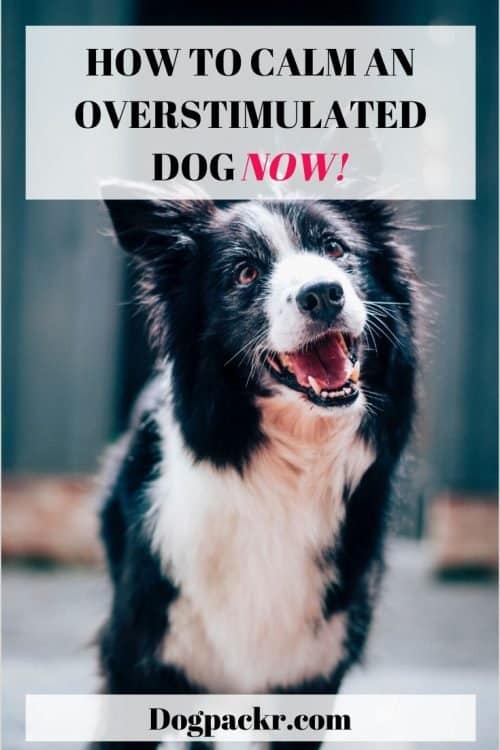
How to Calm an Overstimulated Dog
The best way to calm an overstimulated dog is to reduce the intensity of the situation. Avoid adding more excitement when your dog is already struggling.
Calm training is about teaching your dog how to relax. It is not about stopping all fun activities.
- ✦ Create quiet breaks
Move your dog to a calm area where they can relax without extra triggers.
- ✦ Use calm activities
Sniffing games, chewing, and gentle training can help lower excitement.
- ✦ Reward relaxation
Praise your dog when they choose calm behavior.
Building Better Daily Routines
A balanced routine with exercise, mental stimulation, training, and rest helps prevent repeated overstimulation.
Dogs thrive when they know what to expect during the day.
How Overstimulation Differs From Normal Excitement
Excitement is a normal part of being a dog. A happy dog may wag their tail, play, and show enthusiasm. The problem begins when the dog cannot control their behavior or return to calm.
Understanding this difference helps owners avoid confusing normal happiness with emotional overload.
- ✦ Normal excitement
The dog can listen, interact, and settle after activity.
- ✦ Overstimulation
The dog loses focus and struggles to calm down.
