
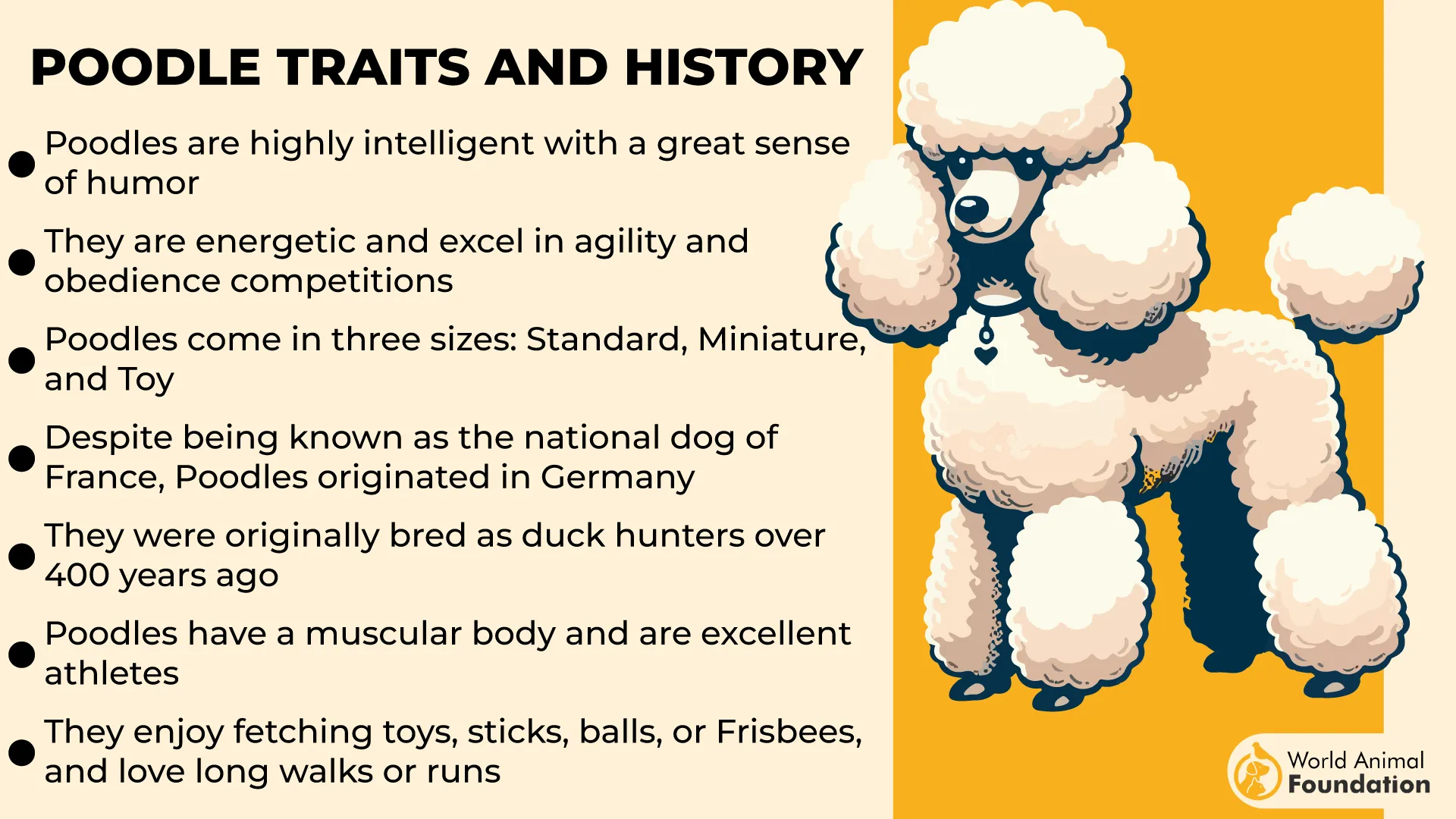
The Poodle temperament and personality often surprise people who only notice their elegant appearance. Behind the famous curly coat is a bright and active dog that enjoys learning, solving problems, and spending time with people. In American homes, Poodles are valued as family companions because they can adapt to apartments, houses, and many daily routines.
A well-raised Poodle is usually friendly, confident, and eager to please. From my experience studying dog behavior, the happiest Poodles are not simply loved for their looks. They thrive when owners provide training, attention, play, and a clear routine that matches their natural abilities.

Understanding the Overall Poodle Temperament and Personality
The Poodle temperament and personality are shaped by intelligence, sensitivity, and a strong desire to connect with humans. These dogs often watch their owners closely and learn daily patterns quickly. They are known for being alert, responsive, and eager to take part in family activities.
Many people think Poodles are only stylish show dogs, but their history as working water retrievers explains their energy and focus. They enjoy having a purpose, whether that means obedience training, games, walks, or learning new tricks.

- ✦ High intelligence
Poodles are quick learners and often understand commands with fewer repetitions than many breeds.
- ✦ Strong human connection
They usually build close relationships with family members and prefer being included in daily life.
- ✦ Active mind
They need mental stimulation because boredom can lead to unwanted behaviors.
Why Poodles Are Considered Smart Dogs
Poodles have a natural ability to notice patterns and respond to training. Their intelligence is not only about learning tricks. It also appears in how they communicate, solve problems, and understand human emotions.
- ✦ Problem-solving ability
Poodles enjoy puzzle toys, training games, and activities that challenge their minds.
Poodle Personality Traits That Make Them Popular Family Dogs
The Poodle personality combines affection, confidence, and curiosity. They often enjoy being around people and may follow family members from room to room. This close bond is one reason many owners describe their Poodles as loyal companions.
Poodles are usually gentle with respectful children and can live well with other pets when introduced properly. Early socialization helps them become calm and comfortable in different situations.

- ✦ Affectionate nature
Poodles often seek attention and enjoy spending quality time with their owners.
- ✦ Playful behavior
They keep a puppy-like interest in games and interactive activities.
- ✦ Adaptability
They can adjust to many lifestyles when their exercise and social needs are met.
Are Poodles Good Family Dogs?
Yes, many Poodles make excellent family dogs. Their intelligence and social nature help them become involved members of the household. However, owners should teach children how to interact respectfully because every dog has individual limits.
- ✦ Family compatibility
Poodles often enjoy homes where they receive attention, training, and daily interaction.
How Poodle Size Affects Temperament and Behavior
The Poodle temperament and personality can differ between Standard, Miniature, and Toy Poodles. All three sizes share common traits like intelligence and loyalty, but their energy levels and confidence may vary.
Standard Poodles are often calm and athletic, while Toy Poodles may be more alert and energetic in smaller bodies. Miniature Poodles commonly sit between the two in size and activity needs.

- ✦ Standard Poodle
Often confident, athletic, and suitable for active families.
- ✦ Miniature Poodle
Usually energetic, smart, and flexible for many living situations.
- ✦ Toy Poodle
Often affectionate and alert while needing gentle handling.
Training and Social Needs of Poodles
Training plays a major role in developing a balanced Poodle personality. Because Poodles are sensitive and intelligent, they respond best to rewards, patience, and clear communication.
Harsh methods can damage trust because many Poodles are emotionally aware. Positive training helps them build confidence while strengthening the bond between dog and owner.

- ✦ Start early
Puppy training and social exposure help create a confident adult dog.
- ✦ Use rewards
Treats, praise, and games motivate Poodles to learn.
- ✦ Keep lessons interesting
Short and varied sessions prevent boredom.
Common Poodle Behavior Challenges
Some Poodles may develop barking, anxiety, or destructive habits when they lack exercise or mental stimulation. These behaviors often come from unmet needs rather than stubbornness.
- ✦ Separation stress
Some Poodles struggle when left alone for long periods because they form strong bonds.
Exercise, Play, and Mental Stimulation Requirements
The Poodle temperament and personality require both physical activity and mental challenges. A simple walk may not be enough for this clever breed. Many Poodles enjoy training games, swimming, retrieving, and interactive toys.
A balanced routine helps prevent boredom and keeps their behavior positive. American owners often find that combining daily walks with short training sessions creates a happier companion.
- ✦ Daily movement
Regular walks and play sessions support physical and emotional health.
- ✦ Brain games
Puzzle toys and obedience practice keep their minds active.
