
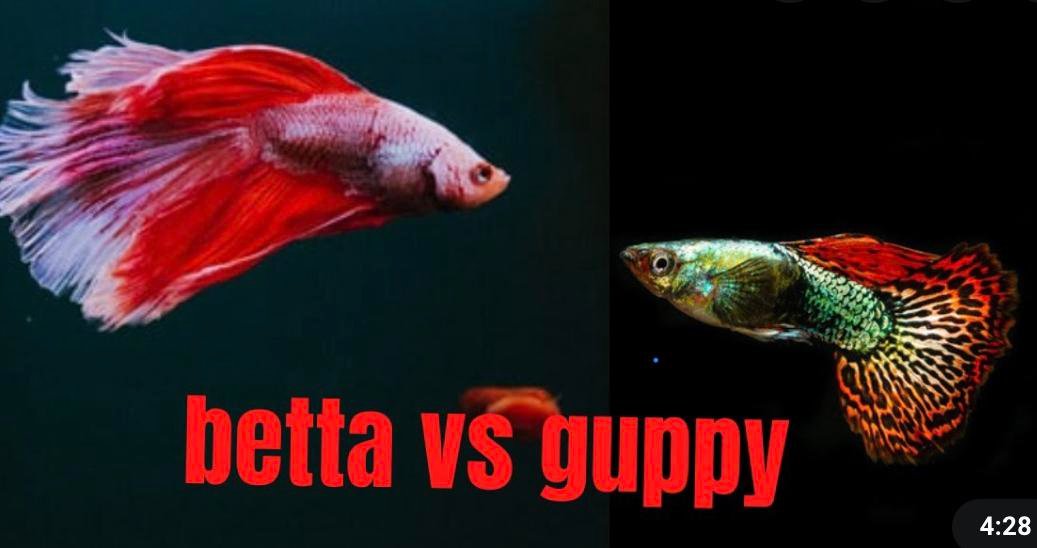
Betta vs guppy fish: bettas are solitary showpieces; guppies are social, colorful, and breed easily.
I’ve kept both species for years and helped hundreds of hobbyists choose between betta vs guppy fish. This guide gives clear, practical answers drawn from hands-on experience and research. You’ll learn their key differences, tank needs, feeding, compatibility, breeding, cost, and which fish fits your lifestyle. Read on for simple, trustworthy advice that helps you pick and care for either species with confidence.
Betta vs Guppy: Quick Comparison Table
| Feature | Betta | Guppy |
|---|---|---|
| Family | Osphronemidae (gourami family) | Poeciliidae (livebearer family) |
| Adult size | Up to 3 in (7.5 cm) | 1.5–2.5 in (4–6 cm) |
| Minimum tank size | 5 gal for a single male | 10 gal for a small group |
| Temperature | 76–82°F (24–28°C) | 72–78°F (22–26°C) |
| pH range | 6.8–7.5 | 6.8–7.5 |
| Water flow | Low; dislikes strong currents | Moderate, gentle filtration |
| Temperament | Solitary, can be aggressive, especially males | Social, peaceful, does best in groups |
| Diet | Carnivore, high-protein | Omnivore, flake + vegetable matter |
| Breeding style | Bubble nest builder, male guards eggs/fry | Livebearer, gives birth to free-swimming fry |
| Lifespan | 2–5 years | 1–3 years |
| Beginner-friendly | Yes, as a solo centerpiece fish | Yes, for a small group in community setups |
Bettas make a striking solo centerpiece fish; guppies suit hobbyists who want an active, colorful group. The two aren’t ideal tankmates — see Compatibility below.
Appearance and behavior
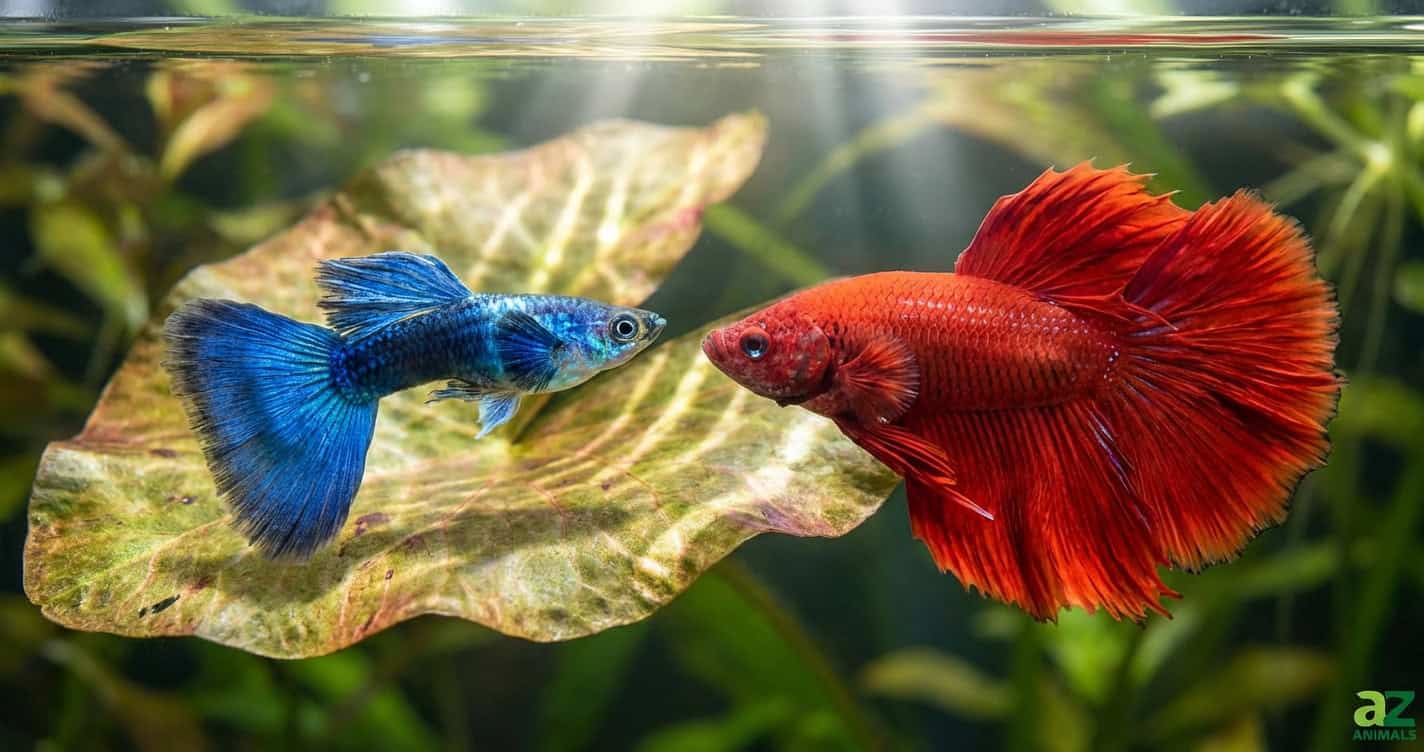
Betta vs guppy fish look different and act very differently. Bettas are known for bold fins and dramatic colors. Males flare and display. They can be territorial and prefer calm spaces.
Guppies are smaller and come in bright, patterned groups. They are active and curious. Guppies swim in shoals and display lively schooling behavior. Males chase each other but are usually not violent.
Key visual and behavioral differences
- Size and shape: Bettas are larger with flowing fins; guppies are petite with fan tails.
- Temperament: Bettas are solitary and can be aggressive toward other fish. Guppies are social and thrive in groups.
- Activity: Bettas often lounge near the surface. Guppies explore the whole tank.
From my experience, a male betta will stare down a flashy male guppy within minutes. For peaceful community tanks, guppy groups are a safer pick.

Tank requirements and care
Tank needs are a top factor when comparing betta vs guppy fish. Both need clean water and stable conditions. But their space and setup differ.
Betta care basics
- Recommended tank size: 5 gallons or larger for a single male.
- Temperature: 76–82°F (24–28°C).
- Water flow: Low; bettas dislike strong currents.
- Decor: Live plants, hiding spots, smooth ornaments to prevent fin tears.
Guppy care basics
- Recommended tank size: 10 gallons for a small group; add 2–3 gallons per extra fish.
- Temperature: 72–78°F (22–26°C); they tolerate slightly cooler temps than bettas.
- Water flow: Moderate with gentle filtration.
- Decor: Plants and open swimming space; floating plants help fry hide.
Maintenance differences
- Bettas need gentle filters and weekly partial water changes. High flow stresses them.
- Guppies need good filtration for groups and more frequent water changes if overstocked.
Practical tip from my tanks: use sponge filters for guppy fry and low-power filters for bettas. This keeps water clean without stressing fish.

Water chemistry and health
Both species prefer stable water. Minor differences matter when keeping betta vs guppy fish together.
Shared water ranges
- pH: 6.8–7.5 suits both species.
- Hardness: Soft to moderately hard works well.
- Ammonia and nitrite: Always 0 ppm; both are sensitive.
Notable health considerations
- Bettas: Prone to fin rot, ich, and swim bladder issues if water is poor. They need warm, clean tanks.
- Guppies: Susceptible to columnaris and external parasites when crowded. They breed fast; fry can overrun a tank if unchecked.
I often test water twice weekly when shifting species or adding fish. Early detection of pH or ammonia shifts prevents common illnesses.

Diet and feeding
Feeding habits are a big difference in betta vs guppy fish care. Diet influences health, color, and lifespan.
Betta diet
- Carnivores that need high-protein foods.
- Feed high-quality betta pellets, frozen or live brine shrimp, daphnia, and bloodworms.
- Frequency: Small meals once or twice daily; avoid overfeeding.
Guppy diet
- Omnivores that eat flake, micro pellets, frozen foods, and vegetable matter.
- Offer high-quality flakes, spirulina, and occasional live foods like brine shrimp.
- Frequency: Small feedings 2–3 times daily.
Feeding tip: observe appetite. Bettas reject stale frozen food; guppies will nibble constantly. Adjust portion sizes to prevent bloating and water fouling.

Compatibility and tankmates
Choosing tankmates is crucial for both species. The question betta vs guppy fish often implies “Can they live together?” The short answer: usually no for male bettas with male guppies.
Compatibility notes
- Male bettas: Often aggressive toward colorful, long-finned fish like male guppies. Risk of fin nipping and stress.
- Female bettas: Sometimes more tolerant but still risky.
- Guppy groups: Best kept with peaceful, non-flashy species such as small tetras, platies, and snails.
Suggested tankmate lists
- For bettas: Corydoras, small peaceful rasboras, shrimp (some species), and snails—only if the betta tolerates them.
- For guppies: Tetras, platies, mollies, and peaceful bottom dwellers.
Personal note: I once tried a male betta with a mixed guppy group. The betta repeatedly attacked bright males, and I had to rehome the guppies. If you want a mix, choose peaceful, dull-colored tankmates and monitor behavior closely.

Breeding and lifecycle
Breeding is a major contrast between betta vs guppy fish. They reproduce in very different ways.
Guppy breeding
- Livebearers: females give birth to free-swimming fry.
- Breed quickly; a female can produce dozens of fry every month under ideal conditions.
- Easy for beginners but requires fry management and extra space.
Betta breeding
- Bubble nest builders: male builds a nest and cares for eggs and fry.
- Breeding requires careful preparation, conditioning, and separating female after spawning.
- More challenging and riskier due to male aggression and fry survival needs.
Lifespan
- Bettas: 2–5 years with good care.
- Guppies: 1–3 years on average, though selective breeding can affect longevity.
Lesson learned: breeding guppies can quickly lead to overpopulation. If you don’t want fry, keep only one sex or use a species-only tank with controlled numbers.

Cost, availability, and varieties
Cost and variety affect the choice between betta vs guppy fish for many hobbyists.
Price and availability
- Betta fish: Widely available; price varies by tail type and color. Specialty show bettas cost more.
- Guppies: Easy to find and cheap. Fancy strains cost extra.
Ongoing costs
- Bettas: Moderate cost for a proper tank, heater, and low-flow filter.
- Guppies: Costs can rise if you keep a large group; more filtration and larger tank needed.
Varieties and color
- Bettas: Many color morphs and fin types (veiltail, crowntail, halfmoon).
- Guppies: Diverse patterns and tail shapes; easy to breed new colors.
If budget is tight, guppies let you enjoy bright fish for less. For a single centerpiece fish with dramatic fins, a betta is worth the initial investment.
Choosing the right fish for you
Ask yourself a few quick questions to decide between betta vs guppy fish.
Decision checklist
- Do you want one standout fish or a lively group? Choose betta for a single showpiece; choose guppies for a lively shoal.
- How much time for maintenance? Bettas need smaller tanks but watch water carefully; guppies need more space and filtration for groups.
- Do you want to breed fish? Guppies breed easily; betta breeding is hands-on and advanced.
- Do you have other tankmates? Bettas require cautious tankmate choices; guppies fit better in community setups.
My recommendation: beginners wanting color and activity should start with a small guppy group in a 10-gallon tank. If you want a low-maintenance solo display and enjoy watching personality, start with a 5–10 gallon betta setup.
Short practical tips I use
- Cycle your tank fully before adding fish.
- Quarantine new fish for two weeks.
- Feed varied diets and avoid overfeeding.
- Keep a journal of water tests and behavior notes.
Quick questions (PAA-style)
What temperature is best for both?
- Aim for 76–78°F for a compromise when keeping them separately; guppies tolerate slightly cooler water, but both do well in the mid-70s.
Can male bettas live with female guppies?
- It is risky. Male bettas often see colorful female guppies as rivals and may attack them.
How many guppies per gallon?
- A conservative rule is 1 inch of fish per gallon. For guppies, plan at least 1 guppy per 2 gallons to avoid overcrowding and water quality issues.
Frequently Asked Questions of betta vs guppy fish
Are bettas and guppies from the same family?
No. Bettas are gouramis and guppies are livebearers in the Poeciliidae family. They have different behaviors and breeding styles.
Can bettas live with guppies in the same tank?
They can, but it’s usually not recommended. Male bettas often target flashy guppy fins, causing stress and injury.
Which is easier for beginners, bettas or guppies?
Guppies are generally easier for beginners who can manage a small group and basic filtration. Bettas suit beginners who want a single, low-footprint fish but still require stable water.
How often should I feed each species?
Feed bettas once or twice daily small portions of high-protein food. Feed guppies small portions 2–3 times daily, mixing flakes with occasional live or frozen foods.
Do guppies outnumber bettas in breeding speed?
Yes. Guppies breed rapidly and continuously, producing many fry. Bettas breed less often and require more care for successful rearing.
Will guppy fry survive in a betta tank?
Not reliably. Bettas may eat fry and adult guppies can also prey on babies. A separate breeding tank or dense plant cover is needed for fry survival.
Will a betta fish kill a guppy?
It’s a real risk, especially with male bettas and bright, long-finned male guppies — a betta may see the guppy as a rival and attack repeatedly, which can injure or kill it over time even without a single fatal strike. Female bettas and dull-colored or female guppies are somewhat lower-risk, but it’s never guaranteed safe.
If you want to try housing them together, use a large, heavily planted tank and watch behavior closely for the first few days, ready to separate them if the betta targets the guppies.
Conclusion
Betta vs guppy fish comes down to your goals: choose a betta for a dramatic, solitary centerpiece and a guppy group for lively, social color and easy breeding. Both require stable water, proper food, and thoughtful tank setup. Use the checklists and tips here to match your time, space, and interest to the right fish. Try one setup, observe, and adjust — learning by doing is the fastest way to become a confident keeper. If this helped, try a small test tank or subscribe for more care guides, and share your experiences in the comments.
