
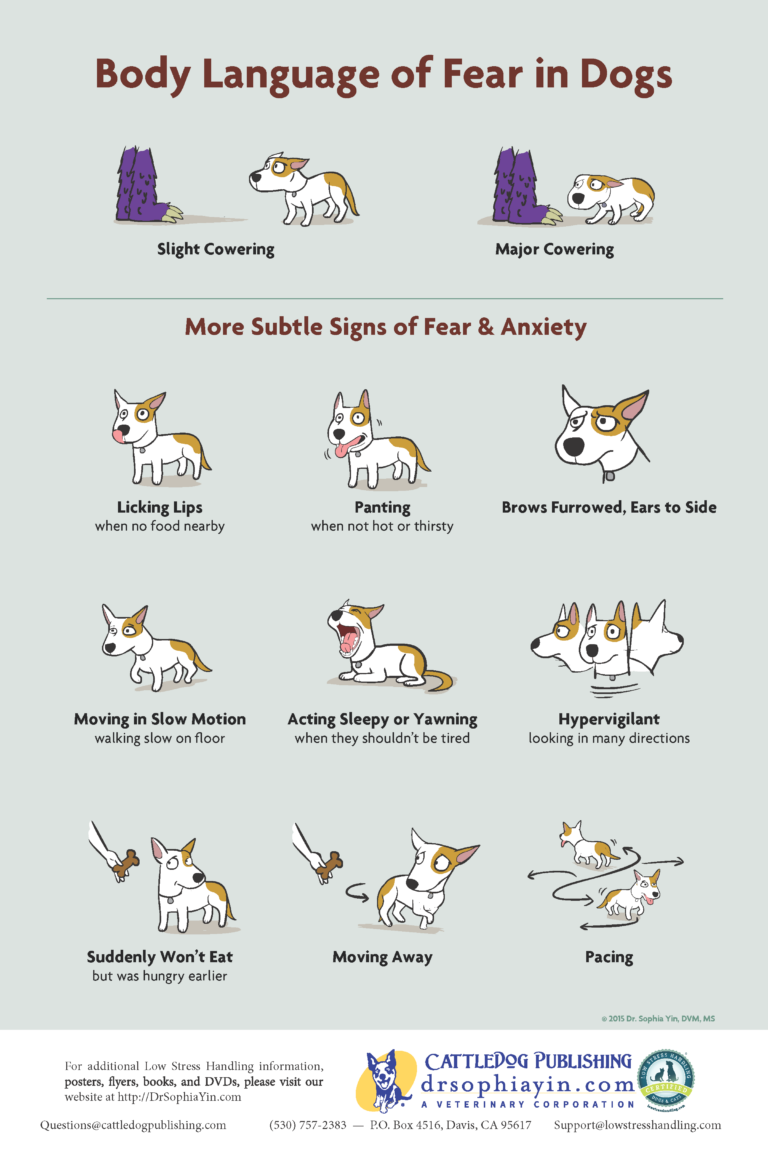
Dog fear body language shows when a dog feels unsafe through posture, eyes, ears, tail, and behavior changes.
Learning dog fear body language is one of the most important skills for any dog owner. Dogs cannot explain when they feel scared, so they communicate through small changes in their body and actions. A lowered head, stiff movement, or sudden avoidance may be a quiet request for help.
In my experience working with dog behavior topics, many fear-related problems become easier to manage when owners notice early warning signs. A dog that looks stubborn or aggressive may actually be worried, overwhelmed, or trying to create distance from something frightening.
This guide explains the most common fear signals, what they mean, and how American dog owners can respond in a safe and supportive way. Understanding these signals can improve your bond and help your dog feel more secure.

What Is Dog Fear Body Language?
Dog fear body language refers to the physical signs a dog uses to communicate discomfort, worry, or fear. These signals can appear before a dog runs away, hides, freezes, or reacts defensively.
Fear signals are often subtle. A dog may turn its head away, lick its lips, yawn, or lower its body before showing stronger reactions. Learning these early signs allows owners to help before stress increases.
Every dog is different. Breed, age, past experiences, and personality can affect how a dog expresses fear. Owners should look at the full picture instead of judging one signal alone.

- ✦ Early warning signs
Small changes like avoiding eye contact, moving slowly, or looking away can show that a dog feels uncomfortable.
- ✦ Stronger fear signals
Hiding, shaking, freezing, barking, or snapping may happen when a dog’s stress level becomes higher.
Why Dogs Use Body Language Instead of Words
Dogs rely on body language because it is their natural way of communicating. They use posture, movement, facial expressions, and sounds to share emotions.
When owners understand these signals, they can respond with patience instead of forcing the dog into uncomfortable situations.
- ✦ Communication without speech
Dogs use physical signals to express comfort, fear, excitement, and stress.
Common Signs of Fear in Dogs
Recognizing dog fear body language requires attention to many parts of the dog’s body. Fear can appear in the face, ears, tail, posture, and movement.
A fearful dog may not always look scared in an obvious way. Some dogs become very still, while others try to escape or create distance from the trigger.

- ✦ Tucked tail
A tail held low or tucked between the legs often shows uncertainty, fear, or stress.
- ✦ Lowered body posture
A dog that crouches, bends low, or makes itself smaller may be trying to appear less threatening.
- ✦ Avoiding eye contact
Looking away or turning the head can be a calming signal used when a dog feels pressure.
- ✦ Pinned ears
Ears pulled back tightly may indicate fear or discomfort, especially with other stress signals.
Facial Signs of Fear
A fearful dog’s face often changes before the rest of the body reacts. You may notice wide eyes, a tense mouth, lip licking, or repeated yawning.
These signs do not always mean fear by themselves. For example, dogs may yawn when tired. Context helps you understand the real message.
- ✦ Whale eye
When a dog shows the white part of the eye, it can be a sign of stress or concern.
Fear vs Aggression: Understanding the Difference
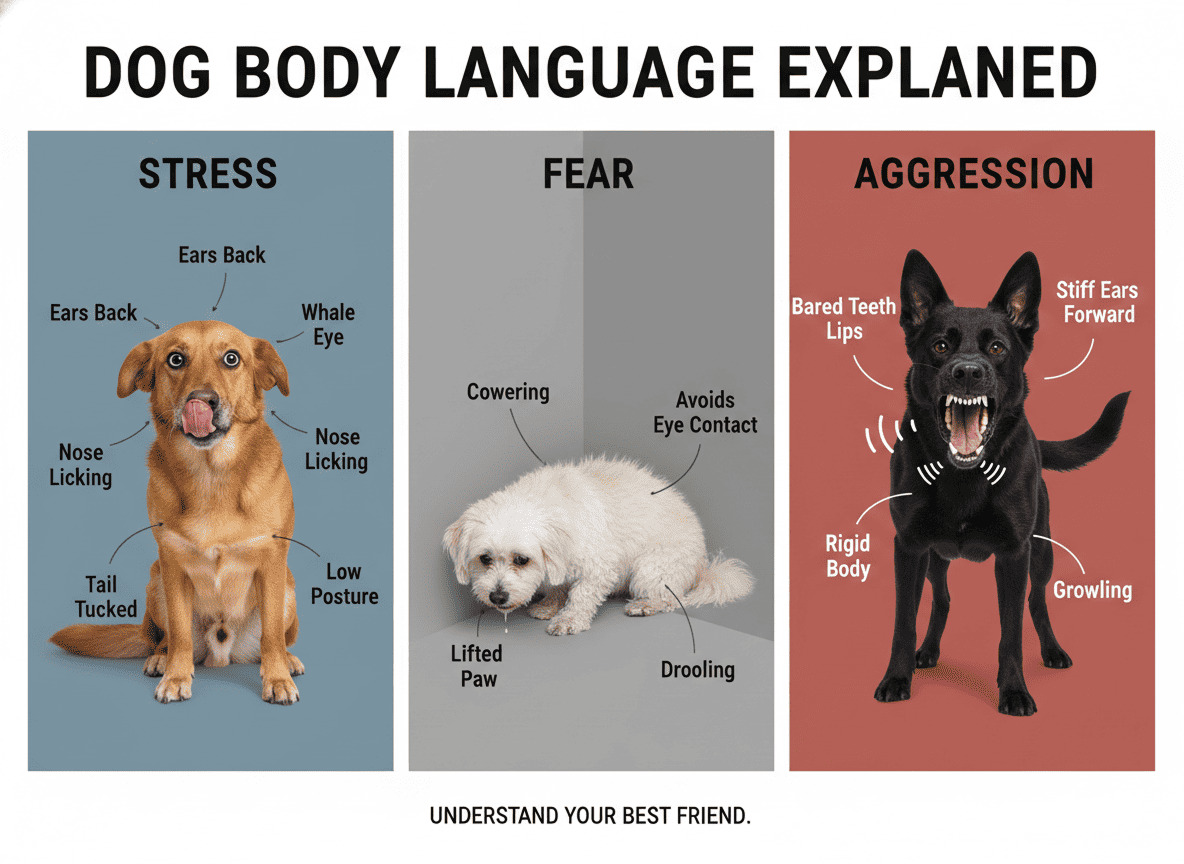
Many owners misunderstand fearful behavior as aggression. A scared dog may bark, growl, or show teeth because it wants more space, not because it wants to fight.
Fear-based reactions often come from a dog’s attempt to protect itself. Recognizing the emotional cause behind behavior can lead to safer and more effective training.
A professional trainer or veterinarian can help when fear reactions become intense or create safety concerns.

- ✦ Fear response
The dog may try to escape, hide, freeze, or warn others to stay away.
- ✦ Aggressive appearance
Barking or growling can happen because a fearful dog feels trapped or threatened.
Why Punishment Can Increase Fear
Punishing a fearful dog can make the problem worse because it may confirm that the situation is dangerous. Dogs need safety and guidance to learn new responses.
Reward-based training helps dogs create positive associations with things they once feared.
- ✦ Build trust
Kind and consistent training helps dogs feel safe around people and environments.
Common Causes of Fear in Dogs
Dogs can develop fear for many reasons. Some fears come from limited social experiences, while others develop after stressful events.
Understanding the cause helps owners create a better plan. A dog afraid of fireworks needs a different approach than a dog afraid of strangers.
- ✦ Loud noises
Thunderstorms, fireworks, and construction sounds can create fear in many dogs.
- ✦ New environments
Moving homes, visiting new places, or meeting unfamiliar people can feel overwhelming.
- ✦ Past negative experiences
A stressful event may create fear around similar situations in the future.
Fear During Daily American Routines
Many dogs in the United States experience common triggers like delivery workers, busy streets, car rides, and veterinary visits.
Small training steps can help dogs handle these situations with more confidence.
- ✦ Observe patterns
Track when fear happens so you can understand your dog’s triggers.
How to Help a Fearful Dog Build Confidence
Helping a fearful dog takes time, patience, and a clear plan. The goal is not to force bravery but to create safe experiences.
Confidence grows when dogs learn that new situations can have positive outcomes. Small wins are more valuable than overwhelming challenges.

- ✦ Use positive reinforcement
Reward calm behavior with treats, praise, or play to create positive connections.
- ✦ Give space
Allow your dog to move away from scary situations instead of forcing interaction.
- ✦ Practice slowly
Introduce triggers at a comfortable level and increase difficulty gradually.
Creating a Safe Home Environment
A calm home routine helps fearful dogs feel secure. Consistent feeding times, gentle handling, and quiet resting areas can reduce stress.
Owners should also avoid sudden pressure during training. Trust grows through repeated safe experiences.
- ✦ Safe spaces
Provide a comfortable area where your dog can relax without disturbance.
