
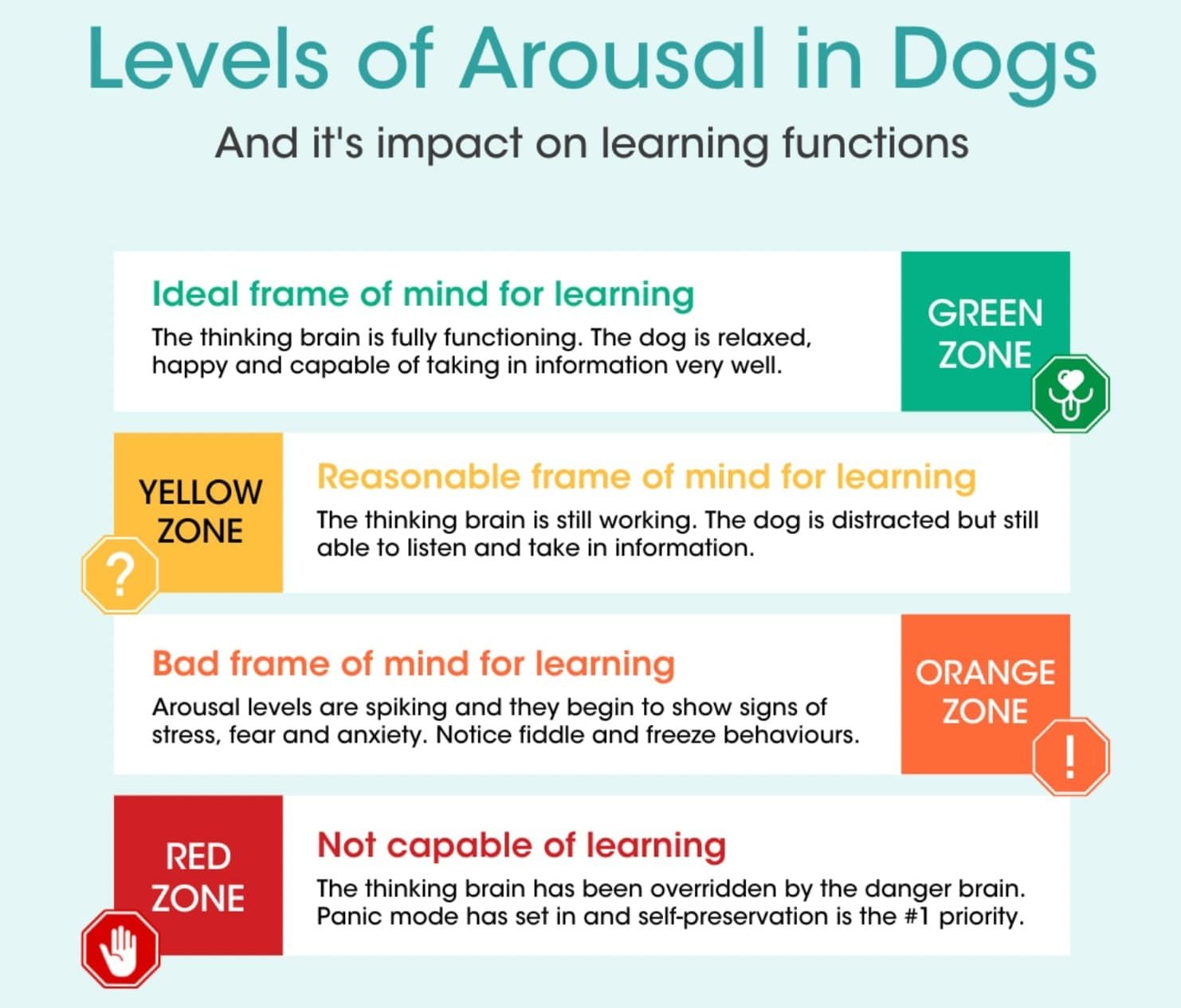
Understanding dog arousal levels is one of the most useful skills for any dog owner. Many behavior problems are not caused by a dog being stubborn. They often happen because the dog is too excited, too stressed, or unable to calm down.
In my experience studying dog behavior, I have seen many owners focus only on commands while missing the emotional state behind the behavior. A dog that cannot focus during training may not need more correction. It may need help reaching a calmer arousal level first.
For families across the United States, daily life can create many arousal triggers. Doorbells, visitors, busy streets, other dogs, children, and exciting outdoor activities can quickly change a dog’s emotional state.

What Are Dog Arousal Levels?
Dog arousal levels describe a dog’s level of emotional and physical activation. A calm sleeping dog has low arousal, while a dog chasing a ball or reacting to another dog has higher arousal.
Arousal itself is not bad. Dogs need energy and excitement for play, learning, sports, and social activities. The problem starts when a dog cannot control or reduce its arousal when needed.
The goal is not to keep a dog calm all the time. The goal is helping the dog move between different states in a healthy way.
- ✦ Low arousal
The dog may appear relaxed, sleepy, or less interested in the environment.
- ✦ Balanced arousal
The dog is alert, responsive, and able to learn or interact calmly.
- ✦ High arousal
The dog may become overly excited, impulsive, noisy, or unable to focus.
Why Arousal Matters in Dog Behavior
A dog’s emotional state affects how it processes information. When arousal becomes too high, many dogs struggle to listen because their brain focuses more on the trigger than the owner’s cues.
Training works best when dogs are inside a comfortable learning zone. This is why professional trainers often manage emotions before teaching new skills.
- ✦ Better learning
Dogs with balanced arousal can focus and understand training more easily.
The Different Stages of Dog Arousal Levels
Dogs move through different arousal states throughout the day. A puppy playing in the yard, a service dog working in public, and a senior dog resting on a bed all have different arousal needs.
Recognizing these stages helps owners respond before behavior becomes difficult to manage.

- ✦ Relaxed state
The dog has loose body movements, soft facial muscles, and can rest comfortably.
- ✦ Alert state
The dog notices something interesting but can still respond to its owner.
- ✦ Excited state
The dog may show faster movements, stronger emotions, and reduced self-control.
- ✦ Over-aroused state
The dog may bark, jump, react, freeze, or ignore familiar commands.
The Optimal Arousal Zone
The best training zone is usually between calm and excited. In this state, dogs have enough energy to participate but enough control to think.
Many owners accidentally push dogs beyond this zone by adding too much excitement before training or play.
- ✦ Signs of optimal arousal
The dog can take treats, follow cues, and recover quickly after excitement.
Signs Your Dog Has High Arousal Levels
High dog arousal levels can look like happiness, but they may also create stress. A dog that is extremely excited may struggle to control its actions.
Many owners notice these behaviors during greetings, walks, training sessions, or when another animal appears nearby.

- ✦ Excessive barking
The dog vocalizes repeatedly because emotions are too intense.
- ✦ Jumping and rushing
The dog moves quickly without thinking about boundaries.
- ✦ Ignoring commands
The dog may know the cue but cannot respond due to emotional overload.
- ✦ Fast body movements
Rapid pacing, spinning, or pulling can show increased arousal.
Hyperarousal in Dogs
Hyperarousal happens when a dog stays in a highly activated state for too long. These dogs may seem constantly ready to react and may have trouble settling after exciting events.
Helping a hyperaroused dog requires patience, predictable routines, enrichment, and training methods that build calm behavior.
- ✦ Common triggers
Triggers can include strangers, loud sounds, other dogs, excitement, frustration, or repeated stress.
Common Causes That Change Dog Arousal Levels
Many factors can influence dog arousal levels. Some are positive, like playtime, while others create pressure, such as fear or frustration.
Understanding triggers helps owners prevent problems instead of only reacting after a dog becomes overwhelmed.

- ✦ Environment
Busy places, crowds, traffic, and unfamiliar areas can increase arousal.
- ✦ Social interactions
Meeting people or dogs can create excitement or stress depending on the individual dog.
- ✦ Daily routine
Lack of rest, inconsistent schedules, or too much stimulation may affect emotional balance.
Trigger Stacking
Trigger stacking happens when several small stressors build up over time. A dog may handle one trigger but struggle when many appear together.
For example, a dog may become reactive after a stressful walk, loud noises, and visitors arrive on the same day.
- ✦ Prevention tip
Give dogs recovery time between stressful events.
How to Help a Dog Manage Arousal Levels
The best way to manage dog arousal levels is to teach emotional control through calm practice. Dogs learn when owners create safe and predictable situations.
Punishment often increases stress and can make emotional reactions worse. Reward-based training helps dogs understand which behaviors are useful.

- ✦ Create calm routines
Regular sleep, exercise, and quiet time support emotional balance.
- ✦ Use mental enrichment
Puzzle toys, scent games, and problem-solving activities help reduce boredom.
- ✦ Reward calm behavior
Rewarding relaxation teaches dogs that calm actions bring positive results.
Training Exercises for Better Emotional Control
Simple exercises like waiting at doors, relaxing on a mat, and checking in with the owner can improve self-control.
The key is practicing when the dog is slightly challenged but still able to think.
- ✦ Mat training
Teaches the dog to settle in a specific safe place.
How Dog Arousal Levels Affect Training and Communication
A dog’s ability to communicate depends heavily on its emotional state. When arousal becomes too high, body signals may become harder to read.
Professional trainers often watch the whole dog, including posture, eyes, movement, breathing, and recovery time.

- ✦ Body language awareness
Owners can identify early signs before unwanted behavior starts.
- ✦ Better training timing
Training during balanced arousal creates better learning results.
