

Understanding Dachshund puppy development and milestones helps owners provide the right care at the right time. A puppy that receives proper nutrition, gentle training, and positive experiences usually becomes a more balanced adult dog.
Many American families bring Dachshund puppies home at around eight weeks old. From that point, every week brings changes in size, confidence, learning ability, and behavior. Based on years of studying puppy care patterns, the biggest lesson is simple: small daily habits shape a Dachshund for life.

Dachshund puppy development timeline from birth to adulthood
Dachshund puppy development and milestones begin at birth when puppies depend completely on their mother. During the first weeks, they learn basic movement, body control, and early social skills.
Each growth stage has a purpose. Puppies do not only grow bigger; they also build confidence, learn communication, and develop habits that affect their adult personality.

- ✦ Newborn stage
From birth to about two weeks, puppies sleep, nurse, and grow rapidly while their senses slowly develop.
- ✦ Early puppy stage
Around three to eight weeks, puppies explore, play with littermates, and learn important dog social signals.
- ✦ Young puppy stage
From eight weeks onward, puppies begin adapting to their new homes, families, and training routines.
The first eight weeks of Dachshund puppy growth
The first eight weeks create the foundation for Dachshund puppy development and milestones. Puppies learn bite control, body language, and confidence through interaction with their mother and siblings.
- ✦ Key lesson
A puppy should not leave its litter too early because early social learning is important.
Physical growth milestones of a Dachshund puppy
Physical growth is one of the easiest parts of Dachshund puppy development and milestones to observe. Owners can track weight, body shape, coat changes, and coordination.
Dachshunds are small dogs, but their long backs need careful support during growth. Avoid activities that create heavy strain on their spine.
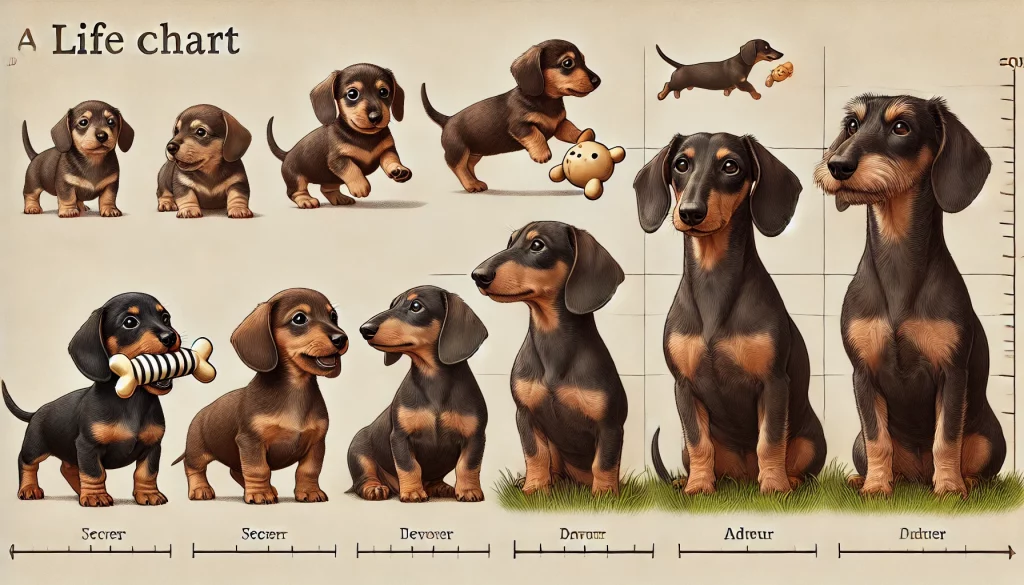
- ✦ Weight changes
Healthy growth depends on genetics, diet, activity level, and whether the Dachshund is miniature or standard size.
- ✦ Body control
Young puppies slowly improve balance, walking skills, and coordination.
Understanding Dachshund growth charts
Growth charts can help owners compare general progress, but every puppy develops at its own pace. A veterinarian can confirm whether growth is healthy.
Mental and behavioral milestones during puppy development
Dachshund puppy development and milestones include major changes in thinking and behavior. Puppies learn problem solving, communication, and emotional control as they mature.
Dachshunds are smart and curious dogs. Their hunting background can make them independent, so patient training works better than harsh methods.

- ✦ Learning commands
Puppies can begin basic cues like sit, come, and stay with short positive training sessions.
- ✦ Building confidence
Safe exposure to sounds, people, and places helps reduce fear later in life.
The importance of socialization
Good socialization teaches a Dachshund puppy that new experiences are safe. This stage is especially important during the early months when puppies are highly adaptable.
Training milestones for a growing Dachshund puppy
Training is a major part of Dachshund puppy development and milestones because habits formed early often continue into adulthood.
Short lessons, rewards, and consistency help Dachshunds understand what owners expect. Their intelligence makes them fast learners when motivation is strong.

- ✦ Potty training
Regular schedules and praise help puppies learn bathroom routines.
- ✦ Leash training
Early leash practice teaches safe walking skills and prevents pulling habits.
Nutrition and health needs during Dachshund puppy growth
Nutrition supports every part of Dachshund puppy development and milestones. Puppies need balanced food that supports bones, muscles, energy, and healthy weight.
Because Dachshunds have long backs, keeping a healthy body condition is important. Extra weight can add stress to their joints and spine.
- ✦ Puppy food choice
Choose a quality puppy diet that matches your dog’s size, age, and activity level.
- ✦ Veterinary care
Regular checkups, vaccines, and parasite prevention support healthy development.
