
Adopting a dog is an exciting moment, but the first days can feel confusing for both the dog and the family. A new dog may hide, act quiet, bark more, or show habits that were not visible at the shelter.
In my experience studying dog behavior and pet care practices, successful adoption depends less on quick results and more on patience. Dogs need time to understand that their new home is safe and permanent.
Understanding Dog Breed Adoption Adjustment
Dog breed adoption adjustment is the process where a dog learns to trust a new family and adapt to a new lifestyle. This change can affect eating, sleeping, bathroom habits, and social behavior.
A dog that lived in a shelter, foster home, or another household may need time to understand new rules. Breed traits can also influence how a dog responds to change.
- ✦ Environment change
New sounds, rooms, people, and smells can feel overwhelming at first.
- ✦ Emotional safety
Dogs adjust better when they feel calm, protected, and understood.
- ✦ New routine
Daily patterns help dogs know what to expect.
Why breed and personality matter
Some breeds are naturally more social and confident, while others may need more quiet time. However, individual personality always matters more than breed alone.
A shy dog from any breed may need slow introductions, while an active dog may need exercise and mental activities during adjustment.
The First Days After Adoption
The first few days are often the most important stage of dog breed adoption adjustment. Many experts describe this period as a time when dogs decompress and observe their new surroundings.
Avoid forcing interaction. Let your dog approach you and create positive experiences through food, gentle play, and calm attention.

- ✦ Prepare a safe area
Give your dog a quiet space with a bed, water, toys, and familiar items.
- ✦ Limit pressure
Avoid crowded visits and too many new experiences during the first days.
Creating a Routine That Builds Trust
Routine is one of the strongest tools for dog breed adoption adjustment. Dogs feel safer when meals, walks, training, and rest happen around the same times each day.
A predictable schedule reduces stress because the dog can learn what happens next. This is especially helpful for rescue dogs with uncertain past experiences.
- ✦ Feeding schedule
Serve meals at regular times to create comfort and stability.
- ✦ Walking routine
Use daily walks to build confidence and allow safe exploration.
- ✦ Training time
Use short positive sessions to teach household rules.
The 3-3-3 adjustment idea
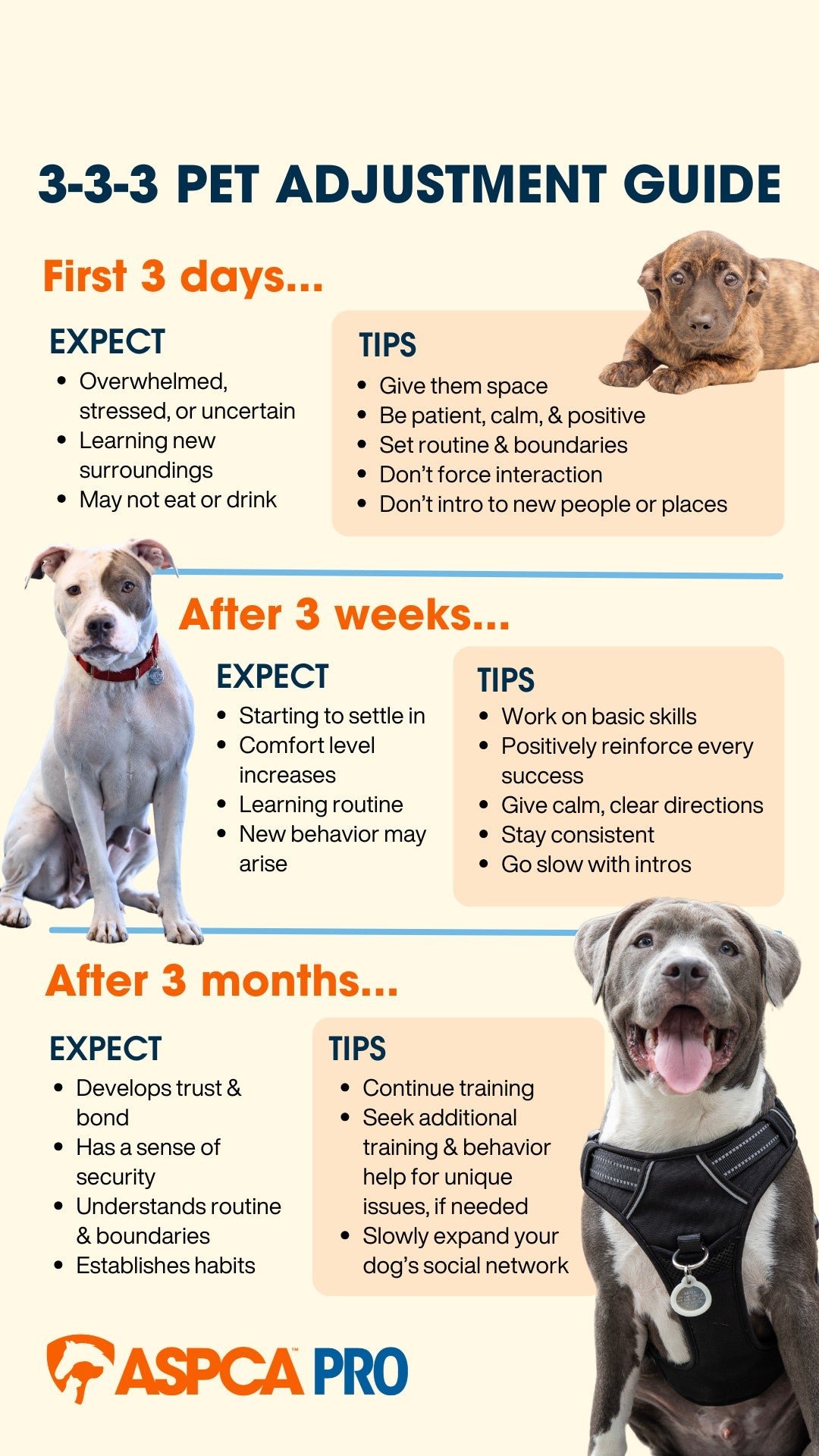
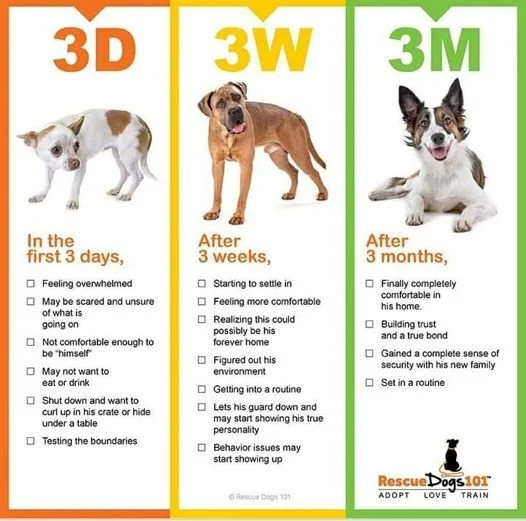
Many adoption groups use the 3-3-3 guideline as a simple way to explain adjustment stages. It suggests that dogs may need about three days to relax, three weeks to learn routines, and three months to fully settle.
This timeline is only a guide. Some dogs adjust faster, while others need much longer based on their history and needs.
Common Challenges During Adoption Adjustment
Many families expect instant bonding after adoption, but real relationships grow over time. Some challenges are normal parts of learning about each other.
Understanding these behaviors helps owners respond with patience instead of frustration.

- ✦ Fear or hiding
A dog may hide because the new environment feels unfamiliar.
- ✦ House training problems
Even trained dogs may have accidents while adjusting to a new place.
- ✦ Separation stress
Some dogs worry when left alone after major life changes.
How to respond to difficult behavior
Use calm guidance instead of punishment. Fear-based behaviors often improve when dogs feel safe and learn clear expectations.
If serious behavior problems appear, a qualified trainer or veterinarian can help create a suitable plan.
Helping Your Adopted Dog Build Confidence
Confidence grows when dogs have safe experiences. Small wins, such as relaxing near family members or exploring a room, are important steps.
Positive reinforcement works well because it rewards behaviors you want to see again.

- ✦ Use rewards
Treats and praise can help your dog connect new experiences with positive outcomes.
- ✦ Respect boundaries
Allow your dog to rest and avoid forcing contact.
- ✦ Provide enrichment
Games, toys, and sniffing activities support mental health.
Long-Term Success After Dog Adoption
Successful dog breed adoption adjustment continues long after the first month. Building a strong bond requires daily care, communication, and consistency.
Many adopted dogs become loving family members once they understand they belong. The key is giving them time to develop trust.
- ✦ Regular healthcare
Schedule veterinary visits and maintain preventive care.
- ✦ Ongoing training
Continue teaching skills throughout your dog’s life.
