
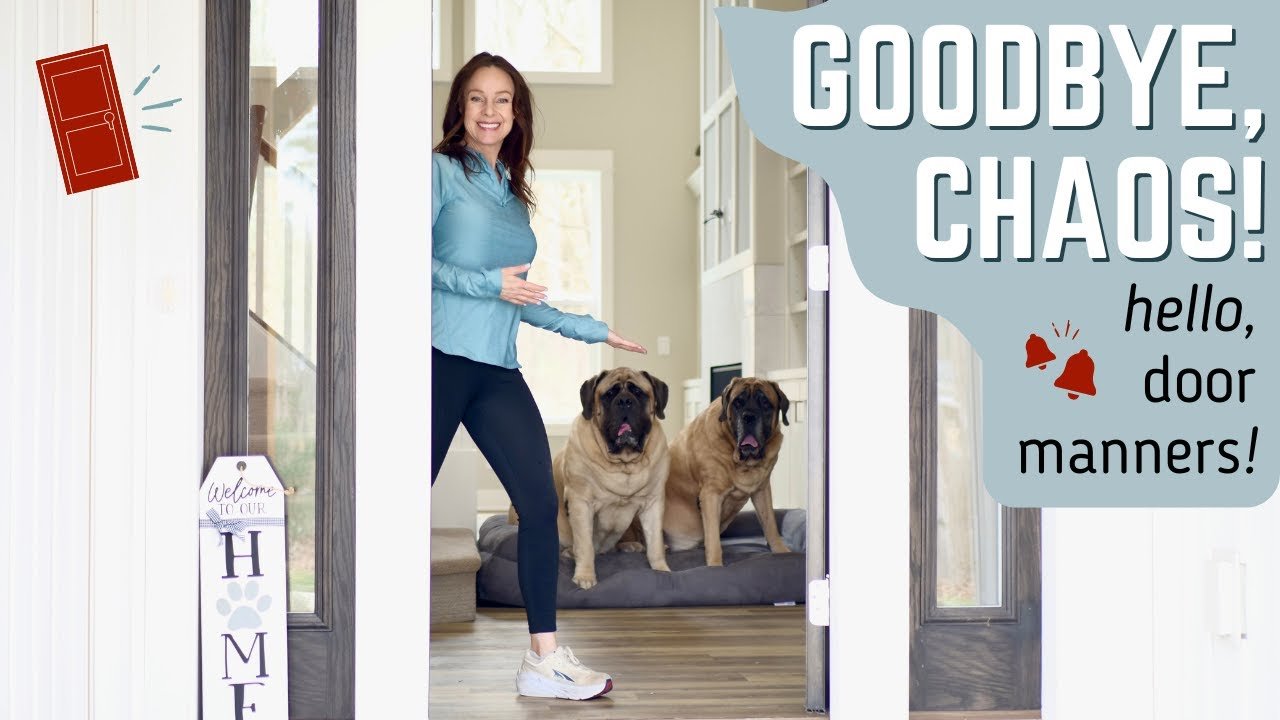
Many dogs get excited near doors. They bark, jump, scratch, or rush outside before their owner is ready. Good **dog door manners** help your dog understand that doors are controlled spaces, not places to push, charge, or panic.
From years of working with common household dog behaviors, I have seen that door problems often come from excitement rather than disobedience. A few minutes of daily practice can build patience and make your home safer for both dogs and people.
In American homes, doors open many times each day for walks, guests, deliveries, and yard access. Teaching **dog door manners** gives your dog a clear routine and helps prevent dangerous door dashing.

What Are Dog Door Manners and Why Do They Matter?
**Dog door manners** are the skills that teach a dog to behave calmly around doors. This includes waiting for permission, avoiding pushing through openings, and responding to simple cues like wait, stay, and come.
A dog that understands door rules is easier to manage during busy moments. These skills are useful when leaving for walks, welcoming visitors, or opening the front door for a delivery.

- ✦ Improved safety
A dog that waits at doors is less likely to run into streets, parking areas, or unsafe spaces.
- ✦ Better home behavior
Calm door habits reduce jumping, barking, and rushing when guests arrive.
- ✦ Stronger communication
Training creates a clear system between you and your dog.
Common Door Problems Dogs Show
Before training **dog door manners**, it helps to understand why dogs struggle. Most door issues come from excitement, curiosity, fear, or a learned habit that has been rewarded in the past.
If a dog rushes through a door and immediately gets access to something fun, such as a walk or the yard, the dog learns that rushing works.

- ✦ Door dashing
The dog pushes ahead and tries to exit before the owner gives permission.
- ✦ Jumping on visitors
The dog becomes overexcited when people enter the home.
- ✦ Barking at the doorway
The dog reacts strongly to sounds, movement, or unfamiliar people outside.
Why Dogs Rush Doors
Dogs often rush doors because the opening predicts something exciting. A walk, a person arriving, or outdoor smells can create a strong emotional response.
- ✦ Excitement
High energy can make dogs forget learned behaviors.
Step-by-Step Training for Dog Door Manners
Training **dog door manners** works best when you start in a quiet area. Do not wait for a stressful moment when someone is already leaving or entering.
Reward calm choices. Your dog should learn that waiting creates opportunities, while rushing makes the door pause.

- ✦ Step 1: Teach a pause
Ask your dog to sit or stand calmly before touching the door handle.
- ✦ Step 2: Reward patience
Give praise or a treat when your dog stays calm as the door moves.
- ✦ Step 3: Add movement
Slowly open the door and reward your dog for staying in place.
- ✦ Step 4: Practice release cues
Use a word like free or okay to show when your dog may move.
Using Positive Reinforcement
Positive reinforcement helps dogs understand what behavior earns rewards. Instead of only correcting mistakes, focus on rewarding calm actions you want repeated.
- ✦ Reward timing
Give rewards immediately after the correct behavior so your dog connects the action with success.
How to Practice Door Manners With Puppies and Adult Dogs
Puppies can learn **dog door manners** early because habits form quickly. Short training sessions are better than long sessions because young dogs have limited focus.
Adult dogs can also learn new door skills. Older habits may take more time, but steady practice can create reliable results.

- ✦ Train in small sessions
Practice for a few minutes each day instead of forcing long drills.
- ✦ Start with easy situations
Begin with quiet indoor doors before practicing with visitors or busy entrances.
- ✦ Stay consistent
Everyone in the home should follow the same rules.
Mistakes That Slow Down Door Training
Many owners accidentally reward unwanted door behavior. For example, opening the door while a dog jumps teaches the dog that jumping gets results.
Good **dog door manners** require clear rules and patience. Avoid changing expectations from one day to another.

- ✦ Opening the door during rushing
Wait for calm behavior before giving access.
- ✦ Using only punishment
Dogs learn faster when they understand the correct behavior to perform.
- ✦ Skipping daily practice
Regular repetition builds stronger habits.
Advanced Dog Door Manners for Real-Life Situations
Once your dog understands basic door rules, add real-world distractions. Practice when guests arrive, when packages are delivered, or before exciting outdoor activities.
Advanced **dog door manners** create reliability because your dog learns to stay calm even when emotions are high.

- ✦ Guest arrivals
Teach your dog to wait away from the door until invited.
- ✦ Multiple dogs
Train each dog separately before expecting group control.
- ✦ Outdoor distractions
Practice with sounds, movement, and exciting smells.
