
Understanding Dog exercise requirements is one of the most important parts of responsible pet care. A dog that gets the right amount of activity is often healthier, calmer, and easier to train. In the United States, many dogs live busy indoor lifestyles, which makes planned exercise even more important.
Over the years of studying dog behavior and care routines, one lesson stands out: exercise is not only about tiring a dog out. Good exercise supports physical health, emotional balance, confidence, and the bond between dogs and their owners. The right routine should match the individual dog, not just a general rule.

What Are Dog Exercise Requirements?
Dog exercise requirements describe the amount and type of activity a dog needs to stay physically fit and mentally healthy. These needs are different for every dog because genetics, lifestyle, and health all affect energy levels.
Exercise includes more than walking. Running, playing, training games, swimming, scent work, and interactive toys can all provide valuable activity. A good plan combines movement with activities that make a dog think.

- ✦ Physical activity
Walking, running, playing fetch, and outdoor games help maintain muscle strength, heart health, and healthy body weight.
- ✦ Mental stimulation
Training sessions, puzzles, and scent games challenge the brain and reduce boredom-related behaviors.
- ✦ Social activity
Safe interaction with people and other dogs can improve confidence and social skills.
Why Every Dog Needs Regular Exercise
Dogs are naturally active animals. Without enough daily movement, they may develop frustration, excess energy, or habits like chewing furniture and excessive barking.
Regular exercise also supports joint health, digestion, sleep quality, and emotional stability.
How Much Exercise Does a Dog Need Each Day?
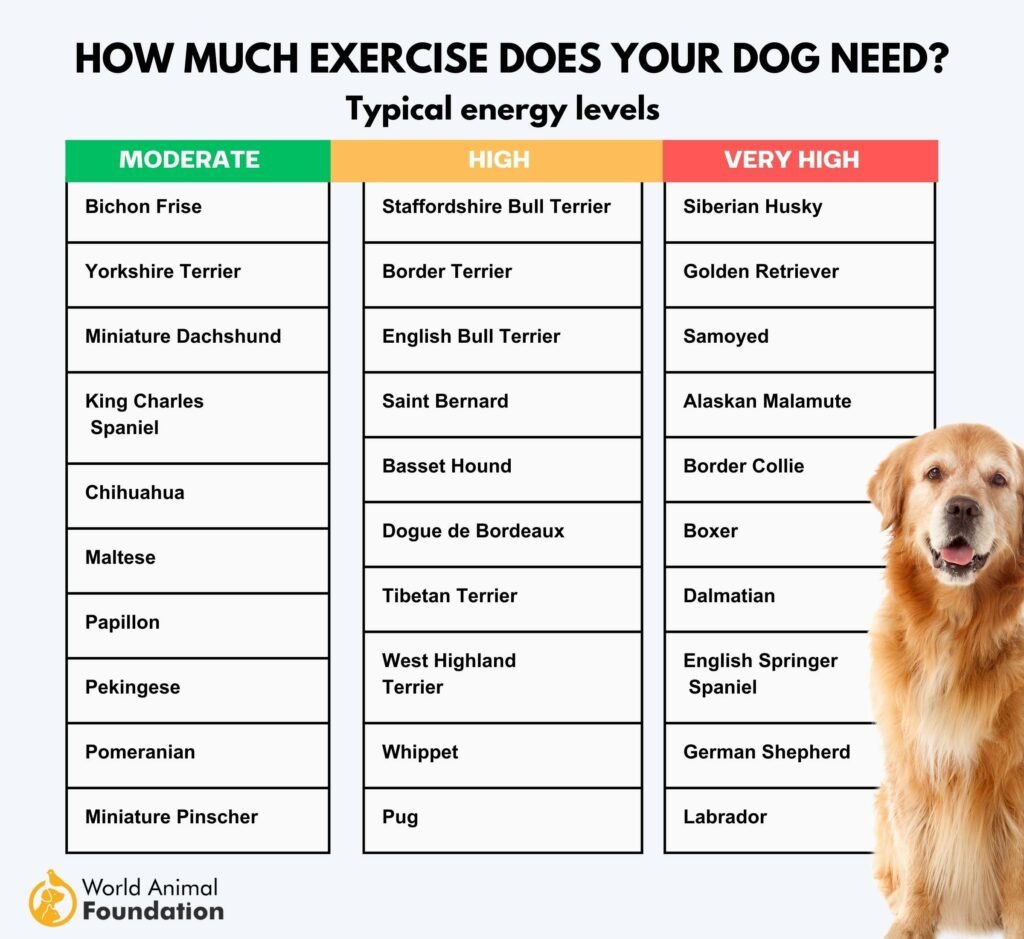
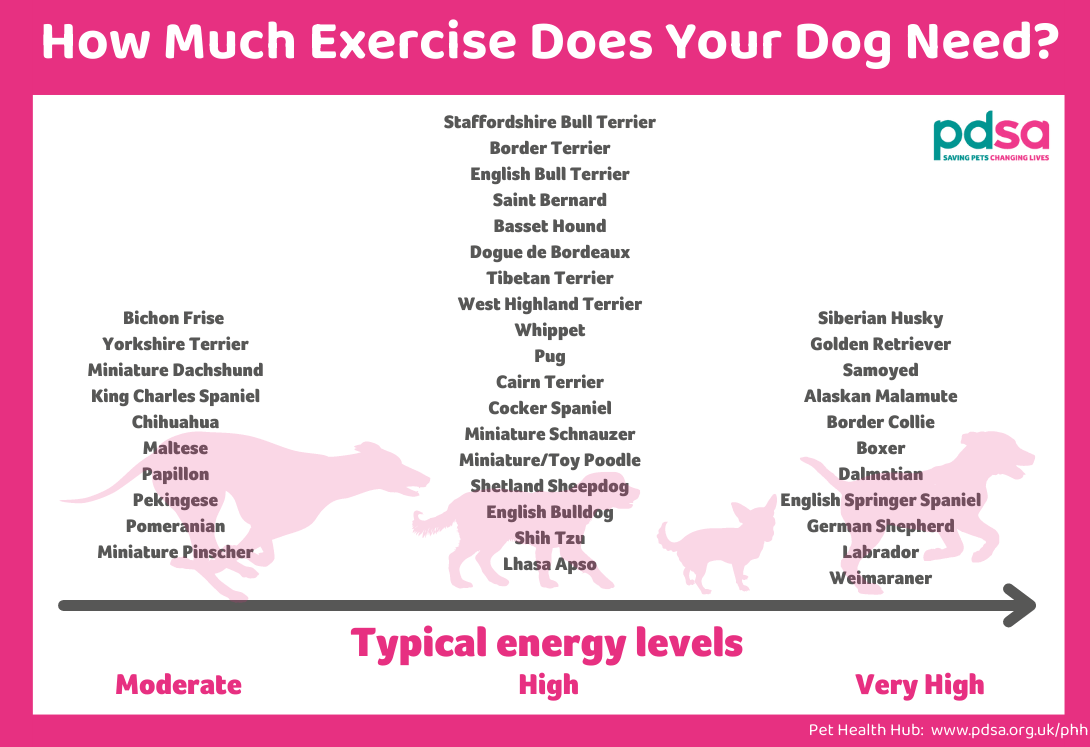
There is no single answer for all dogs. Dog exercise requirements vary widely, but many adult dogs need between 30 minutes and two hours of activity each day.
High-energy breeds may need longer exercise sessions, while smaller or older dogs may do better with shorter and gentler activities. Owners should watch their dog’s behavior and adjust the routine.

- ✦ Low-energy dogs
Some small breeds and senior dogs may stay healthy with short walks and light play sessions.
- ✦ Moderate-energy dogs
Many family dogs benefit from daily walks, playtime, and simple training exercises.
- ✦ High-energy dogs
Working and sporting breeds often need more intense exercise and mental challenges.
Factors That Change Exercise Needs
Breed is only one factor. A young Labrador Retriever and an older Labrador Retriever may have very different exercise needs.
Weather, injuries, weight, and health conditions should also influence the daily plan.
- ✦ Age
Puppies and senior dogs need exercise that matches their developing or aging bodies.
- ✦ Health
Dogs with medical conditions may need modified activities approved by a veterinarian.
Dog Exercise Requirements by Age
A dog’s age plays a major role in deciding how much activity is safe. Puppies, adult dogs, and senior dogs each have different physical limits.
The goal is to build healthy habits without creating stress on growing joints or aging bodies.

- ✦ Puppies
Young dogs need short, controlled play sessions with plenty of rest between activities.
- ✦ Adult dogs
Most adult dogs need consistent daily exercise that combines movement and mental challenges.
- ✦ Senior dogs
Older dogs often benefit from gentle walks, swimming, and low-impact activities.
Safe Puppy Exercise Practices
Puppies are still growing, so intense exercise like long-distance running or repeated jumping may not be suitable. Short play periods and training games are usually better choices.
Owners should increase activity slowly as puppies mature.
Best Types of Exercise for Dogs
The best exercise routine is one that keeps a dog interested and fits the owner’s lifestyle. Variety can prevent boredom and improve overall fitness.
Many American dog owners combine neighborhood walks with backyard play, training, and weekend outdoor activities.
- ✦ Walking
Daily walks provide physical movement and allow dogs to explore new smells.
- ✦ Fetch games
Fetch can improve endurance and provide fun physical activity.
- ✦ Training games
Obedience practice and puzzle games provide mental exercise.
- ✦ Swimming
Swimming can be a low-impact option for dogs that enjoy water.
Signs Your Dog May Need More or Less Exercise
A dog’s behavior often shows whether the current routine is working. Too little exercise may lead to restlessness, while too much activity can cause fatigue or discomfort.
Owners should look for changes in energy, mood, appetite, and movement patterns.

- ✦ Signs of too little exercise
Common signs include destructive chewing, constant attention seeking, excessive barking, and difficulty settling down.
- ✦ Signs of too much exercise
Warning signs include limping, extreme tiredness, reluctance to move, and unusual soreness.
How to Adjust Your Dog’s Routine
Increase or reduce activity slowly. Sudden changes can cause stress or injury.
A veterinarian can help create a safe exercise plan for dogs with special health needs.
Creating a Daily Exercise Routine for Your Dog
A successful exercise plan should be realistic and consistent. A short daily routine is often better than occasional intense activity.
Dog owners should create habits that fit their schedule while meeting their dog’s physical and emotional needs.
- ✦ Morning activity
A walk or play session can help dogs start the day with balanced energy.
- ✦ Midday enrichment
Puzzle toys or short training sessions can provide mental stimulation.
- ✦ Evening movement
A calm walk or interactive play can help dogs relax before bedtime.
