
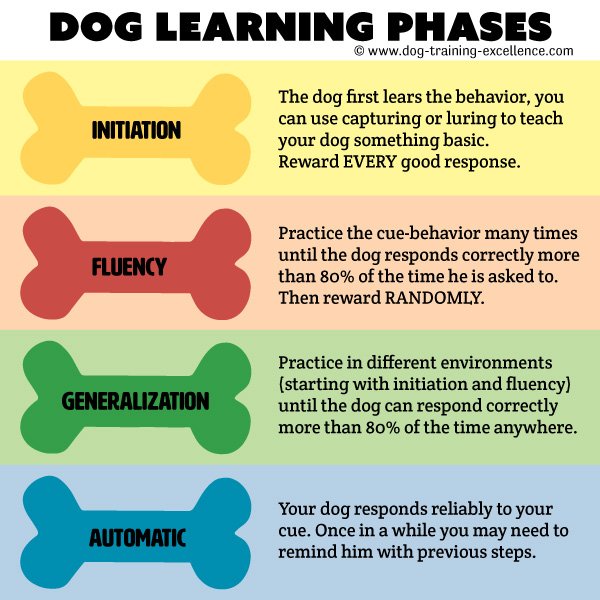
Many owners feel confused when their dog follows a command at home but ignores it at the park. This is usually not stubborn behavior. The dog may have learned the command only in one specific setting.
Dog generalization in training is the process of teaching a dog that a behavior has the same meaning across different environments, people, sounds, and distractions. Professional trainers use this approach to create reliable skills for everyday life.
A well-trained dog should not only sit in a quiet living room. The dog should also understand sit near visitors, on walks, and in busy American neighborhoods. Generalization turns basic training into practical life skills.
 display: block; margin: 0 auto; border-radius: 12px; box-shadow: 0 8px 25px rgba(0, 0, 0, 0.12);”>
What is dog generalization in training?
Dog generalization in training means a dog can perform a learned behavior in different conditions. The dog understands the idea behind a command instead of connecting it to one exact place or routine.
For example, a dog may learn “sit” in the kitchen because the floor, owner, lighting, and reward pattern stay the same. Generalization helps the dog understand that sit means lowering the body anywhere when asked.
Dogs do not naturally generalize skills like humans do. They often connect learning with specific details around them, so trainers must slowly introduce new situations.
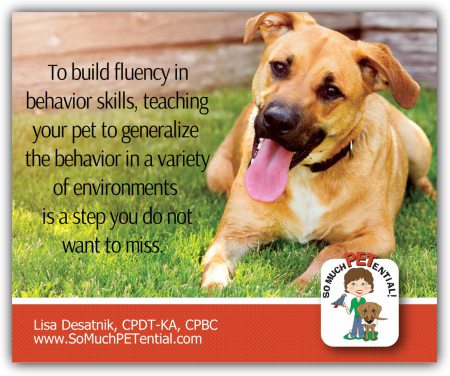
- ✦ Location changes
Practice commands in rooms, yards, sidewalks, parks, and other safe places.
- ✦ Person changes
Help dogs respond to family members, trainers, and trusted visitors.
- ✦ Distraction changes
Add sounds, movement, toys, and other distractions step by step.
Why dogs struggle with generalization
Dogs learn through patterns and associations. If a dog only practices recall inside the home, the dog may not understand that the same word applies at a park.
This does not mean the dog forgot the command. It means the dog needs more examples before the behavior becomes flexible.
Why dog generalization in training is important
A dog that responds only in controlled settings may struggle during real-life moments. Everyday environments are full of smells, people, sounds, and movement.
Dog generalization in training creates confidence because the dog learns that the same rules apply in many places. This improves safety and communication between dogs and owners.
For example, a reliable stay command can help when answering the front door, visiting a cafe with outdoor seating, or crossing a busy street.
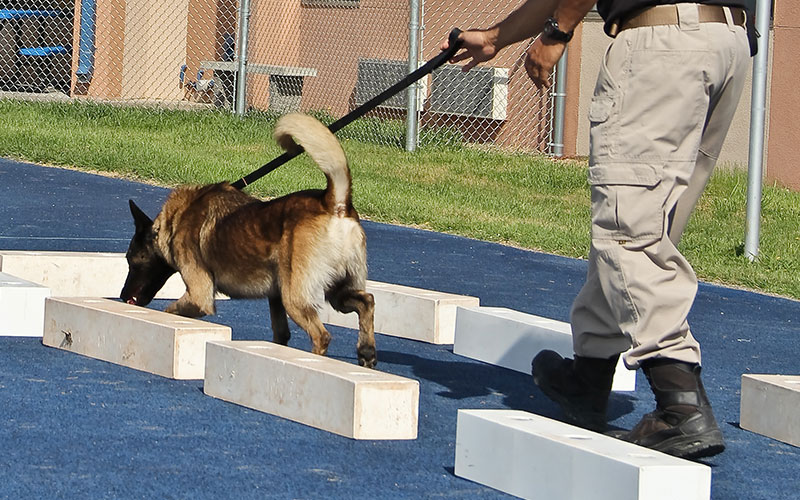
- ✦ Improved safety
Reliable commands can help prevent risky choices during walks and public activities.
- ✦ Better communication
Dogs understand owner expectations more clearly across daily situations.
- ✦ Reduced confusion
Dogs learn that behaviors are not limited to one room or one training session.
How to build generalization step by step
Successful dog generalization in training starts with a strong foundation. First teach the behavior in a low-distraction area where the dog can focus.
After the dog understands the skill, change one factor at a time. Adding too many challenges at once can make the dog confused or frustrated.
A useful rule is to make training slightly harder while keeping the dog successful. Reward correct choices and reduce difficulty when needed.
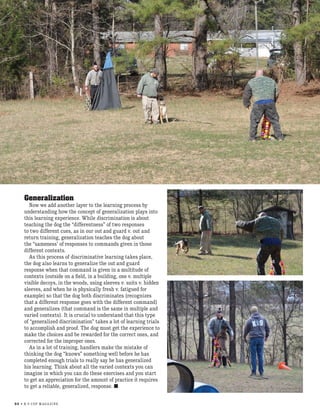
- ✦ Step one: Build the behavior
Teach the command in a calm place with clear rewards.
- ✦ Step two: Change the environment
Move practice sessions to new rooms, yards, or outdoor areas.
- ✦ Step three: Add distractions
Introduce new challenges slowly while maintaining success.
The three D’s of dog training
Many trainers use difficulty, distance, and duration as key factors. A dog may know a command for five seconds but not for one minute.
Increase only one factor at a time. This helps the dog understand what you want without creating unnecessary stress.
- ✦ Duration
Increase how long the dog maintains the behavior.
- ✦ Distance
Practice while moving farther away from the dog.
- ✦ Distraction
Add new challenges around the dog.
Common mistakes that prevent dog generalization
Many training problems happen because owners expect a dog to transfer learning automatically. A dog that performs well in class may still need practice at home.
Another common mistake is increasing difficulty too quickly. If a dog fails often, the training level may be too advanced.
Good trainers focus on gradual progress. They create many successful experiences instead of testing the dog constantly.
- ✦ Practicing in only one place
Dogs need exposure to different environments to build flexible skills.
- ✦ Changing too many things at once
Small changes help dogs learn faster and stay confident.
- ✦ Stopping rewards too early
Rewards help strengthen behaviors during the learning process.
Examples of dog generalization in daily life
Dog generalization in training appears in many normal situations. A family dog may need to sit politely at home, at a veterinarian office, or around children playing.
Service dogs, working dogs, and sport dogs often require advanced generalization because they must perform around many unpredictable conditions.
Pet owners can use the same principles by creating safe practice opportunities during normal routines.
- ✦ Recall practice
Teach the dog to come when called in different safe locations.
- ✦ Loose leash walking
Practice walking skills on quiet streets before busier areas.
- ✦ Calm greetings
Teach polite behavior around different people and dogs.
