
The dog habituation process teaches dogs to ignore safe, repeated experiences over time.
The dog habituation process is one of the basic ways dogs learn about their world. A dog may slowly stop reacting to a sound, object, person, or place when that experience happens often and does not cause harm.
In my experience studying dog behavior, I have seen that calm repetition works better than rushing. A puppy in the United States may need time to accept traffic sounds, doorbells, visitors, grooming tools, or busy parks. The goal is not to make a dog helpless. The goal is to build confidence.

What is the dog habituation process?
The dog habituation process is a form of learning where a dog reduces its response to a repeated stimulus. A stimulus can be a sound, smell, movement, object, or situation.
For example, a dog that first barks at a vacuum cleaner may later ignore it after many calm exposures. The dog learns that the object is not a threat and does not require a strong reaction.

- ✦ Repeated exposure
The dog experiences the same safe event many times.
- ✦ Reduced reaction
The dog slowly shows less fear, excitement, or alert behavior.
- ✦ Natural learning
The change happens through experience rather than punishment.
Why habituation matters for dogs
A dog uses past experiences to decide how to react. The dog habituation process helps create more predictable responses in daily life.
This can help dogs handle normal events such as visitors, city noises, car rides, and household routines.
How dogs develop habituation through daily experiences
Dogs are constantly learning from their environment. The dog habituation process begins when a dog notices something new and then collects information about whether it is safe.
A young puppy may react strongly to a new experience at first. With careful repetition, the puppy can learn that the experience is normal.

- ✦ Observation stage
The dog notices a new sound, object, person, or situation.
- ✦ Adjustment stage
The dog begins to understand that the experience does not create danger.
- ✦ Comfort stage
The dog responds with less attention or concern.
Examples from American homes
A dog living in a U.S. home may need to adjust to delivery workers, lawn equipment, children playing, or neighborhood traffic.
The dog habituation process works best when owners allow the dog to observe these events at a comfortable distance.
Steps in a safe dog habituation process
A safe dog habituation process should move slowly. Dogs learn better when they feel secure and have the ability to leave.
Many behavior problems happen when owners increase exposure too quickly. Small steps create stronger learning.
- ✦ Start with low intensity
Introduce the trigger at a level where the dog remains calm.
- ✦ Repeat calmly
Allow many safe experiences without pressure.
- ✦ Increase difficulty slowly
Gradually add more distance, time, or intensity.
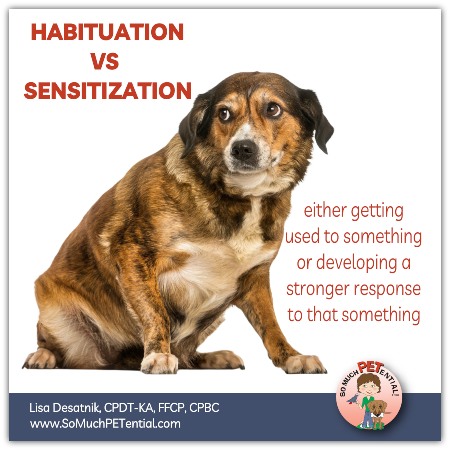
Habituation versus forcing exposure
Habituation is not the same as forcing a dog to face a fear. Flooding a dog with a scary experience can increase stress instead of reducing it.
A good trainer watches body language and adjusts the process when the dog feels overwhelmed.
Common situations where dogs use habituation
The dog habituation process appears in many parts of everyday life. Dogs naturally adjust to repeated experiences when those experiences remain safe.
Owners can support this learning by creating calm routines and avoiding unnecessary stress.

- ✦ Household sounds
Dogs can learn to ignore normal sounds like appliances and doors.
- ✦ New environments
Dogs can become comfortable with parks, streets, and travel.
- ✦ Human activity
Dogs can adjust to visitors, neighbors, and family routines.
Habituation in puppies and adult dogs
Puppies often adapt quickly because they are building their understanding of the world. Adult dogs can also learn through the dog habituation process with enough time.
Every dog has a different learning speed based on history, personality, and previous experiences.
Signs that the habituation process is working
Successful habituation does not always look dramatic. Often, the biggest sign is that the dog simply stops paying attention to the trigger.
Owners should look for relaxed body language rather than complete silence or stillness.

- ✦ Relaxed posture
The dog keeps a normal body position and movement.
- ✦ Less alert behavior
The dog spends less time watching or reacting.
- ✦ Normal daily behavior
The dog continues eating, playing, and resting normally.
