
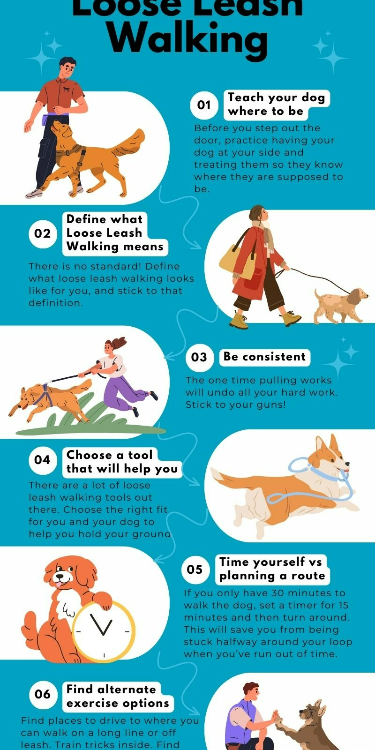
Dog loose leash training is one of the most useful skills a dog can learn. A calm walk makes daily life easier for both dogs and owners. In the United States, many families walk their dogs in neighborhoods, parks, and busy public areas, so leash manners are an important part of responsible pet ownership.
From working with dogs, trainers often find that pulling is not a sign of a bad dog. It usually happens because the dog has learned that pulling helps them reach exciting things. With patience, clear rewards, and steady practice, most dogs can learn a better walking habit.

What Is Dog Loose Leash Training?
Dog loose leash training means teaching your dog to walk with a relaxed leash. The leash should have some slack, and your dog should stay near you instead of dragging you forward.
This skill does not require your dog to walk in a perfect heel position all the time. The goal is a safe and comfortable walk where your dog can explore while still paying attention to you.
- ✦ Better control
A dog that walks calmly is easier to manage around people, cars, and other animals.
- ✦ Less frustration
Loose leash walking reduces stress for both the dog and the person holding the leash.
- ✦ Stronger communication
Training helps your dog understand what behavior earns rewards.
Loose Leash Walking vs Heel Training
Loose leash walking allows more freedom. Your dog can sniff and explore while keeping the leash relaxed. Heel training is more formal and asks the dog to stay in a specific position beside you.
- ✦ Loose leash goal
The main goal is a relaxed leash and polite movement.
Why Dogs Pull on the Leash
Many dogs pull because the outside world is exciting. New smells, squirrels, people, and other dogs can create strong motivation to move forward.
Dog loose leash training works by changing the reward system. The dog learns that staying close and keeping the leash relaxed brings good things.

- ✦ Excitement
Dogs may pull because they want to reach something interesting faster.
- ✦ Lack of practice
Dogs need repeated training to understand walking rules.
- ✦ Past rewards
If pulling has worked before, dogs may continue the habit.
How to Start Dog Loose Leash Training Step by Step
Successful dog loose leash training starts in a quiet place. Begin indoors or in a low-distraction area before expecting your dog to behave well on a busy street.
Keep training sessions short. Five to ten minutes of focused practice can be more effective than a long session that causes boredom.

- ✦ Step 1: Choose rewards
Use small treats, praise, or toys that your dog finds valuable.
- ✦ Step 2: Reward attention
Give rewards when your dog looks at you or stays near you.
- ✦ Step 3: Practice movement
Walk a few steps and reward your dog when the leash stays loose.
- ✦ Step 4: Add distractions
Slowly practice in parks, sidewalks, and busier areas.
The Stop and Wait Method
When your dog pulls, stop walking. Wait until the leash becomes loose, then continue. This teaches your dog that pulling does not move the walk forward.
- ✦ Stay consistent
Everyone who walks the dog should follow the same rule.
Best Equipment for Loose Leash Walking
The right equipment can support dog loose leash training, but tools alone do not teach behavior. Training creates the skill, while equipment helps make practice safer and easier.
Most dogs can learn with a regular flat collar or harness. The best choice depends on the dog’s size, comfort, and walking habits.

- ✦ Standard leash
A fixed leash gives better control than a retractable leash during training.
- ✦ Comfortable harness
A properly fitted harness can help some dogs walk more comfortably.
- ✦ Treat pouch
Easy access to rewards helps reinforce good behavior quickly.
Common Dog Loose Leash Training Mistakes
Many owners struggle because they expect quick results. Dog loose leash training is a skill that develops over time, especially for young dogs or dogs with strong pulling habits.
Avoid harsh corrections that create fear or confusion. Clear rewards and calm guidance usually create stronger long-term results.

- ✦ Training only outside
Starting in a distracting place makes learning harder.
- ✦ Walking after pulling
Moving forward while the dog pulls can reward unwanted behavior.
- ✦ Using inconsistent rules
Mixed signals slow down learning.
How Long Does Training Take?
Every dog learns at a different pace. Some dogs improve within weeks, while others need several months of steady practice. The key is regular training and realistic goals.
- ✦ Daily practice
Small daily sessions help create lasting habits.
Advanced Dog Loose Leash Training Tips
Advanced dog loose leash training focuses on helping your dog stay calm around distractions. This includes passing other dogs, walking near traffic, and handling crowded areas.
Reward your dog for checking in with you. A dog that chooses to focus on you is easier to guide in many situations.

- ✦ Practice in new places
Different locations help your dog generalize the skill.
- ✦ Increase distance slowly
Do not add too many distractions at once.
