
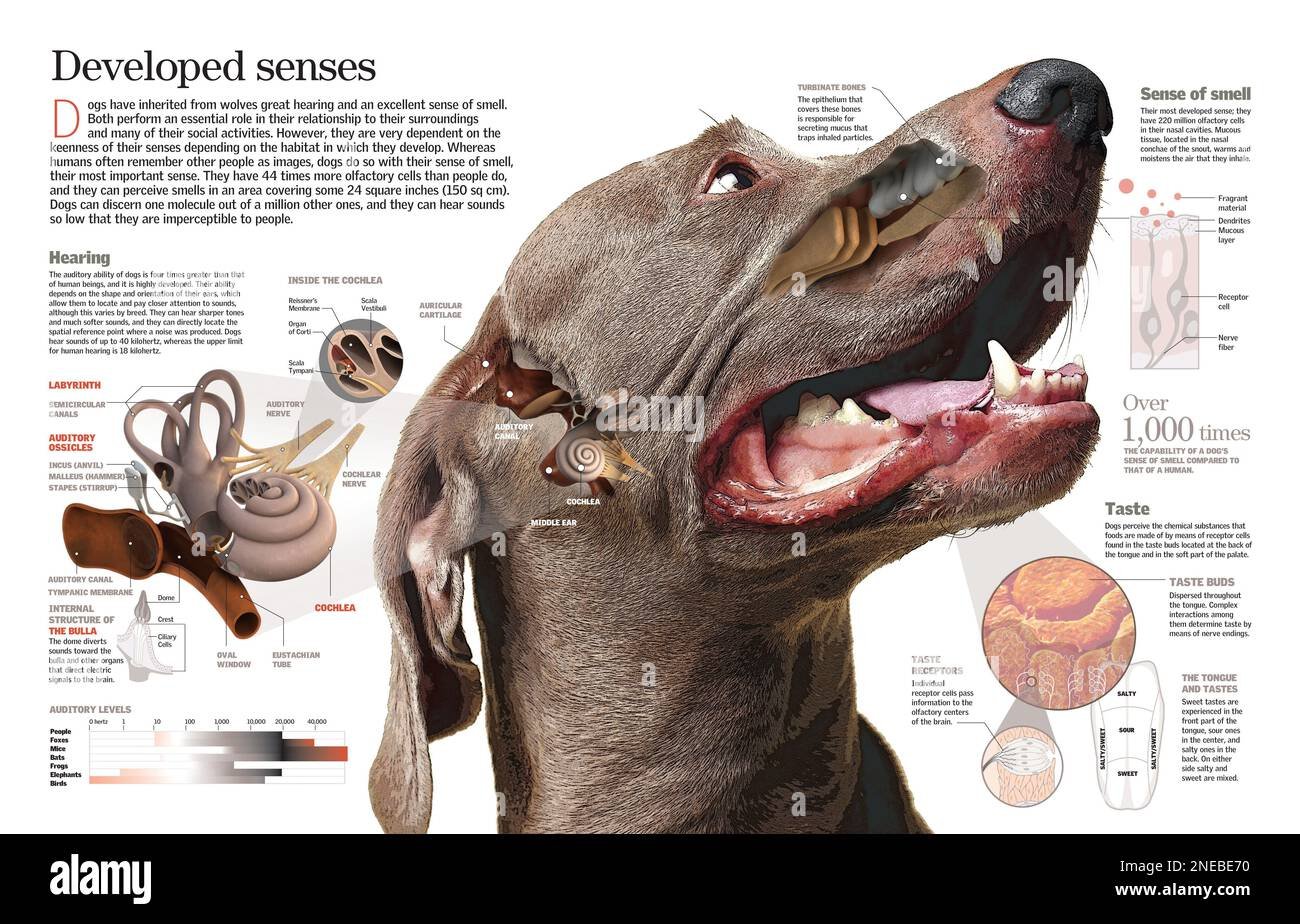
Dogs do not experience the world like humans. While people often depend on vision first, dogs rely heavily on scent and sound. A simple walk in a U.S. neighborhood can become a complex stream of information for a dog, with every smell, noise, and movement telling a story.
In my work studying pet behavior topics, I have found that understanding dog sensory perception helps explain many common actions. A dog stopping to sniff, reacting to a distant sound, or watching a small movement is not random behavior. It is a response to a rich sensory system.

How dog sensory perception works
Dog sensory perception is the way a dog receives and processes information from the environment. Dogs use several senses at the same time instead of depending on one sense alone.
A dog’s brain combines smell, sound, sight, touch, and taste to create a complete picture of the world. This ability helps dogs find food, avoid danger, communicate, and connect with humans.
- ✦ Smell
Dogs use scent as one of their strongest tools for understanding places, animals, and people.
- ✦ Hearing
Dogs can notice many sounds that humans may miss, including quiet movements and high tones.
- ✦ Vision
Dogs use sight mainly for movement detection, body language, and navigation.
Why multiple senses matter
Each sense supports the others. A dog may hear a sound, look toward it, and use smell to identify what caused it.
This teamwork between senses allows dogs to react quickly and adapt to new situations.
A dog’s incredible sense of smell
Smell is the most important part of dog sensory perception. Dogs use their noses to explore their surroundings and gather information.
A dog sniffing a tree, sidewalk, or another dog is collecting details about recent activity. Scent can reveal what animals passed by and what changes happened in an area.

- ✦ Scent communication
Dogs leave and read scent signals that provide social information.
- ✦ Tracking ability
Many dogs are trained for search work because of their strong scent skills.
How dogs hear the world around them
Hearing plays a major role in dog sensory perception. Dogs can detect sounds from greater distances and notice higher frequencies than humans.
This ability helps dogs respond to commands, recognize familiar voices, and detect changes in their surroundings.

- ✦ Ear movement
Dogs can move their ears to locate where sounds come from.
- ✦ Sound awareness
Dogs may react to sounds that humans do not notice.
Hearing and dog behavior
A sudden bark or movement may happen because a dog hears something before its owner does. Understanding this helps owners avoid misreading normal behavior.
Dog vision and visual perception
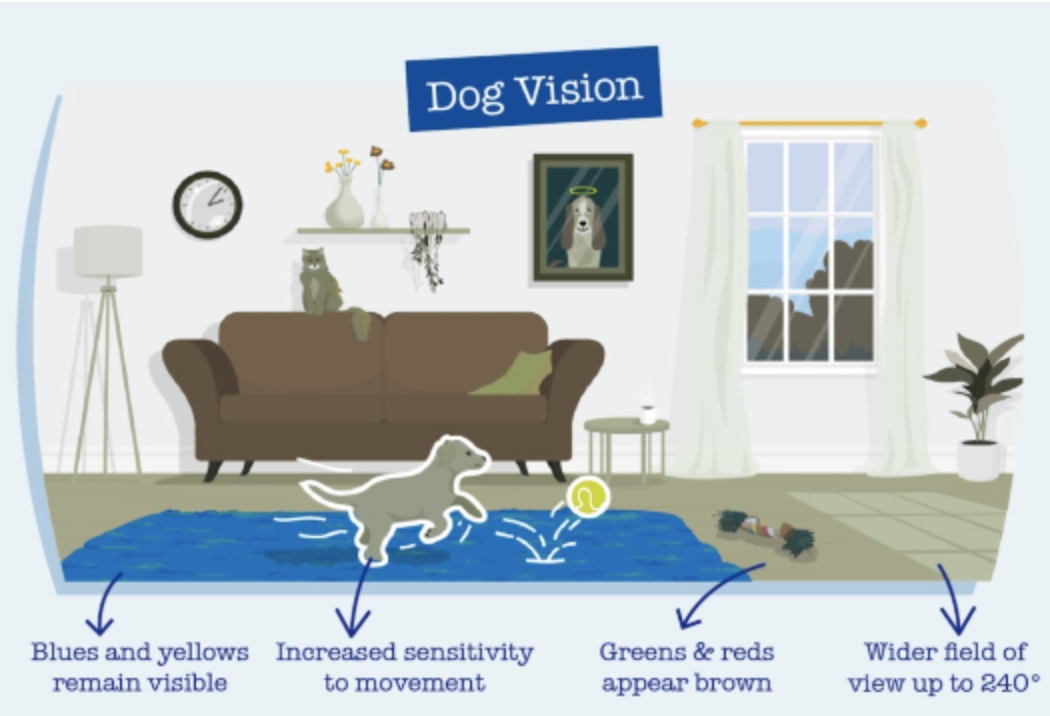
Dog vision works differently from human vision. Dogs are better at noticing movement and changes in their environment than reading fine details.
Many dogs also see fewer colors than humans. However, their ability to detect motion helps them during play, hunting, and training.
- ✦ Motion detection
Dogs are highly skilled at noticing moving objects.
- ✦ Low light ability
Dogs often see better than humans in dim conditions.
Touch, taste, and other canine senses
Touch is another key part of dog sensory perception. Dogs use skin, paws, whiskers, and body contact to understand their surroundings.
Taste is less developed than smell, but it still helps dogs decide what to eat. Smell and taste work together when dogs explore food.

- ✦ Whiskers
Whiskers help dogs detect nearby objects and changes in space.
- ✦ Body contact
Touch supports bonding, comfort, and communication.
How dog sensory perception affects training and daily life
Training becomes easier when owners understand how dogs receive information. A dog may not ignore a command; it may be distracted by a stronger sensory signal.
Professional trainers often use rewards, clear signals, and controlled environments because dogs learn through repeated sensory experiences.
- ✦ Better communication
Owners can choose clearer signals that match how dogs understand information.
- ✦ Reduced stress
Knowing sensory triggers helps create calmer environments.
